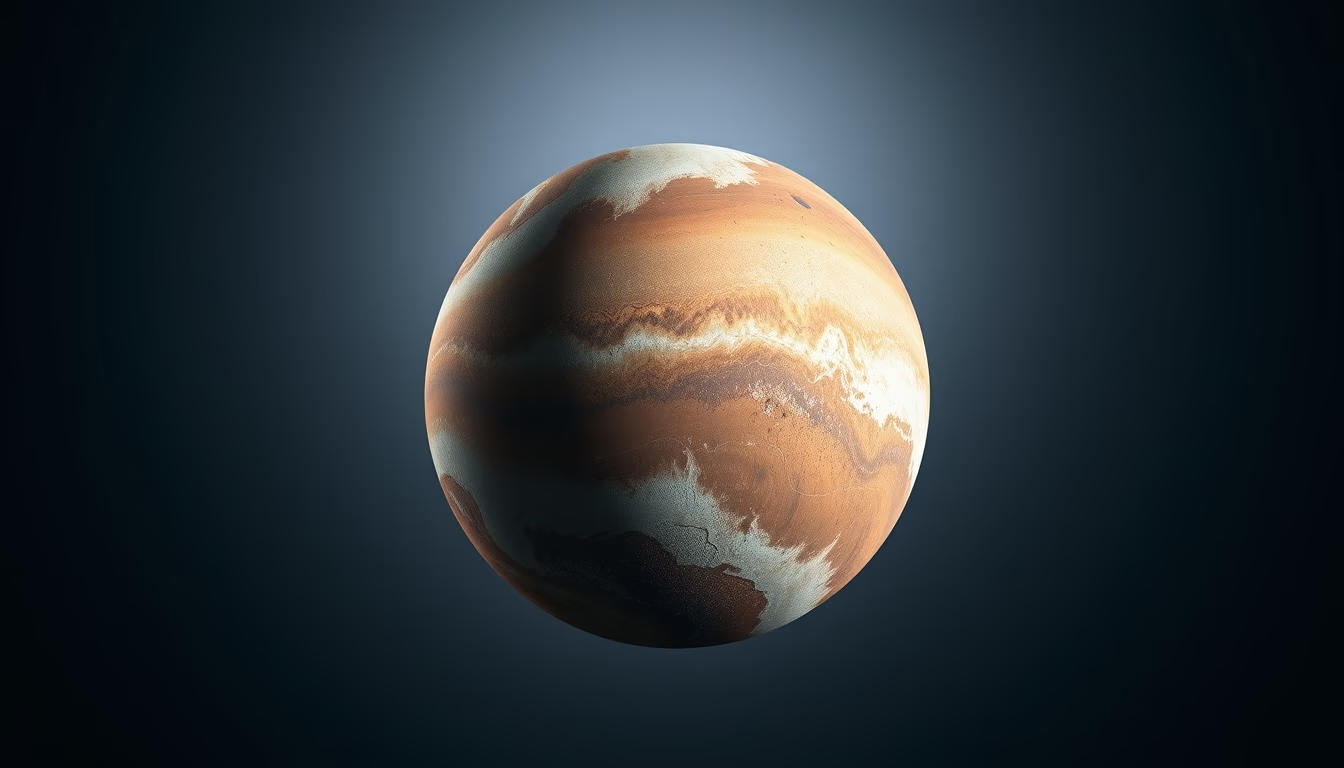
Trappist-1 system art
1344×768 · AVIF · CC BY 4.0

O sistema Trappist-1, uma anã ultrafria a 40 anos-luz, abriga sete planetas do tamanho da Terra, três na zona habitável, revolucionando a busca por vida extraterrestre.
Sobre o tema
O sistema Trappist-1 foi descoberto em 2016 por astrônomos do telescópio TRAPPIST (Transiting Planets and Planetesimals Small Telescope), localizado no Observatório de La Silla, no Chile. Ele está na constelação de Aquário, a aproximadamente 40 anos-luz da Terra. Sua estrela central é uma anã ultrafria do tipo M8V, com cerca de 8% da massa do Sol e temperatura superficial de apenas 2.550 K. Por ser tão fria, sua zona habitável fica muito próxima, com os planetas orbitando a distâncias menores que a órbita de Mercúrio.
Os sete planetas foram detectados pelo método de trânsito, que mede pequenas quedas no brilho da estrela quando um planeta passa na frente. Todos são rochosos e de tamanho similar ao da Terra, com massas entre 0,3 e 1,2 vezes a terrestre. Três deles (Trappist-1e, f e g) estão dentro da zona habitável, onde a temperatura permite a existência de água líquida na superfície, condição essencial para a vida como conhecemos. Os planetas mais internos, como b e c, são muito quentes, enquanto os externos, h, são muito frios.
A importância científica do Trappist-1 é imensa. Ele oferece um laboratório natural para estudar atmosferas de planetas rochosos fora do Sistema Solar. O Telescópio Espacial James Webb já realizou observações do sistema, detectando gases como CO2 e possíveis nuvens em Trappist-1b e c. Futuras missões, como o telescópio espacial Ariel da ESA, focarão na caracterização das atmosferas dos planetas na zona habitável. O sistema também é um alvo prioritário para a busca de bioassinaturas, como oxigênio e metano.
Uma curiosidade é que o nome Trappist remete à ordem monástica trapista, em referência à cerveja trapista, produzida em mosteiros. Além disso, o sistema é notável por seus planetas estarem em ressonância orbital, formando uma cadeia de 8:5, 5:3, 3:2, 3:2, 4:3 e 3:2. Isso indica que o sistema se formou de maneira calma e ordenada. A descoberta do Trappist-1 reacendeu o debate sobre a frequência de planetas potencialmente habitáveis na galáxia, sugerindo que sistemas com múltiplos planetas terrestres podem ser comuns ao redor de anãs ultrafrias.
Perguntas frequentes
Quantos planetas o sistema Trappist-1 possui?
O sistema Trappist-1 possui sete planetas confirmados, todos do tamanho aproximado da Terra e rochosos.
Qual é a distância do sistema Trappist-1 até a Terra?
O sistema está localizado a aproximadamente 40 anos-luz da Terra, na constelação de Aquário.
Algum dos planetas do Trappist-1 é potencialmente habitável?
Sim, três planetas (Trappist-1e, f e g) estão na zona habitável, onde pode existir água líquida na superfície.
URL direta
https://pub-c7d6a6ea828543ac903a74a341ccb2e1.r2.dev/imagens/trappist-1-system-art-studio-still-life-fresh12.avifComo creditar
Inclua um link visível de volta pro UtilizAí. Copie um dos snippets abaixo:
<a href="https://xn--utiliza-eza.com/midia/imagens/trappist-1-system-art-studio-still-life-fresh12">Trappist-1 system art</a> by <a href="https://xn--utiliza-eza.com">UtilizAí</a>, licensed under <a href="https://creativecommons.org/licenses/by/4.0/">CC BY 4.0</a>.
[Trappist-1 system art](https://xn--utiliza-eza.com/midia/imagens/trappist-1-system-art-studio-still-life-fresh12) by [UtilizAí](https://xn--utiliza-eza.com), CC BY 4.0
Licença: CC-BY-4.0