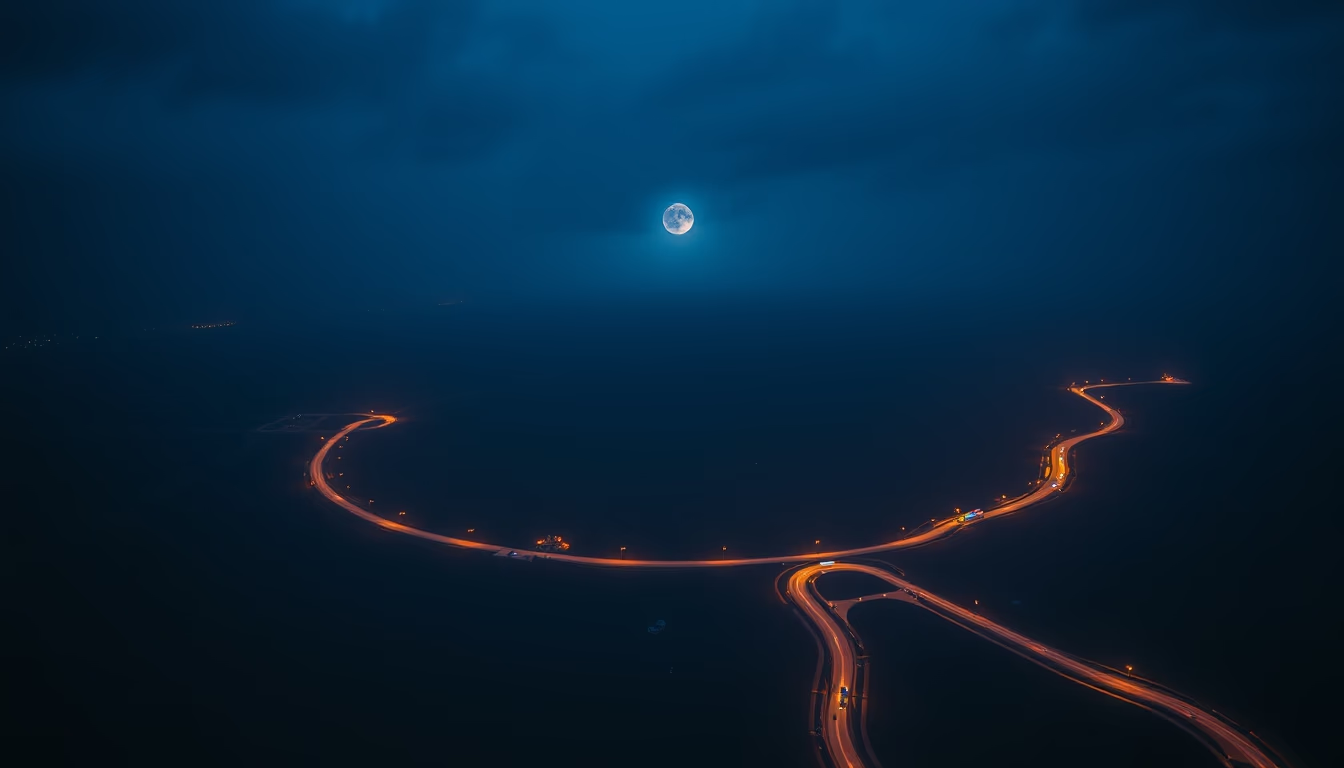
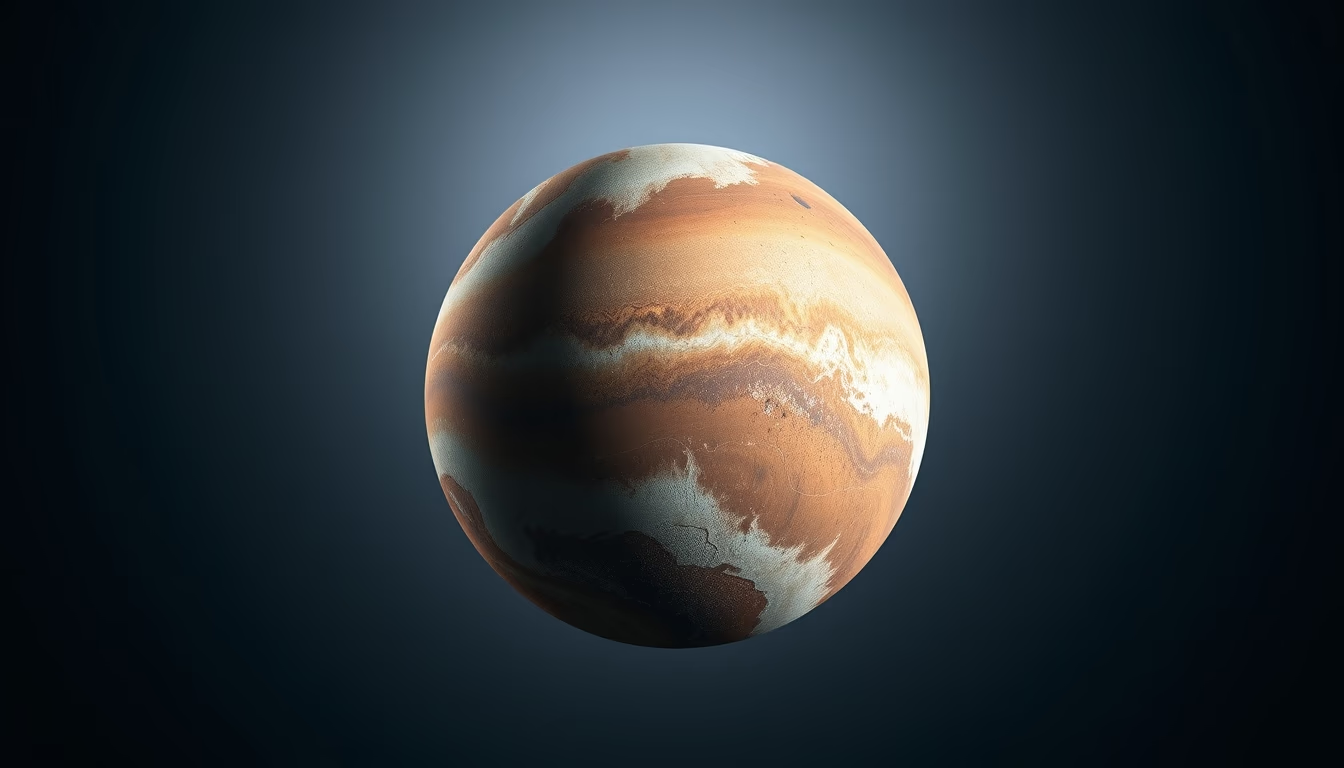
Rogue planet darkness
1344×768 · AVIF · CC BY 4.0

Rogue planets, also called free-floating planets, drift through the Milky Way without orbiting any star. Learn how they form and are detected.
About this subject
Rogue planets, also called free-floating or interstellar planets, are planetary-mass objects that are not gravitationally bound to any star. They drift alone through the galaxy, immersed in the darkness of interstellar space. They are believed to be as numerous as stars in the Milky Way, totaling billions of objects. Their existence has been indirectly confirmed through gravitational microlensing, and the Roman Space Telescope, scheduled for launch in 2027, is expected to discover many more.
Rogue planets can form in two main ways: either they are ejected from their original planetary systems due to violent gravitational interactions (such as close encounters with other planets or passing stars), or they form directly from the collapse of gas and dust clouds, similar to stars but with insufficient mass to ignite nuclear fusion. These objects are extremely cold, emitting only residual infrared radiation from their initial formation.
The study of rogue planets is important because they may be the most common objects in the galaxy and could potentially harbor life beneath thick atmospheres, heated by geothermal processes or radioactive decay. Cassini detected Enceladus, a moon with internal oceans heated by tidal forces, a phenomenon that could occur in massive rogue planets. Future missions may characterize their atmospheres in search of biosignatures.
Although few direct confirmations exist, candidates such as PSO J318.5-22, discovered in 2013, and WISE J085510.83-071442.5, one of the coldest found, help refine theoretical models. Detection via gravitational microlensing, such as by OGLE and MOA surveys, reveals the abundance of these dark worlds. Each new discovery expands our understanding of planetary system diversity and the dynamics of the Milky Way.
Frequently Asked Questions
What is a rogue planet?
It is a planetary-mass object that does not orbit any star, freely wandering interstellar space. It may have been ejected from a solar system or formed directly from the collapse of gas clouds.
How do scientists detect rogue planets?
Mainly through gravitational microlensing, where the planet's gravity bends and magnifies the light of a background star. They are also observed in infrared, as they emit residual heat.
Can rogue planets harbor life?
Yes, it is possible. If they have a thick atmosphere and internal heating (geothermal or radioactive decay), they could maintain liquid oceans beneath the surface, creating conditions for microbial life.
Direct URL
https://pub-c7d6a6ea828543ac903a74a341ccb2e1.r2.dev/imagens/rogue-planet-darkness-macro-closeup-fresh18.avifHow to credit
Include a visible link back to UtilizAí. Copy one of the snippets below:
<a href="https://xn--utiliza-eza.com/en/midia/imagens/rogue-planet-darkness-macro-closeup-fresh18">Rogue planet darkness</a> by <a href="https://xn--utiliza-eza.com">UtilizAí</a>, licensed under <a href="https://creativecommons.org/licenses/by/4.0/">CC BY 4.0</a>.
[Rogue planet darkness](https://xn--utiliza-eza.com/en/midia/imagens/rogue-planet-darkness-macro-closeup-fresh18) by [UtilizAí](https://xn--utiliza-eza.com), CC BY 4.0
License: CC-BY-4.0