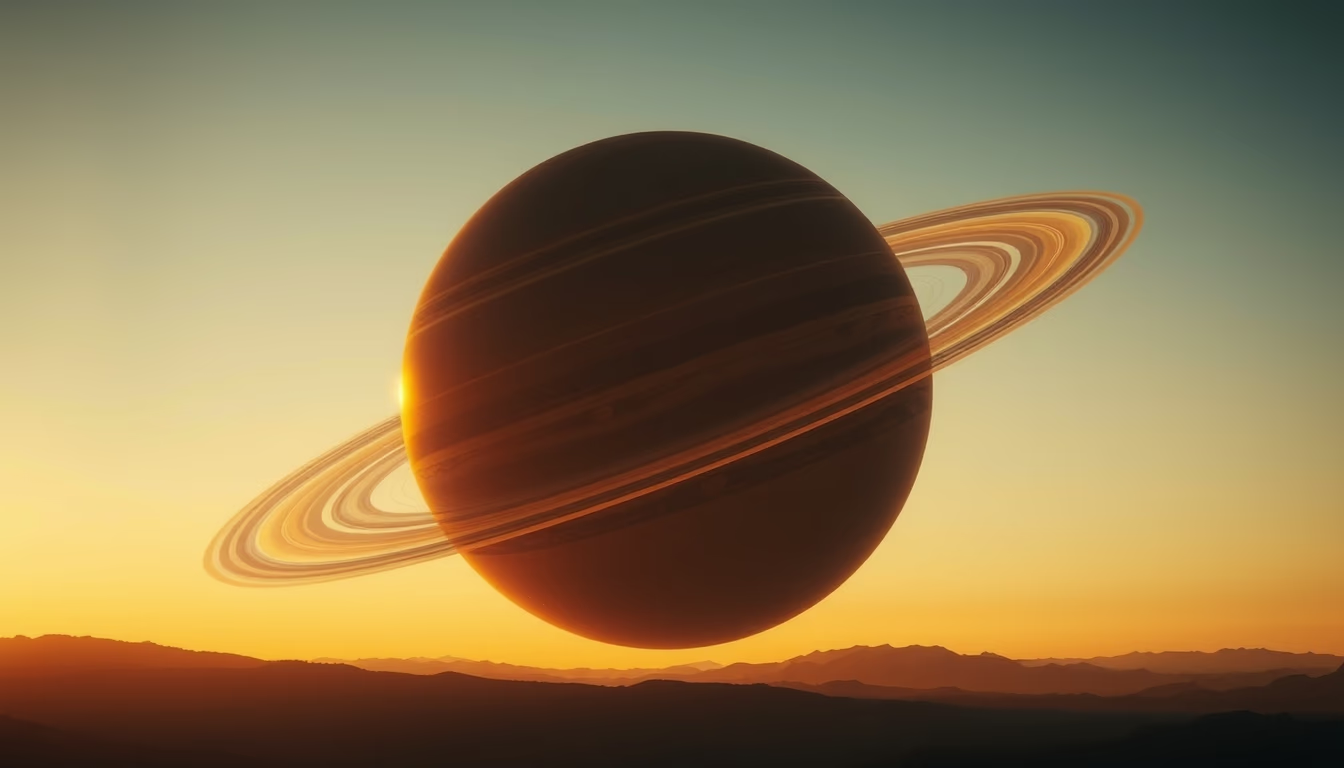
Binary star sunset
1344×768 · AVIF · CC BY 4.0
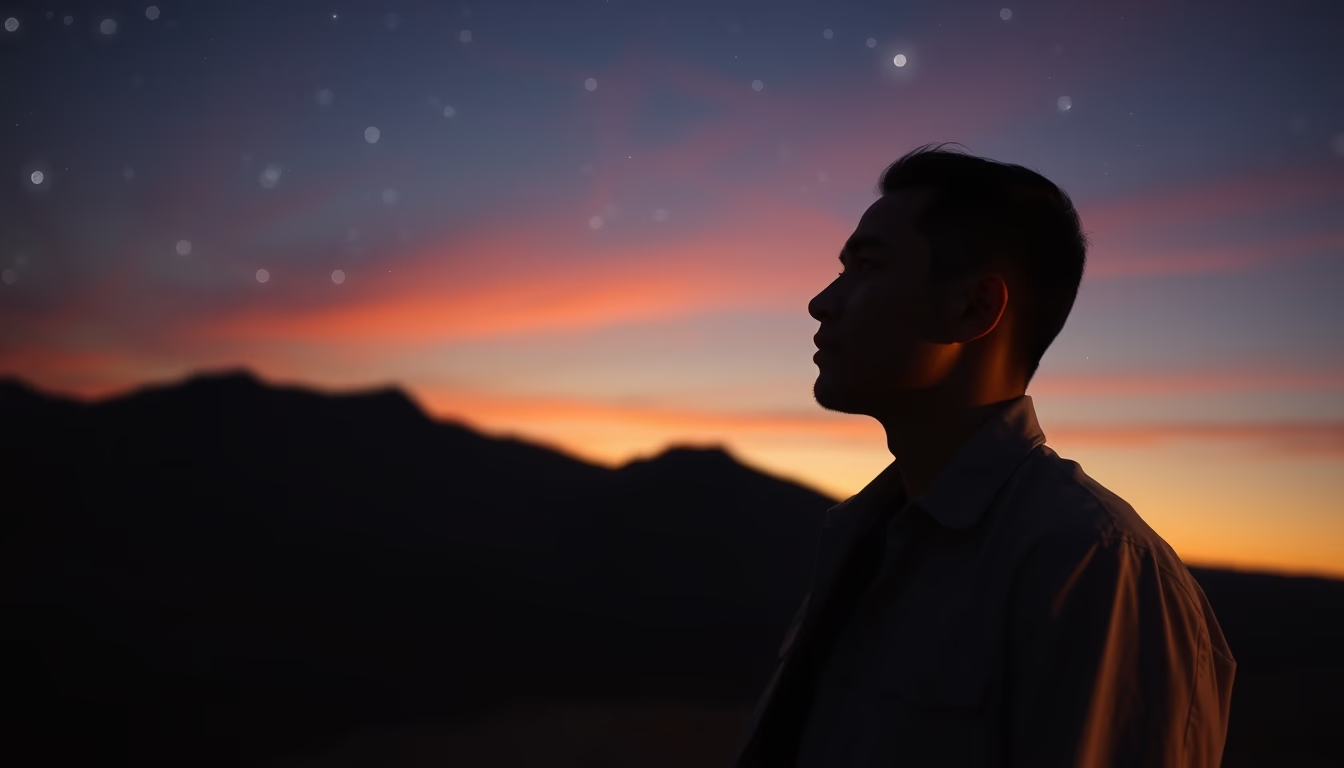
In binary star systems, the sunset can be double, creating unique celestial landscapes on exoplanets.
About this subject
Binary star systems consist of two stars orbiting a common center of mass. Roughly half of Sun-like stars live in pairs or multiple systems, making binaries extremely common in the universe. When an exoplanet orbits one of these stars or both (circumbinary planets), the visual effect of a double sunset becomes possible, though the conditions for life in such scenarios are complex.
The most famous example of a planet with two suns is Kepler-16b, discovered in 2011 by the Kepler mission. This gas giant orbits both stars in a binary system about 200 light-years from Earth. Although Kepler-16b is inhospitable to life as we know it, its existence inspired comparisons with the fictional planet Tatooine from Star Wars, where Luke Skywalker watches a double sunset. Since then, several other circumbinary planets have been confirmed, such as Kepler-34b and Kepler-35b.
Orbital dynamics in binary systems are challenging. For a planet to be stable, it must reside in a zone where the gravitational pull of both stars does not destabilize it. For circumbinary planets, the orbit must be at a minimum distance (about 3 to 4 times the separation between the stars) to avoid ejection or collision. Moreover, the variation in received radiation over the year can be drastic, affecting climate and the possibility of liquid water on the surface.
Culturally, the double sunset has become an icon of science fiction, but science has shown that similar phenomena actually occur in other systems. Telescopes like the James Webb can study the atmospheres of these exoplanets, searching for signs of molecules such as water, methane, and carbon dioxide, which would indicate potential habitability. Although we do not yet have direct images of a real double sunset, computer simulations help visualize what this spectacle might look like under different stellar configurations.
Frequently Asked Questions
Are exoplanets common in binary star systems?
Yes, they are relatively common. Data from the Kepler mission indicates that about 40 to 50% of binary star systems may host planets, especially in circumbinary orbits or around one of the stars. As of 2023, more than 20 circumbinary planets have been confirmed.
How does a double sunset form?
A double sunset occurs when an exoplanet orbits in a binary system such that both stars set simultaneously or in sequence on the planet's horizon. The appearance depends on the separation between the stars and the orbital position of the planet.
What are real examples of planets with two suns?
Besides Kepler-16b, notable examples include Kepler-34b, Kepler-35b, Kepler-47 (a system with three circumbinary planets), and TOI-1338 b. These planets vary in size and orbit, but all orbit binary stars.
Direct URL
https://pub-c7d6a6ea828543ac903a74a341ccb2e1.r2.dev/imagens/binary-star-sunset-cinematic-wide-shot-fresh18.avifHow to credit
Include a visible link back to UtilizAí. Copy one of the snippets below:
<a href="https://xn--utiliza-eza.com/en/midia/imagens/binary-star-sunset-cinematic-wide-shot-fresh18">Binary star sunset</a> by <a href="https://xn--utiliza-eza.com">UtilizAí</a>, licensed under <a href="https://creativecommons.org/licenses/by/4.0/">CC BY 4.0</a>.
[Binary star sunset](https://xn--utiliza-eza.com/en/midia/imagens/binary-star-sunset-cinematic-wide-shot-fresh18) by [UtilizAí](https://xn--utiliza-eza.com), CC BY 4.0
License: CC-BY-4.0