Trappist-1 system art
1344×768 · AVIF · CC BY 4.0

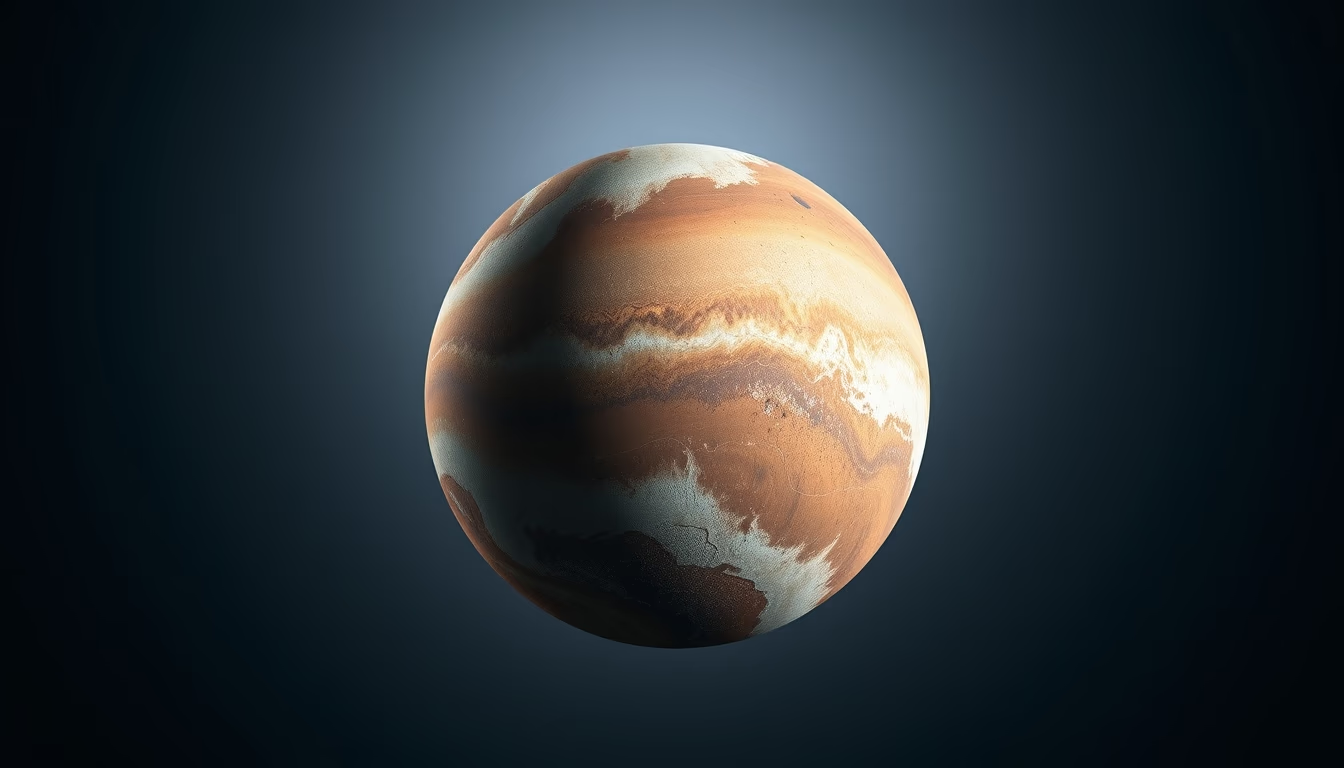
The TRAPPIST-1 system hosts seven Earth-sized planets, three in the habitable zone, orbiting an ultracool dwarf star 40 light-years away.
About this subject
Discovered in 2016 by a team led by astronomer Michaël Gillon from the University of Liège, Belgium, the TRAPPIST-1 system orbits an ultracool dwarf star in the constellation Aquarius. The name derives from the TRAPPIST (Transiting Planets and Planetesimals Small Telescope) located at La Silla Observatory in Chile, which detected the first planets. Initially three were confirmed, but subsequent observations with Spitzer and other telescopes raised the total to seven rocky worlds, all similar in size and mass to Earth.
Three of these planets (TRAPPIST-1e, f and g) lie in the temperate habitable zone, where temperatures allow liquid water on the surface. Studies suggest they may host global oceans, thick atmospheres, or even cryovolcanism. However, the star emits violent flares that could erode atmospheres. The orbital distances are so compact that the planets are closer to each other than Mars is to the Sun; in some cases, an observer on the surface would see other planets larger than a full Moon.
The system is a prime target for the James Webb Space Telescope (JWST), which has already detected molecules such as carbon dioxide and methane in the inner planets' atmospheres, hinting at possible geological or biological activity. Its relative proximity (only 40 light-years) allows detailed transit and spectroscopy studies that could one day identify biosignatures like oxygen and ozone.
TRAPPIST-1's importance extends beyond astronomy: it demonstrates that rocky planets are common around ultracool dwarf stars, the most abundant stars in the universe. Each discovery provides clues about planetary formation, atmospheric evolution, and the conditions necessary for life, bringing humanity closer to answering whether we are alone in the cosmos.
Frequently Asked Questions
How many planets does the TRAPPIST-1 system have?
Seven confirmed planets, all rocky and Earth-sized. Three are located in the habitable zone.
Why is TRAPPIST-1 important in the search for extraterrestrial life?
Its proximity (40 light-years) and multiple planets in the habitable zone allow detailed atmospheric studies with telescopes like JWST, potentially detecting biosignatures.
Which telescope discovered the TRAPPIST-1 system?
It was discovered by the TRAPPIST (Transiting Planets and Planetesimals Small Telescope) at La Silla Observatory in Chile.
Direct URL
https://pub-c7d6a6ea828543ac903a74a341ccb2e1.r2.dev/imagens/trappist-1-system-art-fish-eye-wide-angle-fresh15.avifHow to credit
Include a visible link back to UtilizAí. Copy one of the snippets below:
<a href="https://xn--utiliza-eza.com/en/midia/imagens/trappist-1-system-art-fish-eye-wide-angle-fresh15">Trappist-1 system art</a> by <a href="https://xn--utiliza-eza.com">UtilizAí</a>, licensed under <a href="https://creativecommons.org/licenses/by/4.0/">CC BY 4.0</a>.
[Trappist-1 system art](https://xn--utiliza-eza.com/en/midia/imagens/trappist-1-system-art-fish-eye-wide-angle-fresh15) by [UtilizAí](https://xn--utiliza-eza.com), CC BY 4.0
License: CC-BY-4.0