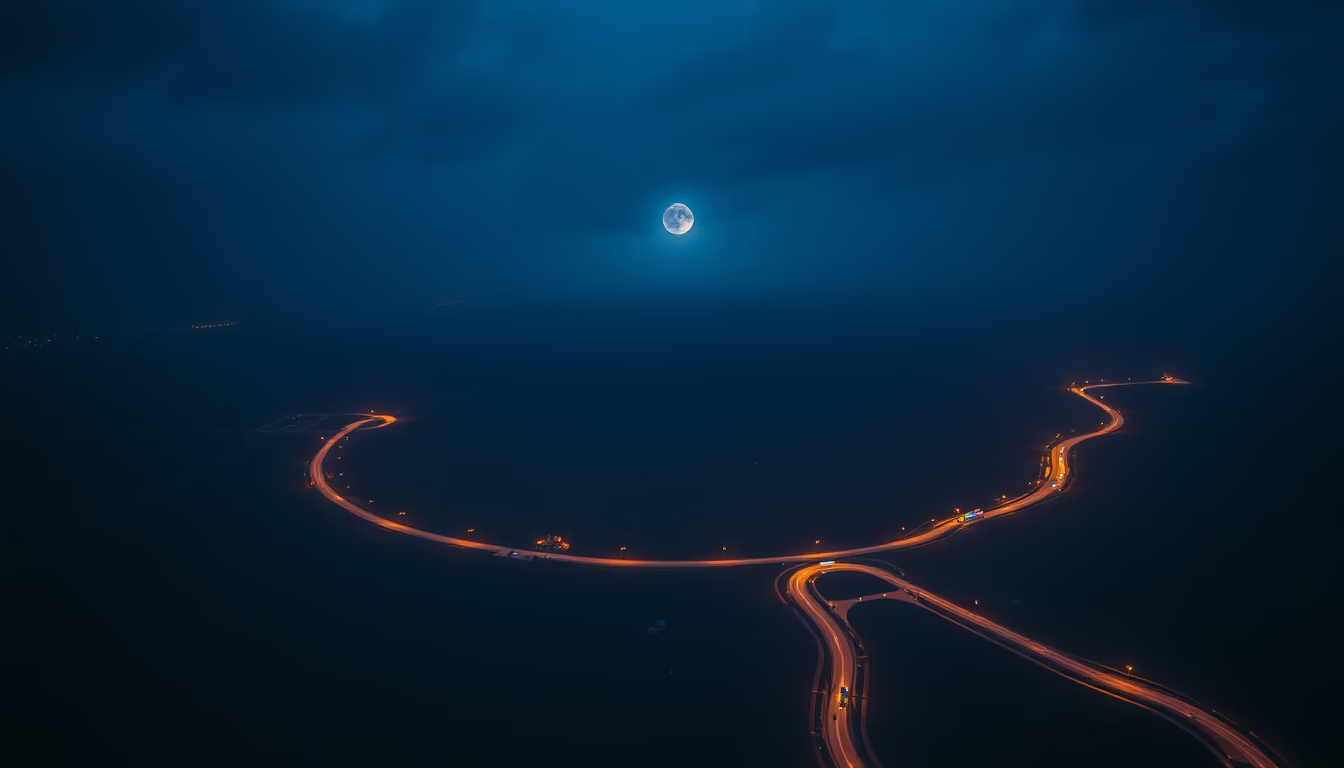
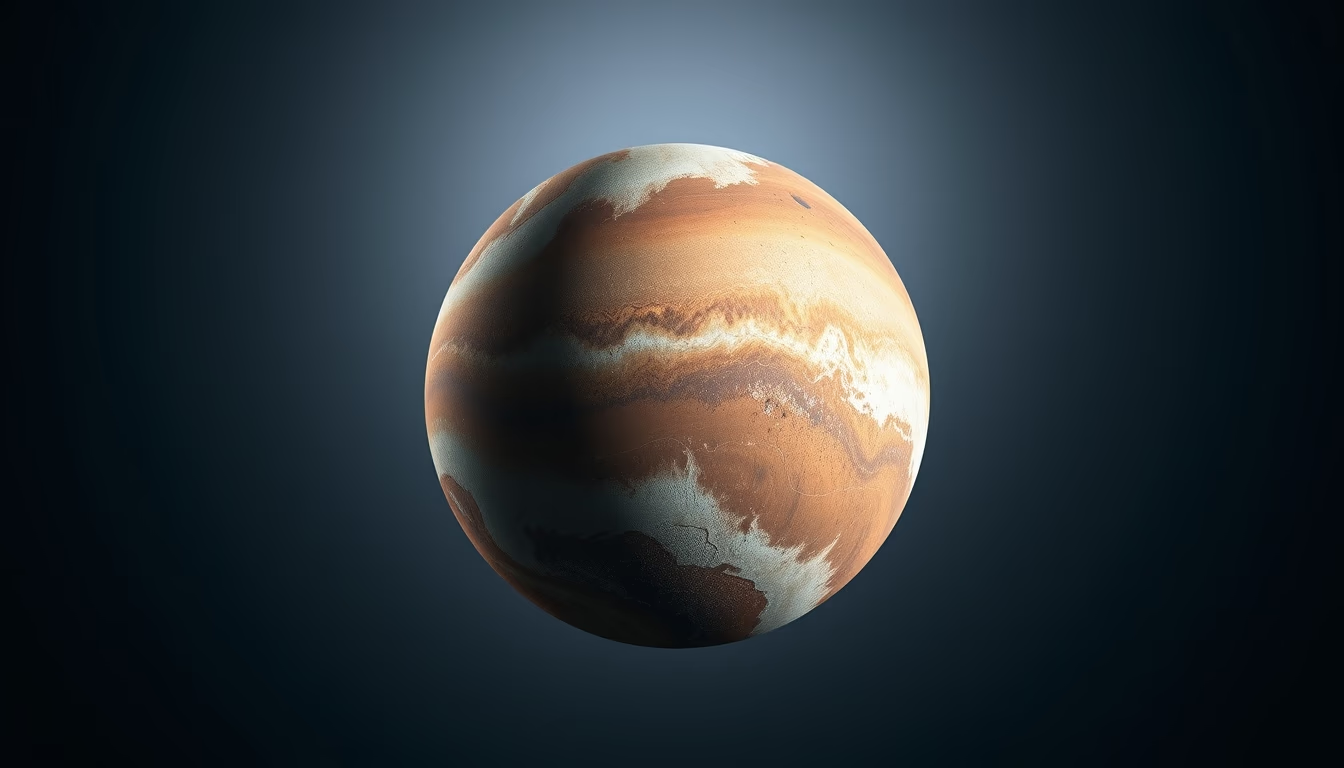
Tidal locked planet
1344×768 · AVIF · CC BY 4.0

Tidally locked planets always show the same face to their star, creating a scorching dayside and a frozen nightside, with a narrow habitable twilight zone.
About this subject
Tidal locking occurs when a planet's orbital period matches its rotation period, a common phenomenon in compact stellar systems. This happens due to gravitational forces from the star, which gradually slow the rotation until equilibrium. In the Solar System, Earth's Moon is a classic example of a tidally locked body. Among exoplanets orbiting red dwarf stars, such as those in the TRAPPIST-1 system, most are believed to be tidally locked.
The main consequence is a stark division between a perpetually sunlit dayside, where temperatures can exceed 200°C, and a dark, frozen nightside with temperatures below -200°C. The transition zone, known as the terminator or twilight zone, may harbor mild conditions with stable liquid water. Thus, scientists hypothesize that any potential life on these worlds would concentrate in this strip.
Proxima Centauri b, the closest exoplanet to Earth, orbits within its star's habitable zone and is likely tidally locked. Atmospheric studies suggest that strong winds could transfer heat from the dayside to the nightside, moderating extreme temperatures. Future observations with telescopes like the James Webb Space Telescope will help characterize the atmospheres and habitability of these planets.
Detection of tidally locked planets is done indirectly through rotation curves and theoretical models. Transit photometry can reveal periodic variations indicating synchronism. Although challenging, these worlds are prime targets in the search for extraterrestrial life due to their relative climatic stability.
Frequently Asked Questions
What causes tidal locking on a planet?
Tidal locking is caused by gravitational forces from the host star, which exert a torque that slows the planet's rotation until it matches the orbital period. This process is most efficient for close-in orbits and low-mass stars.
Which known exoplanets are tidally locked?
Examples include Proxima Centauri b, the planets in the TRAPPIST-1 system (especially the inner ones), and Kepler-186f. Many planets in the habitable zones of red dwarfs are likely tidally locked, though direct confirmation remains rare.
Is life possible on a tidally locked planet?
Yes, provided there is a habitable zone, such as the terminator region, where temperatures may allow liquid water. Atmospheric circulation can redistribute heat and create stable conditions. However, stellar radiation and storms could pose additional challenges.
Direct URL
https://pub-c7d6a6ea828543ac903a74a341ccb2e1.r2.dev/imagens/tidal-locked-planet-tilt-shift-miniature-fresh13.avifHow to credit
Include a visible link back to UtilizAí. Copy one of the snippets below:
<a href="https://xn--utiliza-eza.com/en/midia/imagens/tidal-locked-planet-tilt-shift-miniature-fresh13">Tidal locked planet</a> by <a href="https://xn--utiliza-eza.com">UtilizAí</a>, licensed under <a href="https://creativecommons.org/licenses/by/4.0/">CC BY 4.0</a>.
[Tidal locked planet](https://xn--utiliza-eza.com/en/midia/imagens/tidal-locked-planet-tilt-shift-miniature-fresh13) by [UtilizAí](https://xn--utiliza-eza.com), CC BY 4.0
License: CC-BY-4.0