Tidal locked planet
1344×768 · AVIF · CC BY 4.0

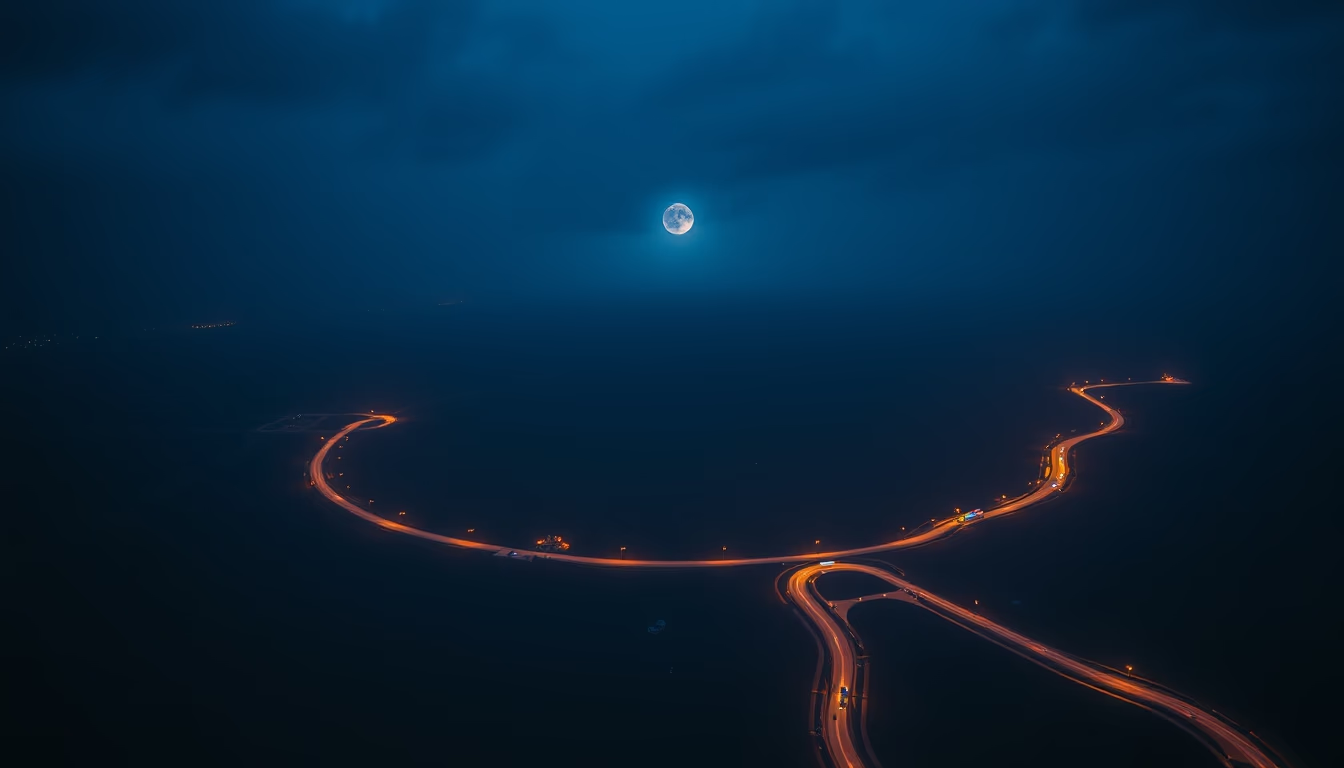
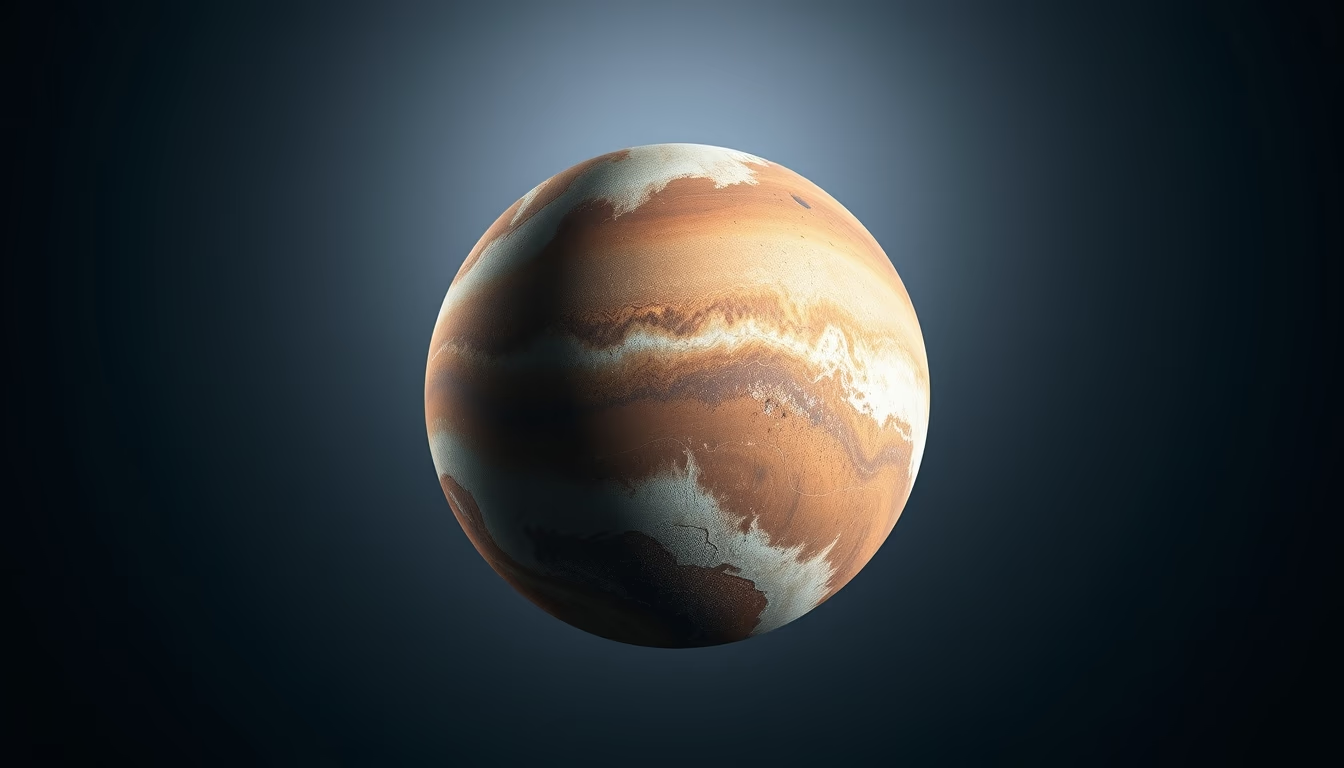
Tidally locked planets always keep the same face toward their star, creating an extreme contrast between a permanently illuminated side and a frozen dark side.
About this subject
Tidal locking is a gravitational phenomenon that occurs when a planet's rotation synchronizes with its orbit around its star. This means the planet's rotational period equals its orbital period, causing one hemisphere (the dayside) to perpetually face the star while the opposite hemisphere (the nightside) remains in eternal darkness. This process is similar to how the Moon always shows the same face to Earth. For exoplanets, especially those orbiting close to their host star, tidal locking is extremely common. Notable examples include Proxima Centauri b, the closest exoplanet to the Solar System, and the seven planets of the TRAPPIST-1 system.
The implications for habitability are profound and debated. On the dayside, temperatures can be extremely high, potentially boiling away any oceans, while the nightside may freeze atmospheric gases. However, along the terminator, the line between day and night, a band of moderate temperatures could exist, potentially favorable for life. Climate models suggest that a thick atmosphere could redistribute heat, mitigating extremes. The discovery of water or ice on planets like those in TRAPPIST-1 fuels speculation about habitable conditions in this twilight zone.
Observationally, detecting tidally locked planets is challenging. Transit and radial velocity methods, combined with orbital phase models, help infer rotation. The James Webb Space Telescope is poised to study the atmospheres of some of these worlds, searching for biomarkers. Interestingly, Venus and Mercury in the Solar System exhibit orbital resonances that prevent full locking, but theory indicates that over billions of years, most planets in the habitable zones of red dwarf stars should be tidally locked.
Frequently Asked Questions
What is a tidally locked planet?
It is a planet whose rotation period equals its orbital period, causing one hemisphere to always face its star while the other remains in perpetual darkness.
Can tidally locked planets be habitable?
Yes, potentially along the terminator zone where day and night meet. A thick atmosphere can redistribute heat, creating temperate conditions. Exoplanets around red dwarf stars, such as those in the TRAPPIST-1 system, are candidates for such habitability.
How do scientists detect tidal locking on exoplanets?
They use transit light curves, brightness variations during orbit, and orbital phase models. The James Webb Space Telescope can analyze the atmosphere and infer rotation.
Direct URL
https://pub-c7d6a6ea828543ac903a74a341ccb2e1.r2.dev/imagens/tidal-locked-planet-isometric-flat-lay-fresh11.avifHow to credit
Include a visible link back to UtilizAí. Copy one of the snippets below:
<a href="https://xn--utiliza-eza.com/en/midia/imagens/tidal-locked-planet-isometric-flat-lay-fresh11">Tidal locked planet</a> by <a href="https://xn--utiliza-eza.com">UtilizAí</a>, licensed under <a href="https://creativecommons.org/licenses/by/4.0/">CC BY 4.0</a>.
[Tidal locked planet](https://xn--utiliza-eza.com/en/midia/imagens/tidal-locked-planet-isometric-flat-lay-fresh11) by [UtilizAí](https://xn--utiliza-eza.com), CC BY 4.0
License: CC-BY-4.0