Tidal locked planet
1344×768 · AVIF · CC BY 4.0

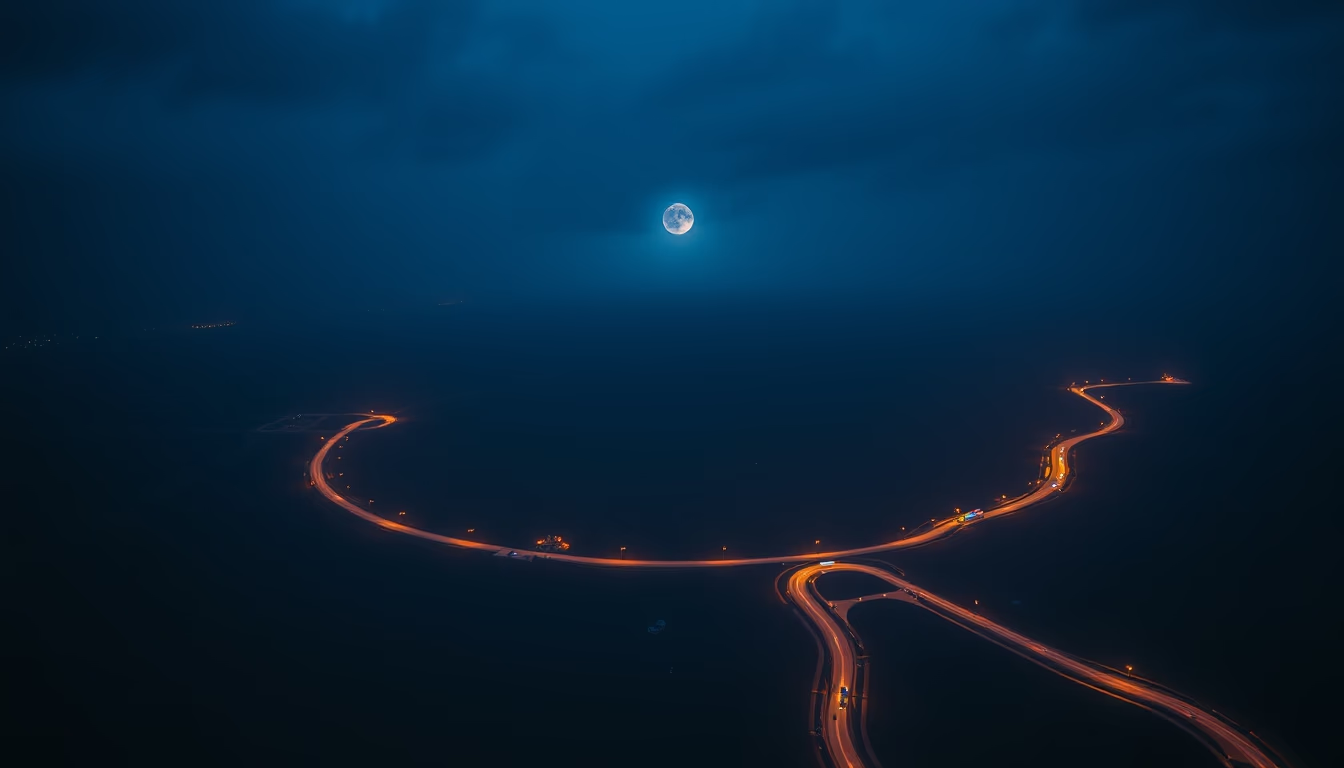
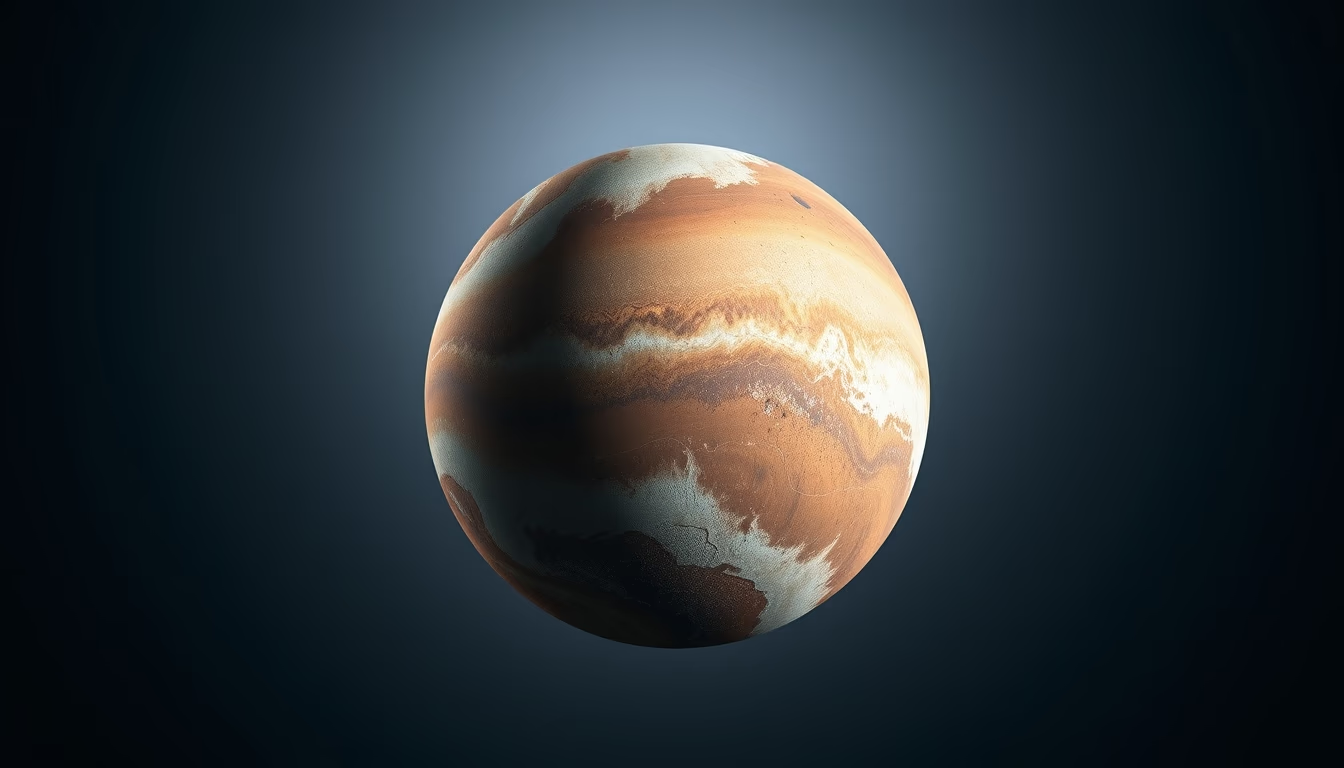
Tidally locked exoplanets have one side permanently facing their star and the other in perpetual darkness, a common phenomenon in compact systems.
About this subject
Tidal locking is an orbital phenomenon where a planet's rotation period matches its orbital period, causing the same hemisphere to always face the host star. This effect is seen in our own solar system with the Moon, which always shows the same face to Earth. For exoplanets, most rocky worlds in the habitable zones of red dwarf stars (M-type) are expected to be tidally locked due to the close orbital distances required to maintain liquid water. Notable examples include Proxima Centauri b and the TRAPPIST-1 planets, all orbiting very close to their stars.
A tidally locked planet exhibits extreme temperature contrasts: on the dayside, constant stellar radiation can heat the surface to hundreds of degrees Celsius, while the nightside freezes at cryogenic temperatures. Between these hemispheres, a narrow twilight zone (terminator) may offer milder conditions where liquid water could persist if the atmosphere is thick enough to redistribute heat. Climate models suggest that, depending on atmospheric thickness and the presence of oceans, even the nightside could be warmed by heat transport.
The search for life on tidally locked exoplanets is an active research topic. Astronomers consider that the habitable zone around red dwarfs is closer, but intense stellar activity (flares) and the lack of a global magnetic field may hinder atmospheric retention. However, recent simulations indicate that with a dense CO2 or hydrogen atmosphere, heat can be efficiently carried to the nightside, preventing total freezing. Future observations with telescopes like the James Webb Space Telescope (JWST) could detect atmospheric signatures on these worlds, looking for molecules such as water vapor, methane, and oxygen.
Interestingly, tidal locking is not binary: many exoplanets may be in spin-orbit resonances, like Mercury (3:2), which allows parts of the planet to experience seasonal variations. Nonetheless, most habitable candidates near red dwarfs are considered tidally locked, making these objects natural laboratories for understanding climate evolution and potential habitability under extreme conditions.
Frequently Asked Questions
What does it mean for a planet to be tidally locked?
It means the same side always faces its star, like the Moon facing Earth. This happens when the rotation period equals the orbital period.
Could life exist on a tidally locked planet?
Yes, depending on factors like a thick atmosphere, heat transport, and climate stability. The terminator zone may offer mild temperatures, and simulations show global oceans can circulate heat.
Why are planets around red dwarfs often tidally locked?
Because the habitable zone is very close to the star, causing the star's gravity to lock the planet's rotation in geologically short timescales.
Direct URL
https://pub-c7d6a6ea828543ac903a74a341ccb2e1.r2.dev/imagens/tidal-locked-planet-documentary-nature-style-fresh4.avifHow to credit
Include a visible link back to UtilizAí. Copy one of the snippets below:
<a href="https://xn--utiliza-eza.com/en/midia/imagens/tidal-locked-planet-documentary-nature-style-fresh4">Tidal locked planet</a> by <a href="https://xn--utiliza-eza.com">UtilizAí</a>, licensed under <a href="https://creativecommons.org/licenses/by/4.0/">CC BY 4.0</a>.
[Tidal locked planet](https://xn--utiliza-eza.com/en/midia/imagens/tidal-locked-planet-documentary-nature-style-fresh4) by [UtilizAí](https://xn--utiliza-eza.com), CC BY 4.0
License: CC-BY-4.0