Tidal locked planet
1344×768 · AVIF · CC BY 4.0
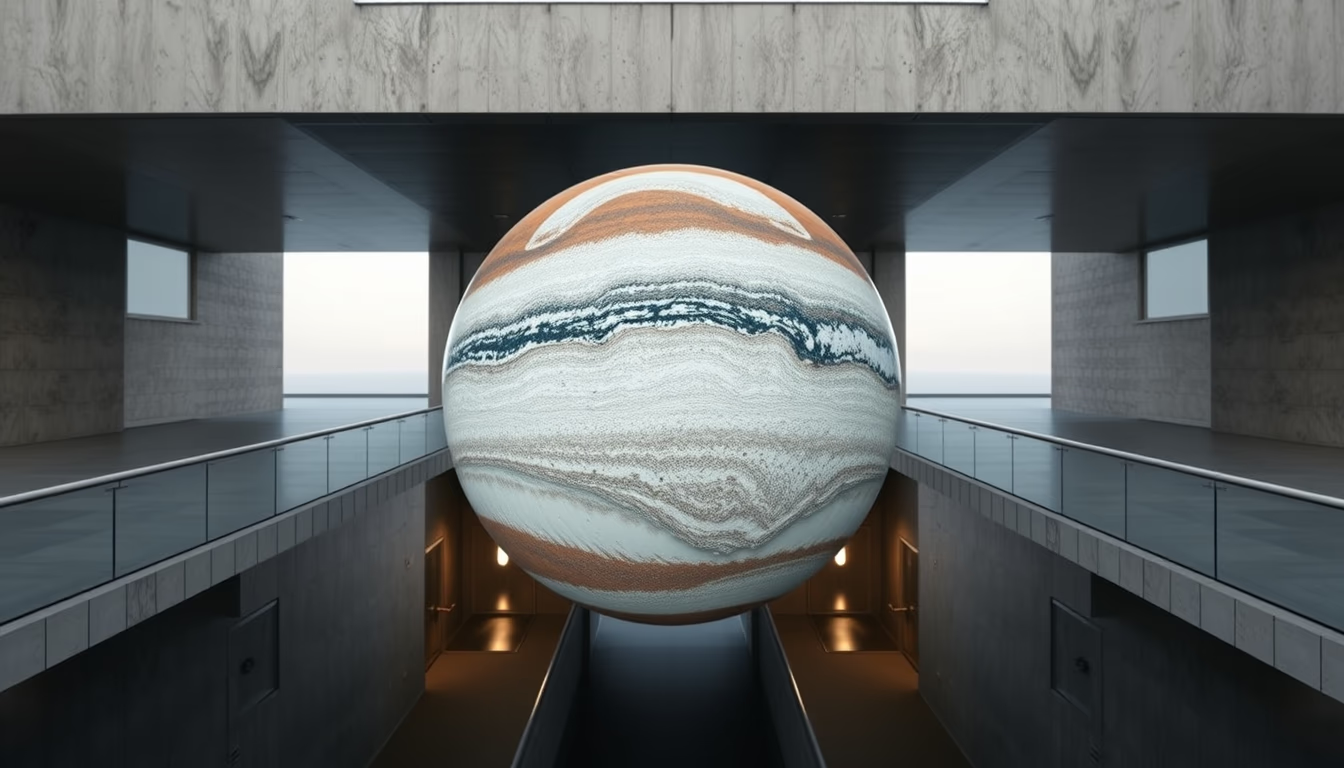
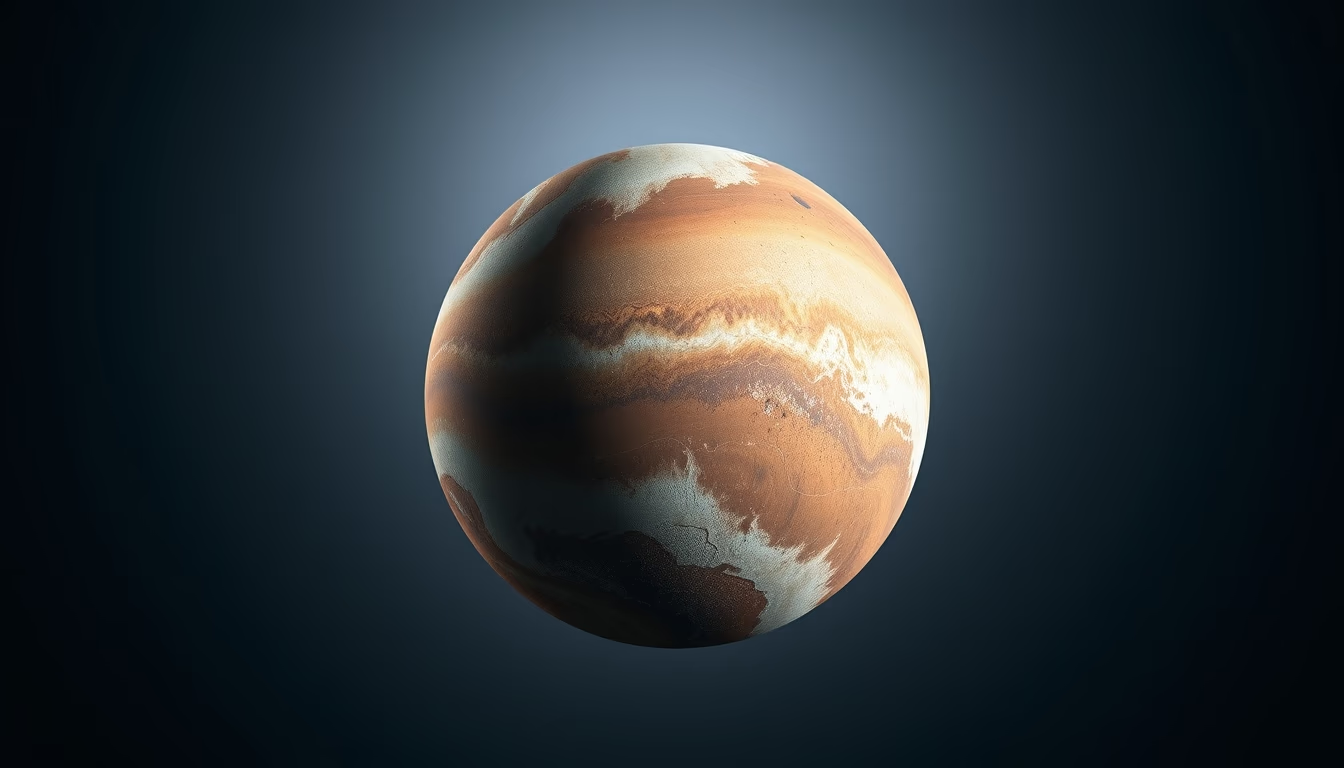
A tidally locked planet always keeps one face toward its star, creating extreme temperature contrasts and potential habitable zones along the terminator.
About this subject
Tidally locked planets have a rotation period equal to their orbital period, so one hemisphere always faces the star. This is common among exoplanets orbiting red dwarf stars, such as those in the TRAPPIST-1 system. The dayside can reach scorching temperatures, while the nightside freezes to hundreds of degrees below zero. Between these extremes lies the terminator line, a permanent twilight zone where conditions might be more temperate.
Scientists hypothesize that liquid water could exist in the terminator region if the atmosphere is thick enough to redistribute heat. Exoplanets like Proxima Centauri b and the TRAPPIST-1 worlds are considered prime candidates for habitability because they orbit within the habitable zone. However, the intense stellar flares from red dwarfs may strip away atmospheres, making survival uncertain.
Recent climate models indicate that atmospheric composition and ocean coverage can greatly moderate temperatures. A dense CO2 or water vapor atmosphere could transport heat to the nightside, creating habitable pockets beyond the terminator. The study of tidally locked planets has advanced our search for extraterrestrial life, as these worlds are easier to detect using transit and radial velocity methods, and they offer unique laboratories for understanding planetary climate dynamics.
Frequently Asked Questions
What causes tidal locking in a planet?
Tidal locking results from gravitational forces between the planet and its star. Over time, these forces slow the planet's rotation until one hemisphere permanently faces the star, similar to the Moon's relationship with Earth.
Is life possible on tidally locked planets?
Yes, especially along the terminator line where temperatures may be moderate. However, intense stellar activity from red dwarf stars can strip away atmospheres, posing challenges for habitability.
Which known exoplanets are tidally locked?
Examples include Proxima Centauri b and the TRAPPIST-1 planets. All orbit red dwarfs within the habitable zone and are frequently studied for their potential to host life.
Direct URL
https://pub-c7d6a6ea828543ac903a74a341ccb2e1.r2.dev/imagens/tidal-locked-planet-architectural-photography-fresh6.avifHow to credit
Include a visible link back to UtilizAí. Copy one of the snippets below:
<a href="https://xn--utiliza-eza.com/en/midia/imagens/tidal-locked-planet-architectural-photography-fresh6">Tidal locked planet</a> by <a href="https://xn--utiliza-eza.com">UtilizAí</a>, licensed under <a href="https://creativecommons.org/licenses/by/4.0/">CC BY 4.0</a>.
[Tidal locked planet](https://xn--utiliza-eza.com/en/midia/imagens/tidal-locked-planet-architectural-photography-fresh6) by [UtilizAí](https://xn--utiliza-eza.com), CC BY 4.0
License: CC-BY-4.0