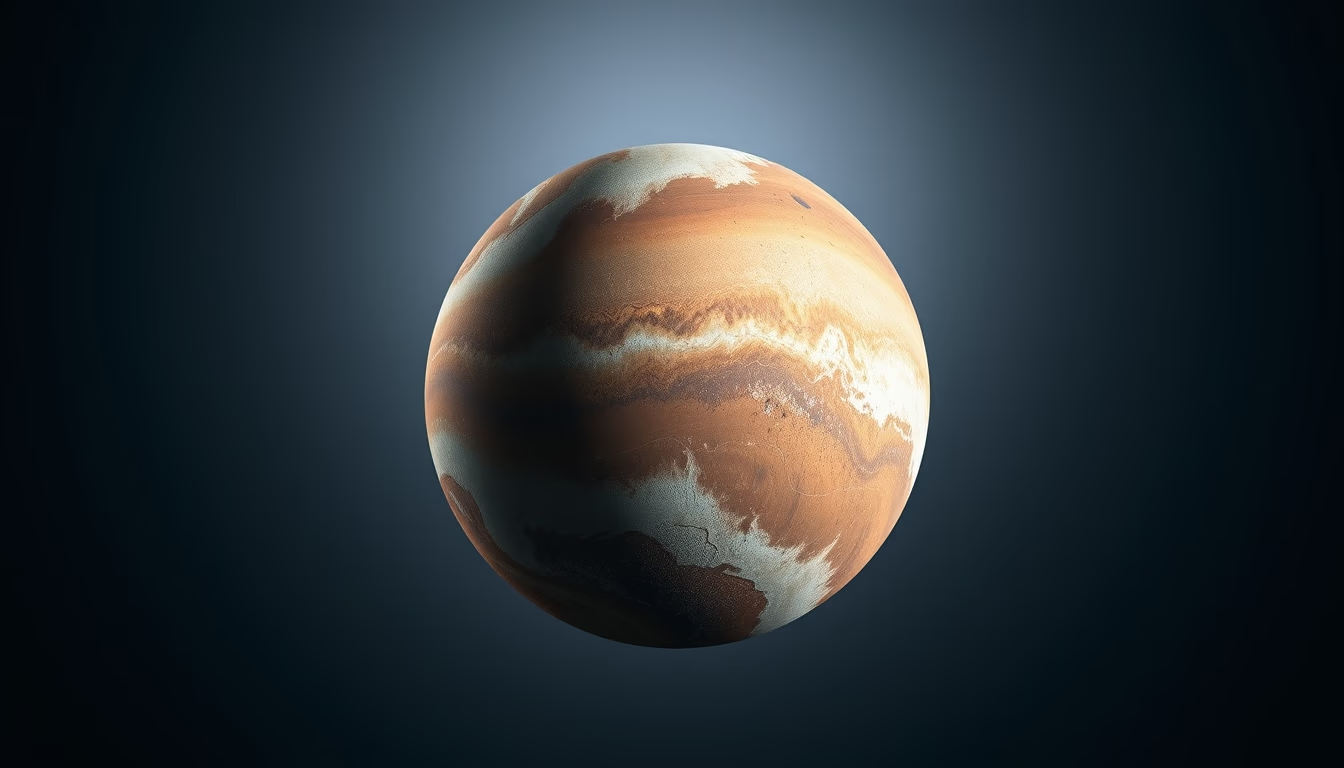
Kepler 186f earthlike concept
1344×768 · AVIF · CC BY 4.0

Kepler-186f é o primeiro exoplaneta do tamanho da Terra descoberto na zona habitável de uma estrela anã vermelha, a 582 anos-luz de distância.
Sobre o tema
Kepler-186f foi descoberto pelo telescópio espacial Kepler da NASA em 2014. Ele orbita a estrela Kepler-186, uma anã vermelha do tipo M1V, localizada na constelação de Cygnus. Com um raio apenas 1,17 vezes o da Terra, é classificado como um planeta rochoso, embora sua massa e composição exatas não sejam conhecidas. A estrela Kepler-186 é muito mais fria e menos luminosa que o Sol, e o planeta completa uma órbita a cada 130 dias, recebendo cerca de um terço da energia que a Terra recebe do Sol. Isso o coloca na borda externa da zona habitável, onde a água líquida poderia existir na superfície, mas com condições possivelmente mais frias que em Marte.
A descoberta de Kepler-186f foi um marco na busca por mundos similares ao nosso. Antes dele, exoplanetas de tamanho terrestre eram raros, e a maioria orbitava estrelas muito mais quentes. Kepler-186f demonstrou que planetas rochosos podem se formar em torno de estrelas anãs vermelhas, as mais comuns na Via Láctea. No entanto, sua distância e a fraca luz de sua estrela tornam observações detalhadas difíceis; os telescópios atuais não conseguem analisar sua atmosfera. Ainda assim, estudos sugerem que, se houver uma atmosfera, provavelmente é mais densa que a terrestre para reter calor, e a superfície pode ser coberta por gelo ou oceanos congelados em parte.
O sistema Kepler-186 possui outros quatro planetas, todos em órbitas mais internas, muito próximos à estrela para serem habitáveis. Kepler-186f, como o quinto e mais externo, é o único candidato promissor para vida. A zona habitável de uma anã vermelha é mais próxima da estrela, mas Kepler-186f está longe o suficiente para evitar o travamento de maré? Na verdade, ele provavelmente está travado: um lado sempre voltado para a estrela (lado diurno) e o outro permanentemente escuro (lado noturno). Isso pode criar contrastes extremos de temperatura, mas correntes oceânicas ou atmosféricas poderiam distribuir calor ao redor do planeta, potencialmente permitindo regiões habitáveis no terminador.
A importância de Kepler-186f transcende a astronomia: ele representa a possibilidade de que a Terra não é única. Desde sua descoberta, dezenas de exoplanetas do tamanho da Terra foram encontrados, como os do sistema TRAPPIST-1, mas Kepler-186f permanece um símbolo na imaginação popular. Ele inspirou obras de ficção científica e discussões sobre a colonização interestelar, embora qualquer viagem até lá, com a tecnologia atual, leve dezenas de milhares de anos. O legado de Kepler-186f é lembrar que o universo está cheio de mundos, esperando para serem compreendidos.
Perguntas frequentes
Kepler-186f é realmente habitável?
Ele está na zona habitável, mas isso não garante habitabilidade. Sua atmosfera desconhecida e possível travamento de maré criam incertezas. A vida poderia existir em condições específicas, como no terminador.
Qual é a distância de Kepler-186f da Terra?
Está a aproximadamente 582 anos-luz de distância, na constelação de Cygnus. Isso é muito longe para qualquer missão com tecnologia atual.
Como Kepler-186f foi descoberto?
Foi descoberto pelo método de trânsito usando o telescópio espacial Kepler, que detectou pequenas quedas no brilho da estrela quando o planeta passava na frente dela.
URL direta
https://pub-c7d6a6ea828543ac903a74a341ccb2e1.r2.dev/imagens/kepler-186f-earthlike-concept-macro-closeup-fresh3.avifComo creditar
Inclua um link visível de volta pro UtilizAí. Copie um dos snippets abaixo:
<a href="https://xn--utiliza-eza.com/midia/imagens/kepler-186f-earthlike-concept-macro-closeup-fresh3">Kepler 186f earthlike concept</a> by <a href="https://xn--utiliza-eza.com">UtilizAí</a>, licensed under <a href="https://creativecommons.org/licenses/by/4.0/">CC BY 4.0</a>.
[Kepler 186f earthlike concept](https://xn--utiliza-eza.com/midia/imagens/kepler-186f-earthlike-concept-macro-closeup-fresh3) by [UtilizAí](https://xn--utiliza-eza.com), CC BY 4.0
Licença: CC-BY-4.0