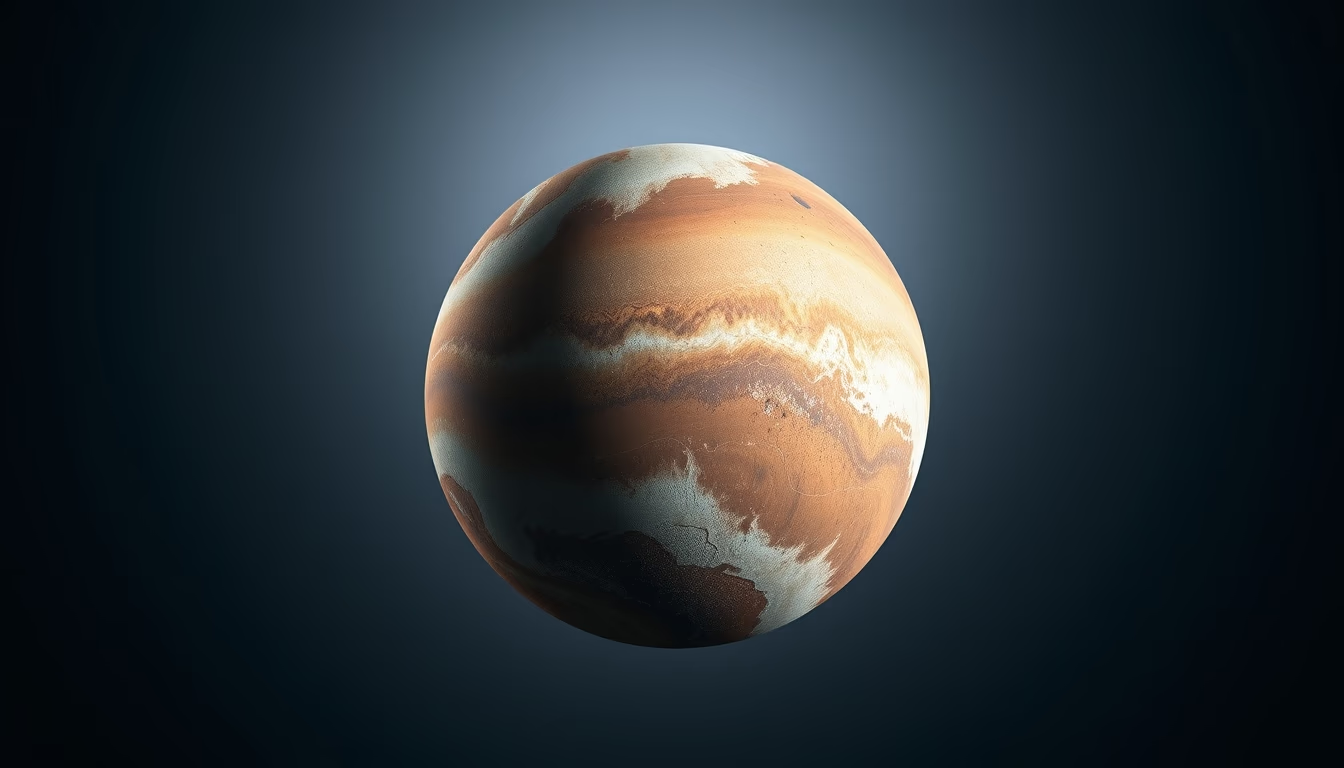
Gas giant ringed exoplanet
1344×768 · AVIF · CC BY 4.0
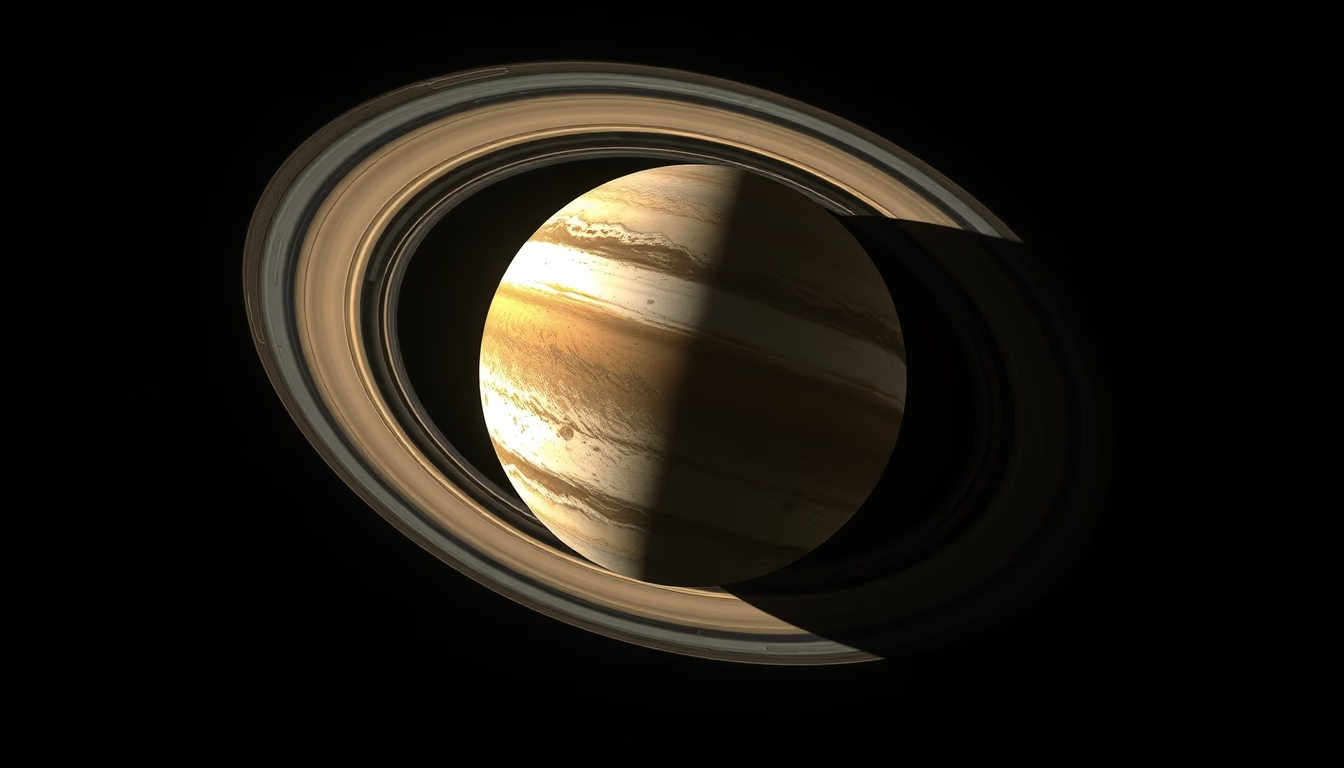
Ringed gas giant exoplanets are hypothetical objects that intrigue astronomers, suggesting complex planetary systems beyond the Solar System.
About this subject
The detection of rings around gas giant exoplanets has not yet been confirmed unequivocally, but promising candidates like J1407b suggest the possibility of massive ring systems. J1407b, an exoplanet discovered in 2012, exhibits a light curve that indicates a ring system about 200 times the diameter of Saturn's rings. This discovery was possible through the transit method, where the dimming of the host star's light reveals structures around the planet. Exoplanetary rings can be composed of dust, ice, and rocky debris, similar to Saturn's rings, but on much larger scales. They may also influence moon formation, as particles in the rings can aggregate to form natural satellites. The presence of rings can affect the amount of light reflected by the planet and even its climate, depending on orientation and composition. Furthermore, studying exoplanetary rings helps understand orbital dynamics and the evolution of planetary systems. Another interesting candidate is the exoplanet HD 209458b, which has shown signs of a possible hydrogen ring around its expanding atmosphere. Although no definitive confirmation exists for any case, the search for exoplanet rings continues with telescopes like the James Webb Space Telescope, which can detect spectral signatures of ring materials. Confirmation of a ring system around a gas giant exoplanet would have important implications for planet formation theory, as rings may be remnants of the protoplanetary disk that gave birth to the planet. In short, the possibility of rings on gas giant exoplanets is an active area of research that connects astronomical observations with models of planetary evolution.
Frequently Asked Questions
Are there confirmed ringed exoplanets?
To date, no exoplanet with rings has been definitively confirmed. Candidates like J1407b and HD 209458b show evidence, but further observations are needed for confirmation.
How do astronomers detect rings on exoplanets?
The primary method is the transit technique, analyzing the light curve of the host star. Rings cause additional brightness variations during transit, distinct from a ringless planet.
Why is finding rings on exoplanets important?
Rings provide clues about the planet's formation and evolution, indicating material that could form moons. They also help understand the composition and dynamics of planetary systems beyond our own.
Direct URL
https://pub-c7d6a6ea828543ac903a74a341ccb2e1.r2.dev/imagens/gas-giant-ringed-exoplanet-magazine-editorial-fresh3.avifHow to credit
Include a visible link back to UtilizAí. Copy one of the snippets below:
<a href="https://xn--utiliza-eza.com/en/midia/imagens/gas-giant-ringed-exoplanet-magazine-editorial-fresh3">Gas giant ringed exoplanet</a> by <a href="https://xn--utiliza-eza.com">UtilizAí</a>, licensed under <a href="https://creativecommons.org/licenses/by/4.0/">CC BY 4.0</a>.
[Gas giant ringed exoplanet](https://xn--utiliza-eza.com/en/midia/imagens/gas-giant-ringed-exoplanet-magazine-editorial-fresh3) by [UtilizAí](https://xn--utiliza-eza.com), CC BY 4.0
License: CC-BY-4.0