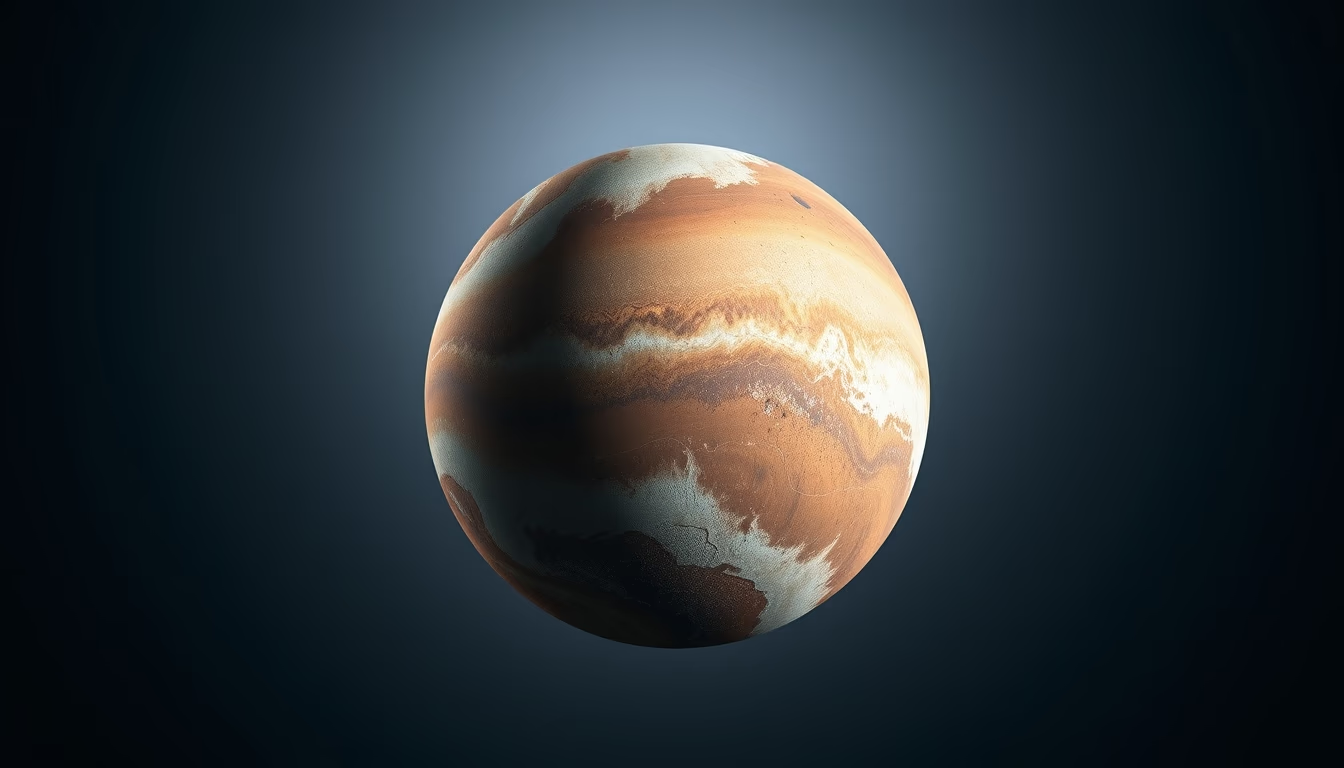
Gas giant ringed exoplanet
1344×768 · AVIF · CC BY 4.0
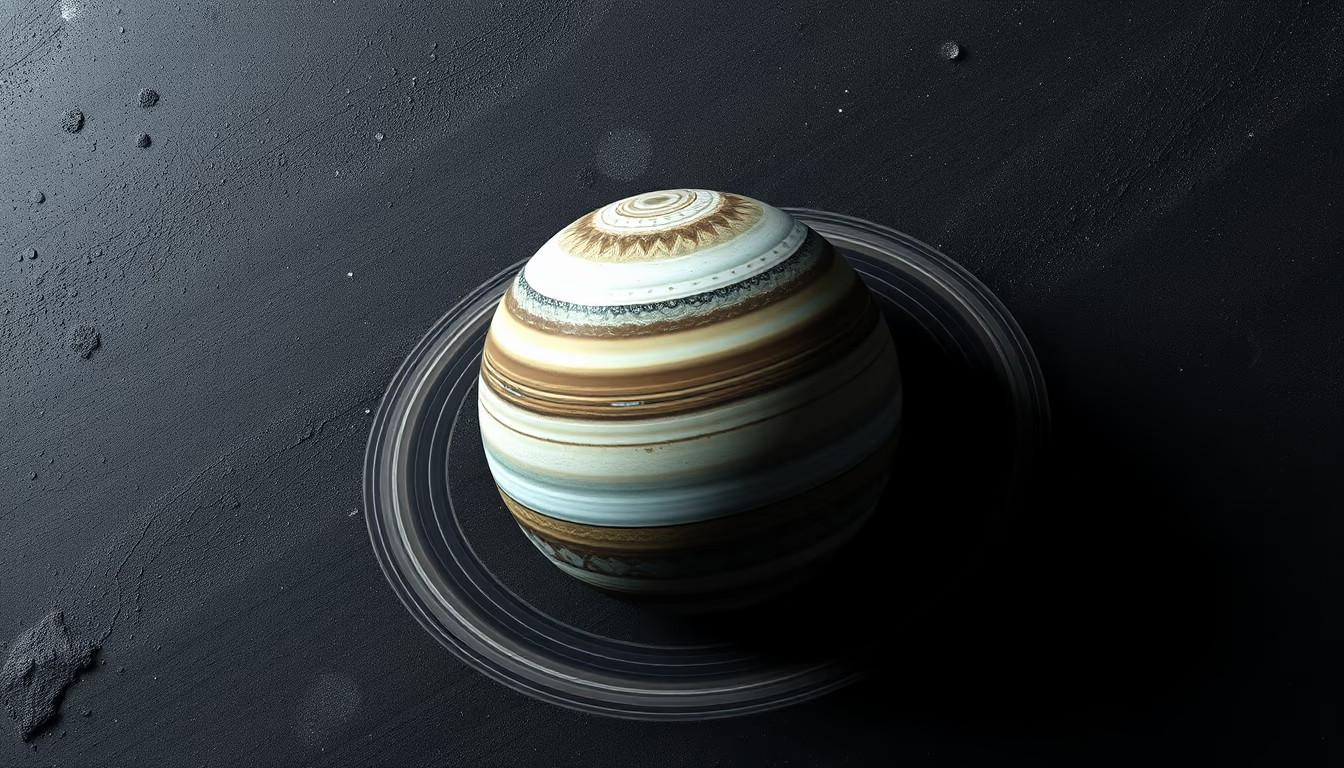
Ringed gas giant exoplanets are rare but reveal clues about planetary formation. Examples include J1407b, with a ring system 200 times larger than Saturn's.
About this subject
Ringed gas giant exoplanets are fascinating and relatively rare objects in astronomy. Unlike the gas giants in our solar system, such as Saturn, these distant worlds can possess much larger and more complex ring systems. The most notable example is J1407b, a planet discovered in 2012 orbiting the young star J1407. Its ring system is so vast that if it were in Saturn's place, it would dominate Earth's night sky, visible to the naked eye. The rings of J1407b are estimated to have a diameter of approximately 120 million kilometers, about 200 times the diameter of Saturn's rings.
Detecting rings on exoplanets is challenging. The most common method is transit photometry, where the star's brightness dip as the planet passes in front reveals the presence of rings. For J1407b, the transit lasted 56 days and showed complex dimming patterns, indicating ring gaps similar to Saturn's, suggesting possible exomoons. Other candidates include the exoplanet PDS 70b, which may have a circumplanetary disk of dust and gas, but not yet confirmed as classic rings.
The origin and longevity of rings are open questions. Rings can form from debris from moon collisions or capture of cometary material. In young planets, thick rings may be temporary, evolving into moons. The study of exoplanetary rings helps understand accretion processes and planetary system evolution. ESA's PLATO mission, scheduled for 2026, may detect more transits with ring signatures.
Trivia: J1407b's ring system is so massive that it contains material equivalent to several Earth masses. If ever observed with next-generation telescopes like the Extremely Large Telescope (ELT), we could obtain direct images of these rings and study their spectral composition.
Frequently Asked Questions
How are rings detected on exoplanets?
The main method is transit photometry. When a planet passes in front of its star, rings cause extra brightness dips and asymmetric patterns in the light curve, which can be modeled to reveal ring structure.
What is the largest known ring system on an exoplanet?
The largest known ring system belongs to exoplanet J1407b. Its rings span about 120 million kilometers in diameter, over 200 times the size of Saturn's rings. They are thought to contain gaps indicating forming exomoons.
Are ringed exoplanets common?
No. Only a few ring candidates have been detected so far. The rarity may be due to detection difficulties or because durable rings are less common in mature planetary systems. ESA's PLATO mission will help find more examples.
Direct URL
https://pub-c7d6a6ea828543ac903a74a341ccb2e1.r2.dev/imagens/gas-giant-ringed-exoplanet-isometric-flat-lay-fresh12.avifHow to credit
Include a visible link back to UtilizAí. Copy one of the snippets below:
<a href="https://xn--utiliza-eza.com/en/midia/imagens/gas-giant-ringed-exoplanet-isometric-flat-lay-fresh12">Gas giant ringed exoplanet</a> by <a href="https://xn--utiliza-eza.com">UtilizAí</a>, licensed under <a href="https://creativecommons.org/licenses/by/4.0/">CC BY 4.0</a>.
[Gas giant ringed exoplanet](https://xn--utiliza-eza.com/en/midia/imagens/gas-giant-ringed-exoplanet-isometric-flat-lay-fresh12) by [UtilizAí](https://xn--utiliza-eza.com), CC BY 4.0
License: CC-BY-4.0