Binary star sunset
1344×768 · AVIF · CC BY 4.0

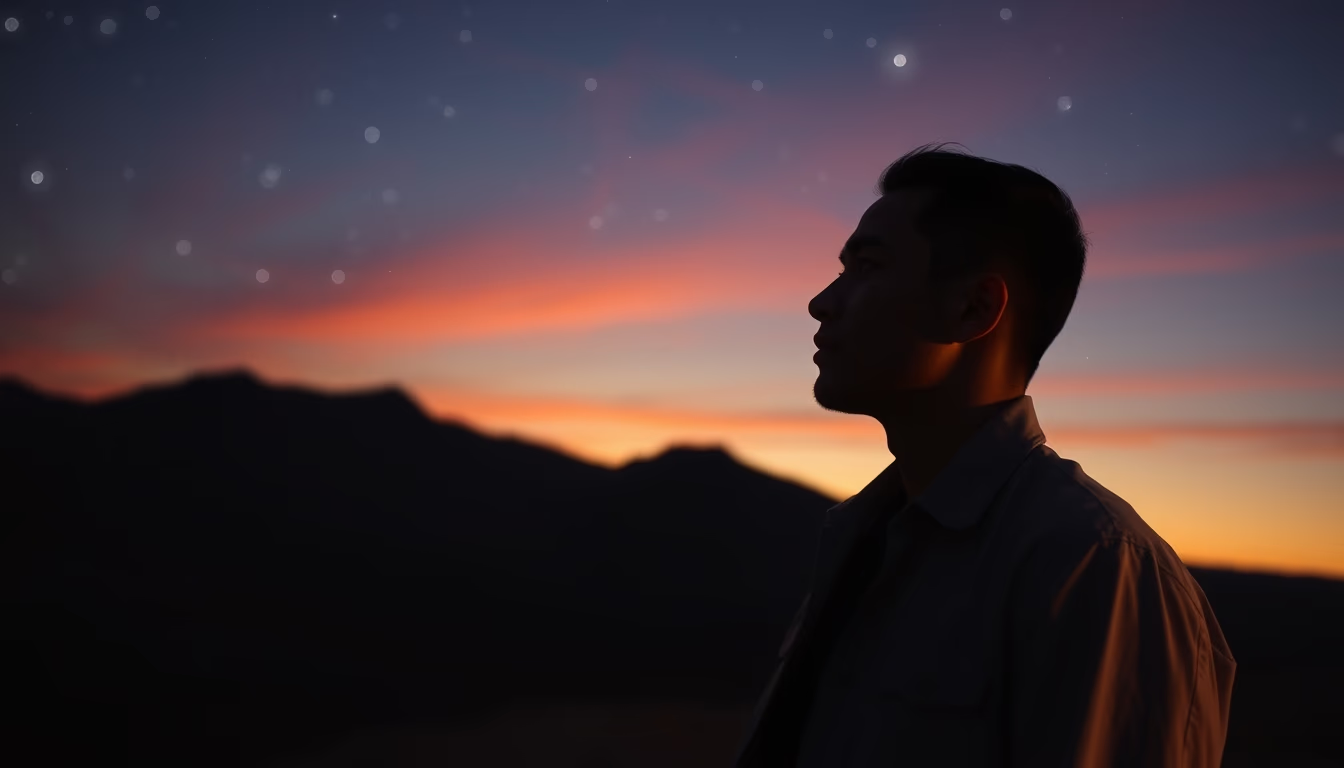
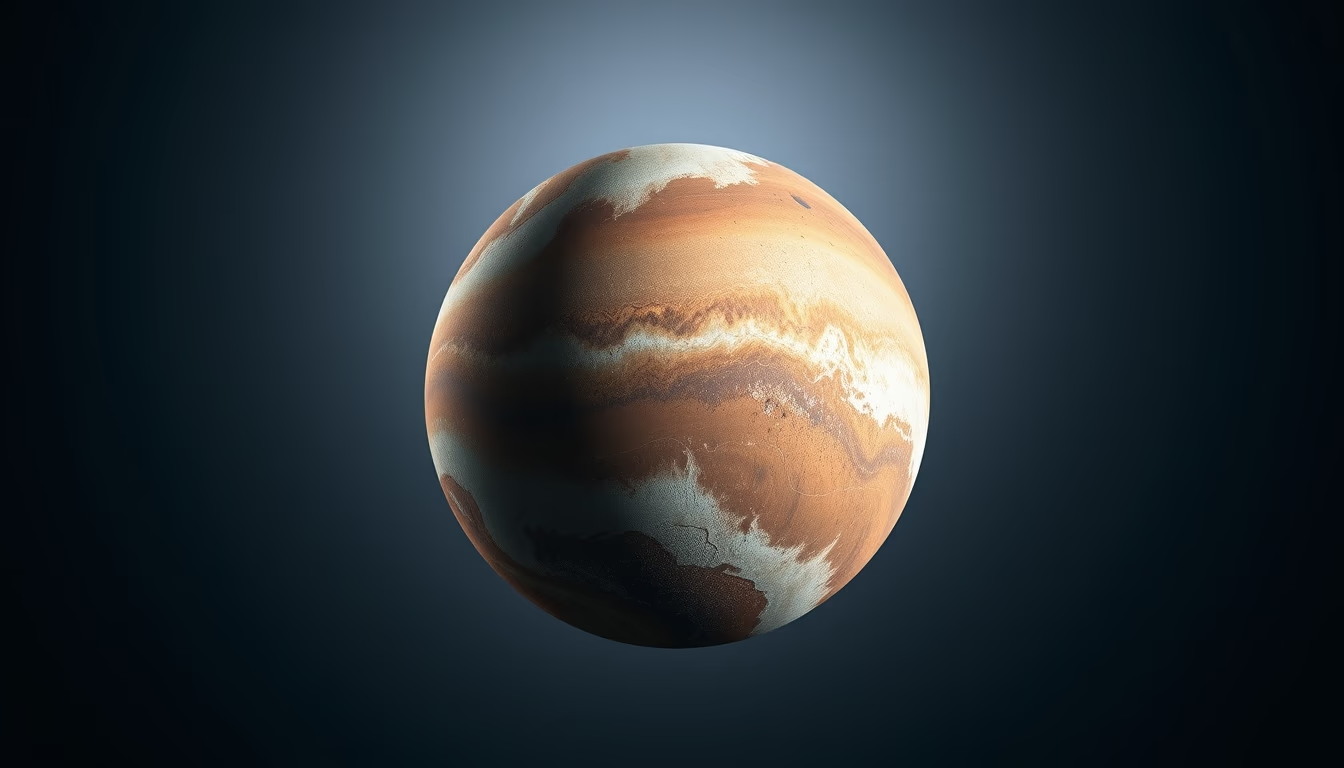
Sunset scenes in binary star systems, where two suns set on the horizon of exoplanets, spark scientific and popular imagination.
About this subject
Binary star systems, consisting of two stars orbiting a common center of mass, are extremely common in the Milky Way. It is estimated that about half of all Sun-like stars are part of multiple systems. The presence of exoplanets in such environments, once considered unlikely, was confirmed by discoveries such as Kepler-16b, a Saturn-sized planet that orbits both stars of a binary pair 200 light-years from Earth. Discovered in 2011 by the Kepler telescope, this world is often called 'Tatooine' after the fictional planet in Star Wars.
Orbital dynamics in binary systems are complex. Planets can orbit one of the stars (S-type orbit) or both (P-type or circumbinary orbit). For stability, distances must be carefully calculated: if a planet is too close to one star, it may be ejected or collide. Circumbinary planets must be at a minimum distance of about three to four times the separation between the stars to maintain long-term stable orbits.
The phenomenon of a sunset on a planet with two suns captivates both scientists and the public. On Earth, sunsets are colored by Rayleigh scattering, resulting in reddish and orange hues. On a binary planet, colors can vary according to the stars' temperatures and spectral types. For instance, if one star is cooler and redder and the other hotter and bluer, the sky could display unique combinations of tones, creating distinct visual spectacles at each twilight. NASA and other agencies have produced artistic simulations based on real exoplanet data, such as Kepler-16b and Kepler-47c.
Beyond scientific interest, the idea of a binary sunset permeates pop culture, immortalized in films like Star Wars. For astrobiology, these systems are targets for habitability studies: the habitable zone around binary stars can be wider or narrower depending on orbital configuration, and dual stellar radiation may influence climate and photosynthesis in potential life forms. The search for exoplanets in binary systems continues with missions like TESS and the James Webb Space Telescope, which may reveal atmospheres and surface conditions on these fascinating worlds.
Frequently Asked Questions
Is it possible for life to exist on a planet with two suns?
Yes, in theory. The habitable zone (region with temperatures suitable for liquid water) can exist around binary stars, depending on orbital configuration. However, conditions may be more extreme, with varying radiation and complex seasons. No confirmed binary exoplanet has been classified as potentially habitable so far.
What is the most famous binary exoplanet?
Kepler-16b is the most iconic, discovered in 2011 by the Kepler mission. It orbits two dwarf stars, one orange and one red, every 229 days. Its discovery proved that circumbinary planets can exist and inspired comparisons to the fictional planet Tatooine from Star Wars.
What would a sunset look like on a binary planet?
It would depend on the stars' characteristics. If one is cooler and redder and the other hotter and bluer, the sky could display blended shades of orange, pink, and violet. The duration of twilight would also differ, as the stars set at different times, creating a prolonged spectacle.
Direct URL
https://pub-c7d6a6ea828543ac903a74a341ccb2e1.r2.dev/imagens/binary-star-sunset-studio-still-life-fresh11.avifHow to credit
Include a visible link back to UtilizAí. Copy one of the snippets below:
<a href="https://xn--utiliza-eza.com/en/midia/imagens/binary-star-sunset-studio-still-life-fresh11">Binary star sunset</a> by <a href="https://xn--utiliza-eza.com">UtilizAí</a>, licensed under <a href="https://creativecommons.org/licenses/by/4.0/">CC BY 4.0</a>.
[Binary star sunset](https://xn--utiliza-eza.com/en/midia/imagens/binary-star-sunset-studio-still-life-fresh11) by [UtilizAí](https://xn--utiliza-eza.com), CC BY 4.0
License: CC-BY-4.0