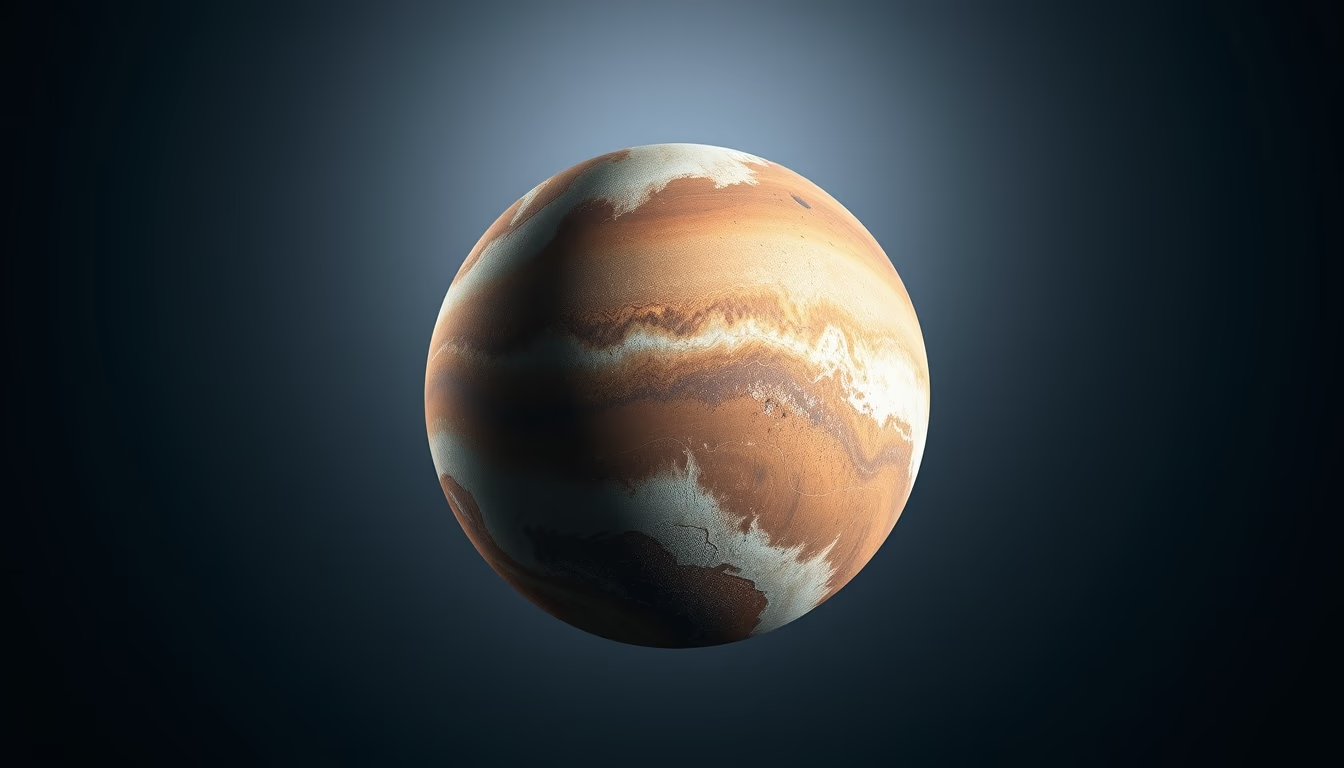
Binary star sunset
1344×768 · AVIF · CC BY 4.0

Pôr do sol em um planeta orbitando um sistema binário: como seriam as cores e sombras em um mundo com dois sóis?
Sobre o tema
Sistemas binários de estrelas são compostos por duas estrelas orbitando um centro de massa comum. Eles são extremamente comuns na Via Láctea: estima-se que cerca de metade de todas as estrelas estejam em sistemas múltiplos. Quando um planeta orbita um sistema binário, o espetáculo de um pôr do sol pode ser dramaticamente diferente do que vemos na Terra. Em vez de um único astro se pondo, o observador veria dois sóis, podendo haver ocultações, eclipses e variações de brilho conforme as órbitas se alinham.
A cor do céu dependeria dos tipos espectrais das estrelas. Uma estrela fria do tipo M (anã vermelha) produziria tons alaranjados profundos, enquanto uma estrela quente do tipo A ou B iluminaria com luz azulada. Em sistemas próximos, o aquecimento diferencial poderia gerar ventos atmosféricos intensos e padrões climáticos exóticos. O exemplo mais famoso na ficção científica é o planeta Tatooine de Star Wars, mas na realidade planetas circumbinários já foram descobertos, como Kepler-16b, que orbita duas anãs alaranjadas.
A visibilidade do pôr do sol binário depende da geometria orbital. Se o planeta estiver em uma órbita circunbinária (ao redor de ambas as estrelas), ambos os sóis podem se pôr simultaneamente ou em momentos diferentes, criando entardeceres prolongados. Já em uma órbita ao redor de apenas uma das estrelas (tipo S), a segunda estrela apareceria como um ponto brilhante no céu, similar a Vênus visto da Terra, mas mais intenso.
Curiosidade: em sistemas onde as estrelas estão muito próximas, efeitos de maré podem fazer com que uma delas se deforme, criando um brilho variável. A temperatura de um planeta nesse cenário também oscilaria de forma complexa, podendo ter estações muito diferentes das terrestres. Astrônomos usam o método de trânsito para detectar esses planetas, medindo as pequenas variações de brilho quando o planeta passa na frente de uma das estrelas.
Perguntas frequentes
O que é um sistema binário de estrelas?
É um sistema onde duas estrelas orbitam um centro de massa comum. Elas podem ser semelhantes ao Sol ou de tipos diferentes, como anãs vermelhas e gigantes azuis.
Existem planetas reais em sistemas binários?
Sim. O primeiro descoberto foi Kepler-16b, que orbita duas anãs laranjas. Já foram confirmados dezenas de planetas circumbinários e outros que orbitam apenas uma estrela do par.
Como seria a cor do céu em um pôr do sol binário?
Depende das estrelas. Uma estrela fria dá tons alaranjados, enquanto uma quente dá tons azulados. A combinação pode gerar cores complexas, como púrpura ou verde, dependendo da atmosfera planetária.
URL direta
https://pub-c7d6a6ea828543ac903a74a341ccb2e1.r2.dev/imagens/binary-star-sunset-macro-closeup-fresh1.avifComo creditar
Inclua um link visível de volta pro UtilizAí. Copie um dos snippets abaixo:
<a href="https://xn--utiliza-eza.com/midia/imagens/binary-star-sunset-macro-closeup-fresh1">Binary star sunset</a> by <a href="https://xn--utiliza-eza.com">UtilizAí</a>, licensed under <a href="https://creativecommons.org/licenses/by/4.0/">CC BY 4.0</a>.
[Binary star sunset](https://xn--utiliza-eza.com/midia/imagens/binary-star-sunset-macro-closeup-fresh1) by [UtilizAí](https://xn--utiliza-eza.com), CC BY 4.0
Licença: CC-BY-4.0