Binary star sunset
1344×768 · AVIF · CC BY 4.0
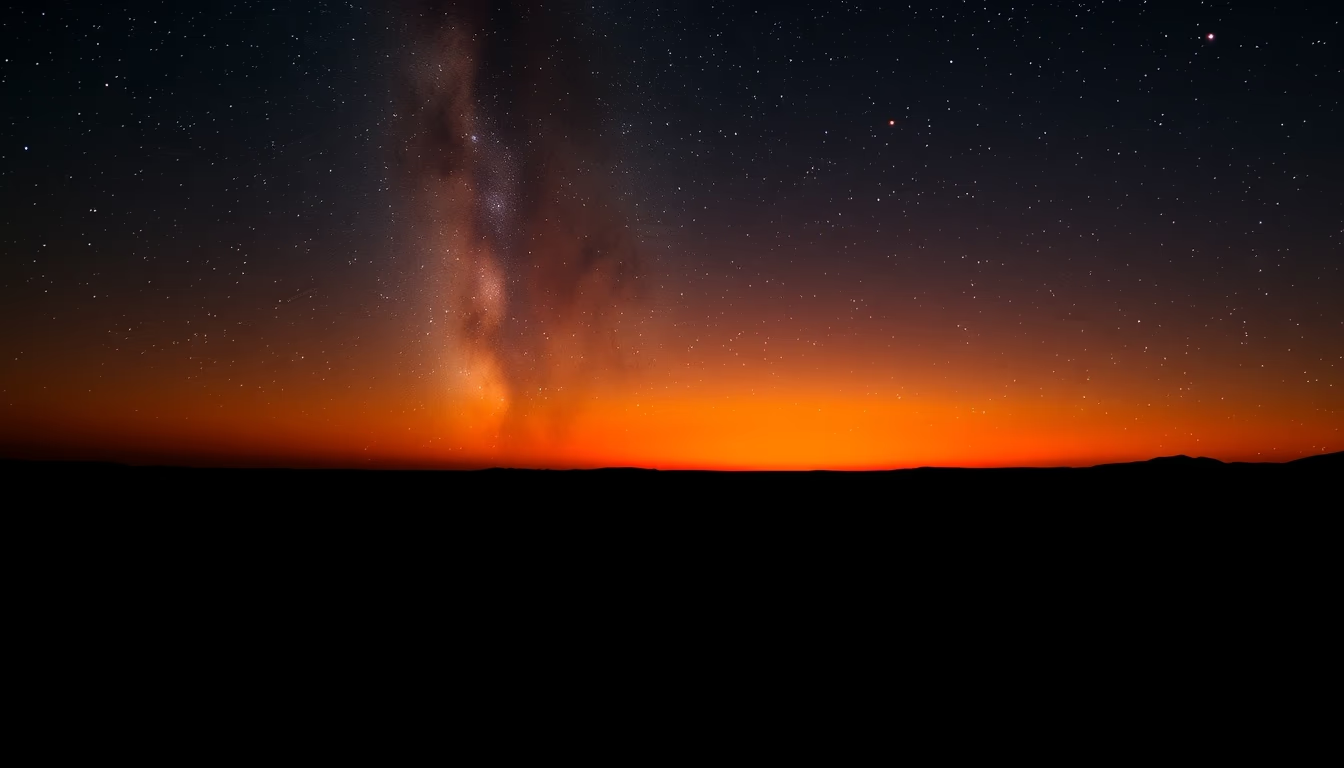
Sunset scenes on exoplanets in binary star systems reveal spectacular skies with two stars on the horizon, sparking curiosity about habitability.
About this subject
In binary star systems, two suns orbit a common center of mass, creating celestial landscapes dramatically different from what we see on Earth. When an exoplanet orbits one of these stars, or both, the sunset can present two stellar disks setting at different times, with colors varying according to temperatures and atmospheric compositions. Scientists estimate that more than half of Sun-like stars are part of multiple systems, making binary exoplanets a frequent subject in astrobiology. The most famous example is the planet Kepler-16b, discovered in 2011, which orbits a pair of dwarf stars and was immortalized as the real-life "Tatooine." Orbital dynamics in these systems are complex: planets can have P-type orbits (circumbinary, around both stars) or S-type orbits (around just one, with the second as a distant companion). The habitable zone in binary systems varies depending on stellar separation, potentially being wider or more restricted. The combined radiation from two stars directly influences climate and the possible existence of liquid water on the surface. Despite challenges for life as we know it, some models suggest that stable environments are possible, especially in systems with low-mass stars. Fine art photography of these scenes not only delights but also educates about cosmic diversity and the search for potentially habitable worlds.
Frequently Asked Questions
What is a binary star system?
It is a system of two stars orbiting a common center of mass, representing about half of all stars in the Milky Way.
Are there exoplanets in binary systems?
Yes, the first was Kepler-16b in 2011. Dozens have been confirmed since, both circumbinary and orbiting one star.
Could life exist on planets with two suns?
Despite orbital instability and intense radiation, some may have stable habitable zones, especially if the stars are red dwarfs and well separated.
Direct URL
https://pub-c7d6a6ea828543ac903a74a341ccb2e1.r2.dev/imagens/binary-star-sunset-fine-art-photography-fresh3.avifHow to credit
Include a visible link back to UtilizAí. Copy one of the snippets below:
<a href="https://xn--utiliza-eza.com/en/midia/imagens/binary-star-sunset-fine-art-photography-fresh3">Binary star sunset</a> by <a href="https://xn--utiliza-eza.com">UtilizAí</a>, licensed under <a href="https://creativecommons.org/licenses/by/4.0/">CC BY 4.0</a>.
[Binary star sunset](https://xn--utiliza-eza.com/en/midia/imagens/binary-star-sunset-fine-art-photography-fresh3) by [UtilizAí](https://xn--utiliza-eza.com), CC BY 4.0
License: CC-BY-4.0