Andean textile vivid
1344×768 · AVIF · CC BY 4.0
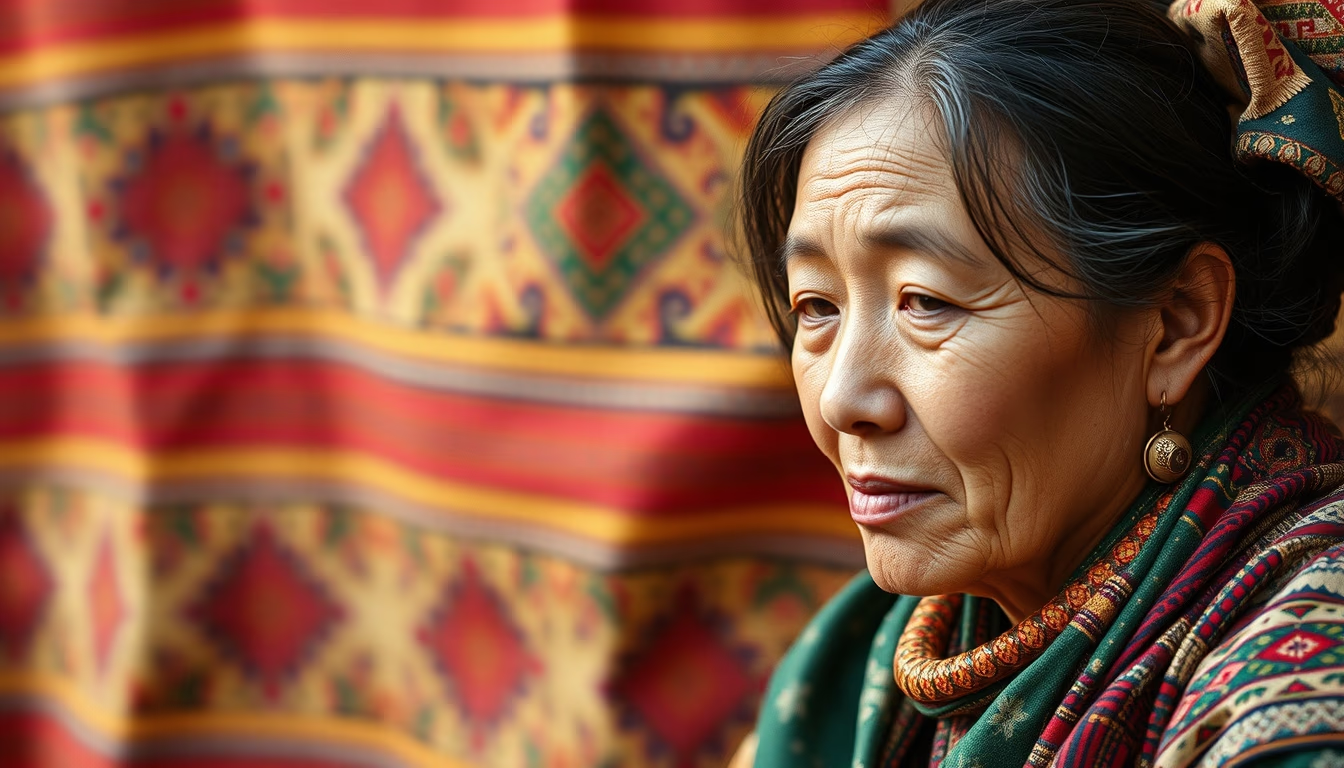
Andean weaving with naturally dyed yarns creates geometric patterns that tell millennia-old stories of the Andean peoples.
About this subject
Andean weaving is one of the oldest and most sophisticated textile traditions in the Americas, with archaeological evidence dating back to 4,000 BC in present-day Peru. Fabrics were not only clothing but also means of record-keeping, communication, and expression of cultural identity. Each geometric pattern, such as stripes, diamonds, and zigzags, carries specific meanings related to cosmology, agriculture, and social hierarchy.
Vivid colors are obtained through natural dyes extracted from plants, minerals, and insects. Cochineal, a parasite insect on cacti, produces intense reds. Indigo from the Indigofera plant yields deep blues. The root of Relbunium, known as "dyer's root," produces orangish reds. Dyeing is a careful process involving natural mordants like aluminum in certain clays to fix the colors.
Weaving is predominantly women's work, passed from mother to daughter. Backstrap looms, which allow controlling thread tension with the body, are typical of the region. Products like ponchos, blankets, and bags (chuspas) are woven with llama, alpaca, or vicuña wool, fibers known for softness and thermal insulation. In communities like Chinchero, Peru, weavers continue pre-Columbian techniques, making their work pieces of cultural resistance.
UNESCO recognized Andean weaving as Intangible Cultural Heritage in 2015, highlighting its role in transmitting ancestral knowledge. Today, designers and artisans collaborate to preserve these techniques, while the global market increasingly values the authenticity and history behind each thread.
Frequently Asked Questions
How do Andean weavers obtain the vibrant colors in their textiles?
Colors come from natural dyes: cochineal (insect) for red, indigo (plant) for blue, and Relbunium root for orange. Fixation uses mordants like aluminum-rich clay.
What is the cultural importance of geometric patterns in Andean textiles?
Each pattern carries meanings: diamonds may represent fields, zigzags rivers or serpents, and stripes lineages. They function as a visual code of identity and history.
Is Andean weaving recognized as cultural heritage?
Yes. In 2015, UNESCO inscribed traditional Andean weaving on the Intangible Cultural Heritage of Humanity list, recognizing its role in preserving ancestral knowledge and strengthening communities.
Direct URL
https://pub-c7d6a6ea828543ac903a74a341ccb2e1.r2.dev/imagens/andean-textile-vivid-film-grain-authentic-fresh5.avifHow to credit
Include a visible link back to UtilizAí. Copy one of the snippets below:
<a href="https://xn--utiliza-eza.com/en/midia/imagens/andean-textile-vivid-film-grain-authentic-fresh5">Andean textile vivid</a> by <a href="https://xn--utiliza-eza.com">UtilizAí</a>, licensed under <a href="https://creativecommons.org/licenses/by/4.0/">CC BY 4.0</a>.
[Andean textile vivid](https://xn--utiliza-eza.com/en/midia/imagens/andean-textile-vivid-film-grain-authentic-fresh5) by [UtilizAí](https://xn--utiliza-eza.com), CC BY 4.0
License: CC-BY-4.0