Amazonian basketry
1344×768 · AVIF · CC BY 4.0
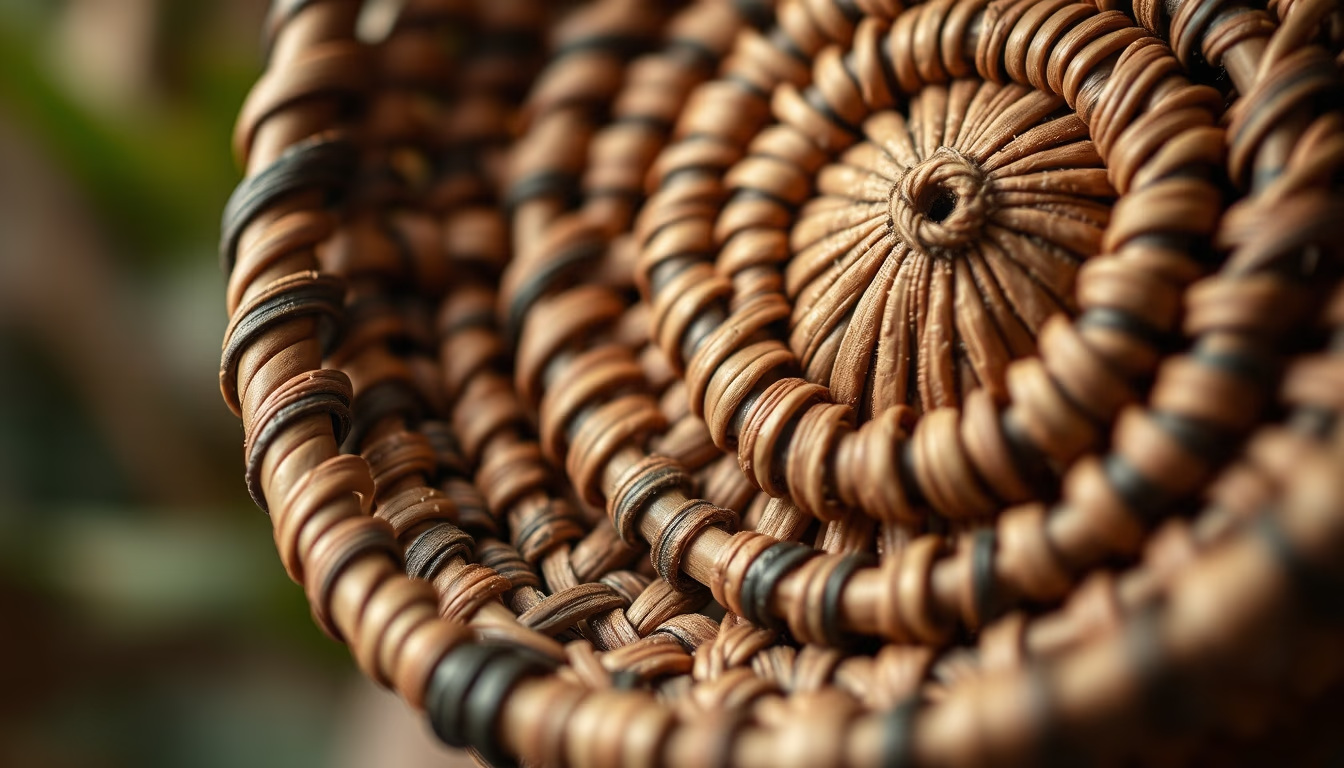
Amazonian basketry is an ancient tradition of indigenous peoples, using natural fibers and techniques passed down through generations.
About this subject
Amazonian basketry is one of the oldest and most sophisticated expressions of indigenous art in the region. Using fibers extracted from palms such as arumã, tucum, and buriti, artisans create pieces that combine functionality and beauty. Each ethnic group has specific methods: the Wayana-Apalai are known for complex geometric weaves, while the Baniwa use arumã for everyday baskets. Techniques include spiral weaving, straight weave, and interlacing, requiring years of practice.
The baskets serve multiple functions: storing food, transporting objects, sifting flour, and even in shamanic rituals. The designs are not merely aesthetic; they often represent animals, plants, or cosmic elements, carrying spiritual and historical meanings. For example, the turtle pattern may symbolize longevity, while the spiral refers to the cycle of life.
Production is seasonal, respecting the harvest cycle of fibers. Women generally master the technique, though men also participate in some communities. Today, basketry has gained international market through fair trade, helping preserve tradition and generate income. Organizations like the Instituto Socioambiental support the valorization of this ancestral knowledge, which faces risks from biodiversity loss and cultural pressure.
Despite modernization, Amazonian basketry maintains its relevance. Young indigenous people are incorporating new colors and shapes, ensuring the art continues to evolve. Exhibitions in museums and craft fairs showcase the richness of this practice, which is an intangible heritage of Brazil.
Frequently Asked Questions
What raw materials are most common in Amazonian basketry?
The most used fibers are arumã, tucum, buriti, and envira, extracted from palms and trees of the forest. Each fiber has specific characteristics: arumã is flexible and resistant, ideal for fine weaves; tucum is more rigid, used for structural baskets.
How are basketry techniques passed down through generations?
Learning occurs through observation and practice from childhood, usually within the family. Older women teach younger girls the gestures and patterns, a process that also transmits stories and cultural values.
What is the meaning of the geometric patterns on baskets?
The patterns are not random; they represent elements of nature and indigenous cosmology, such as animals, plants, rivers, and constellations. For example, the snake design may symbolize protection, and the diamond shape refers to fertility.
Direct URL
https://pub-c7d6a6ea828543ac903a74a341ccb2e1.r2.dev/imagens/amazonian-basketry-macro-closeup-fresh18.avifHow to credit
Include a visible link back to UtilizAí. Copy one of the snippets below:
<a href="https://xn--utiliza-eza.com/en/midia/imagens/amazonian-basketry-macro-closeup-fresh18">Amazonian basketry</a> by <a href="https://xn--utiliza-eza.com">UtilizAí</a>, licensed under <a href="https://creativecommons.org/licenses/by/4.0/">CC BY 4.0</a>.
[Amazonian basketry](https://xn--utiliza-eza.com/en/midia/imagens/amazonian-basketry-macro-closeup-fresh18) by [UtilizAí](https://xn--utiliza-eza.com), CC BY 4.0
License: CC-BY-4.0