Aboriginal dot painting
1344×768 · AVIF · CC BY 4.0
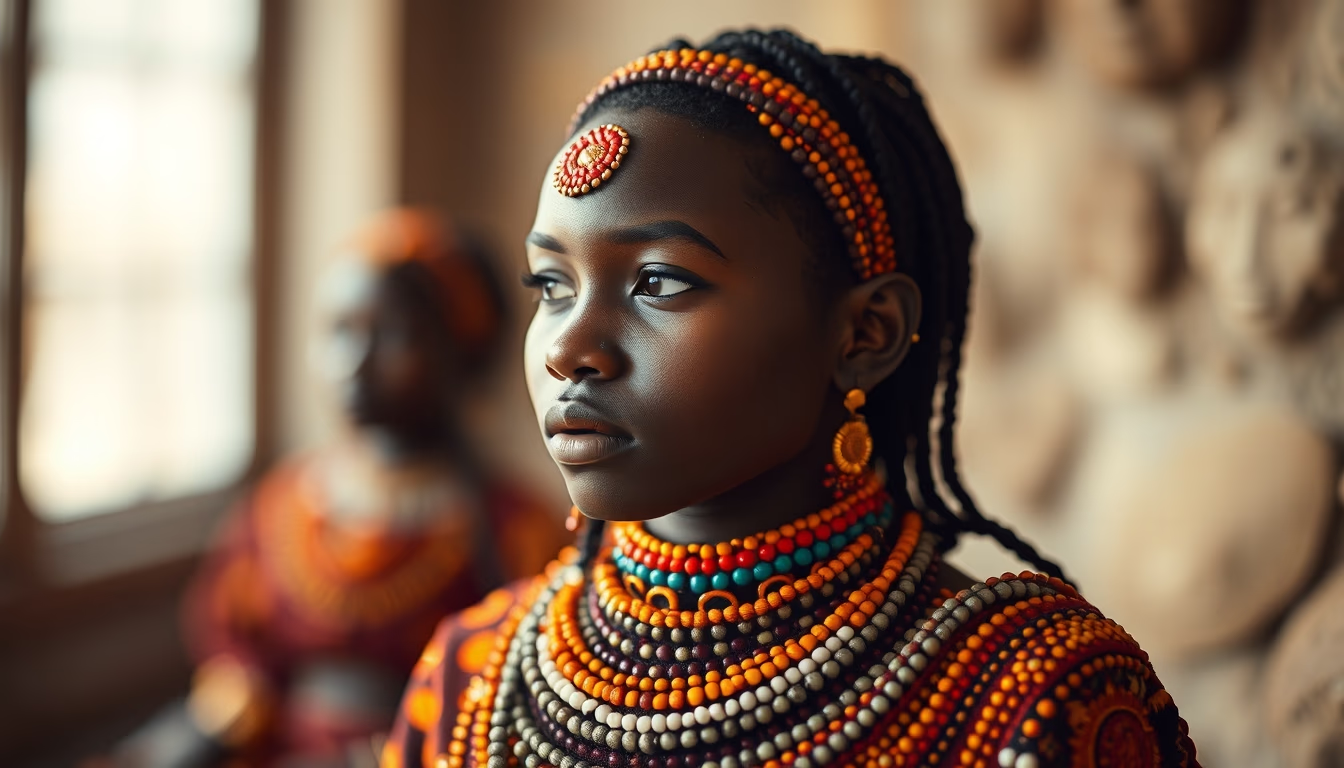
Aboriginal dot painting is an Australian art form using dot patterns to tell Dreamtime stories, with origins in sacred ceremonies.
About this subject
Aboriginal dot painting is a technique developed by Indigenous Australians, particularly the Anangu people from the Central Desert. It gained international prominence in the 1970s through the Papunya Tula art movement. Artists use fine brushes or sticks to apply dots of paint, creating intricate patterns that depict landscapes, animals, and ancestral stories tied to the Dreamtime, the Aboriginal cosmology of creation.
Originally, these designs were painted on bodies, sand, or ceremonial objects. The shift to canvas and acrylics in the 20th century allowed broader dissemination while preserving sacred narratives. Each dot's placement, color, and density carry specific meanings, often restricted by clan or gender. For instance, concentric circles may represent a waterhole or campsite, while meandering lines denote ancestral travel routes.
Today, dot painting is globally recognized as a pinnacle of Indigenous Australian art. Renowned artists like Emily Kame Kngwarreye and Clifford Possum Tjapaltjarri have shaped its evolution. The style is legally protected under Indigenous cultural and intellectual property laws. Despite its abstract appearance, every piece functions as a cultural map, encoding knowledge about survival, law, and spirituality.
Interestingly, the dot technique was also used to obscure sacred symbols from uninitiated viewers. Deep meanings are reserved for community elders, adding a layer of cultural protection. This makes dot painting not just an art form but a powerful tool for cultural preservation and identity.
Frequently Asked Questions
What is the origin of Aboriginal dot painting?
Dot painting originated in the Central Desert of Australia among the Anangu people. While dotting was used in ceremonies, it became a canvas art form through the Papunya Tula movement starting in 1971.
Do the dots have specific meanings?
Yes. Each dot, its color, and position carry meanings tied to the Dreamtime. Circles may represent places or events, while lines symbolize ancestral paths. Many meanings are secret, revealed only to initiated community members.
Is Aboriginal dot painting commercially available?
Yes, but with restrictions. Authentic works are created by Indigenous artists and sold through licensed galleries. Laws protect cultural rights, prohibiting unauthorized reproduction of sacred symbols.
Direct URL
https://pub-c7d6a6ea828543ac903a74a341ccb2e1.r2.dev/imagens/aboriginal-dot-painting-tilt-shift-miniature-fresh18.avifHow to credit
Include a visible link back to UtilizAí. Copy one of the snippets below:
<a href="https://xn--utiliza-eza.com/en/midia/imagens/aboriginal-dot-painting-tilt-shift-miniature-fresh18">Aboriginal dot painting</a> by <a href="https://xn--utiliza-eza.com">UtilizAí</a>, licensed under <a href="https://creativecommons.org/licenses/by/4.0/">CC BY 4.0</a>.
[Aboriginal dot painting](https://xn--utiliza-eza.com/en/midia/imagens/aboriginal-dot-painting-tilt-shift-miniature-fresh18) by [UtilizAí](https://xn--utiliza-eza.com), CC BY 4.0
License: CC-BY-4.0