Amazonian basketry
1344×768 · AVIF · CC BY 4.0
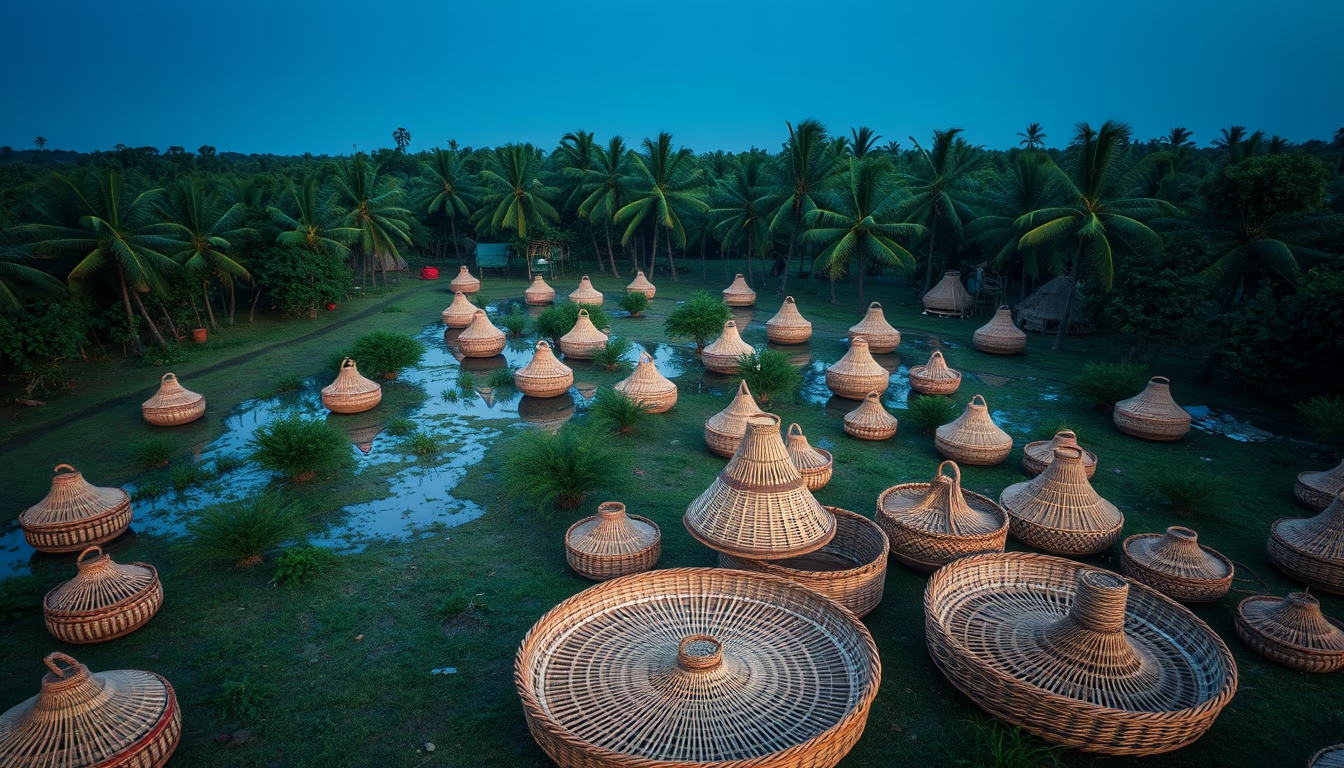
Amazonian basketry: ancient art of indigenous peoples, using plant fibers from the forest, with techniques passed down through generations.
About this subject
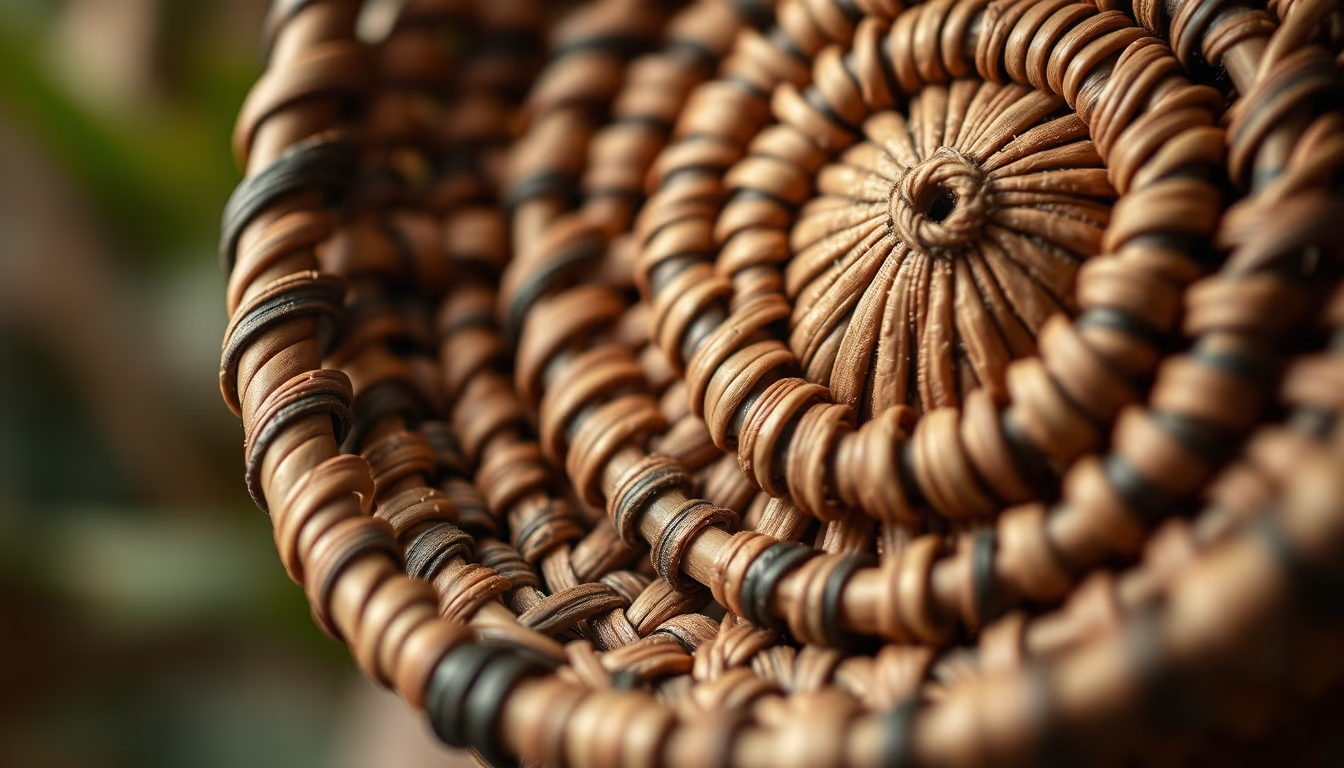
Amazonian basketry is one of the oldest artistic expressions of the indigenous peoples of the region. Using plant fibers such as buriti palm straw, titica vine, arumã, and tucum, artisans create utilitarian and ritual pieces with complex weaves. Each ethnic group develops distinct geometric patterns that carry symbolic meanings linked to cosmology and daily life. For example, the Baniwa and Tukano produce baskets with designs representing animals, spirits, and natural elements.
Weaving techniques range from coil over a foundation to straight weave and interlocking. Baskets, sieves, hampers, and mats are made for storing food, carrying crops, sifting flour, or serving in ceremonies. The collection of fibers is done sustainably, respecting the plant's life cycle, demonstrating the deep ecological knowledge of indigenous peoples.
Today, Amazonian basketry has gained prominence in the art and design market, valued for its beauty and technique. Fair trade initiatives and cultural revitalization projects help preserve this ancestral knowledge that faces extinction due to modern societal pressures. Many artisans see the sale of their pieces as a complementary source of income, strengthening their communities' cultural identity.
Interestingly, basketry fragments found in Amazonian archaeological sites date back thousands of years, evidencing the long tradition of this art. Each piece is unique, carrying the history and skill of its creator, and represents a link between past and present in the rich cultural tapestry of the Amazon.
Frequently Asked Questions
What materials are used in Amazonian basketry?
The main materials are plant fibers such as buriti palm straw, titica vine, arumã, tucum, and guarumã. Each fiber has specific characteristics of strength and flexibility, chosen according to the type of piece being woven.
Which indigenous peoples are known for their basketry?
Several peoples are renowned for their basketry, including the Baniwa, Tukano, Yanomami, Ashaninka, Kayapó, and the peoples of the Rio Negro. Each ethnic group has its own techniques and patterns.
What is the cultural importance of basketry in the Amazon?
Basketry has utilitarian, ritual, and symbolic importance. It is used daily for transport and storage, in religious ceremonies, and as an artistic expression that transmits ancestral knowledge and cultural identity.
Direct URL
https://pub-c7d6a6ea828543ac903a74a341ccb2e1.r2.dev/imagens/amazonian-basketry-aerial-drone-shot-fresh17.avifHow to credit
Include a visible link back to UtilizAí. Copy one of the snippets below:
<a href="https://xn--utiliza-eza.com/en/midia/imagens/amazonian-basketry-aerial-drone-shot-fresh17">Amazonian basketry</a> by <a href="https://xn--utiliza-eza.com">UtilizAí</a>, licensed under <a href="https://creativecommons.org/licenses/by/4.0/">CC BY 4.0</a>.
[Amazonian basketry](https://xn--utiliza-eza.com/en/midia/imagens/amazonian-basketry-aerial-drone-shot-fresh17) by [UtilizAí](https://xn--utiliza-eza.com), CC BY 4.0
License: CC-BY-4.0