Aboriginal dot painting
1344×768 · AVIF · CC BY 4.0
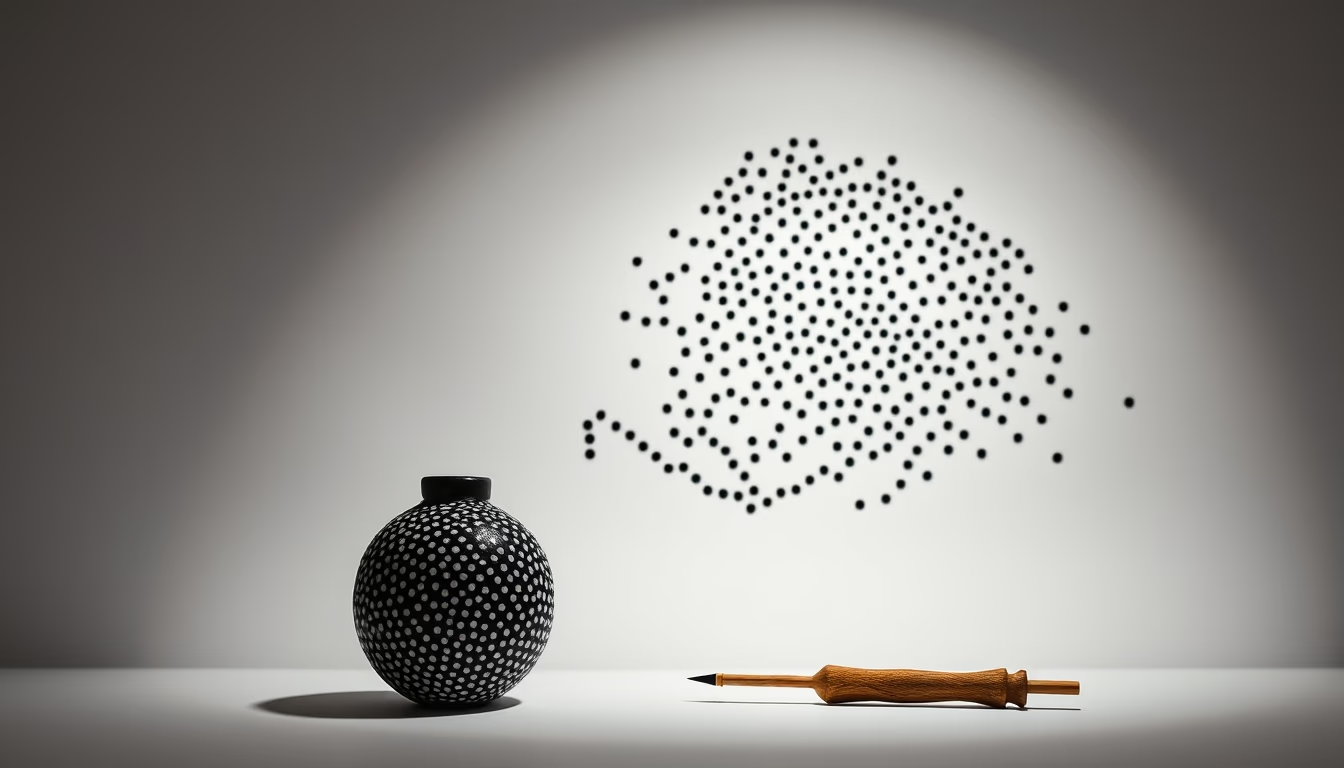
Aboriginal dot painting is an ancient art form of Australian indigenous peoples, using dot patterns to tell stories and represent the Dreamtime.
About this subject
Aboriginal dot painting, also known as dot painting, emerged in the 1970s in the Papunya community of central Australia. It originated as an adaptation of body and sand painting rituals onto canvas, allowing sacred knowledge to be shared in a way hidden from uninitiated viewers. The dots function as a visual code, concealing ceremonial details while telling narratives of the Dreamtime, the creation period according to Aboriginal cosmology.
Artists use natural pigments such as ochre, clay, and charcoal, or modern acrylic paints, applied with fine brushes or sticks. Each region has distinct styles, including concentric circles, wavy lines, and fields of dots that represent topographic maps, migration routes, or ancestral stories. The brush tip is often dipped in paint and pressed gently, creating rhythmic patterns that require great precision.
Dot painting gained international recognition in recent decades, with works exhibited at museums like the Musée du Quai Branly in Paris and the Metropolitan Museum of Art in New York. Artists such as Emily Kame Kngwarreye and Clifford Possum Tjapaltjarri became icons, with canvases selling for millions at auction. Despite commercialization, communities maintain strict cultural protocols to protect sacred themes and ensure benefits return to indigenous peoples.
Authenticity is monitored by organizations like the Aboriginal Art Association of Australia, which verifies origin and compliance with indigenous copyright laws. Dot painting is not merely an aesthetic expression but a vehicle for identity, resistance, and intergenerational knowledge transmission. Its preservation is crucial for the cultural survival of Aboriginal Australians.
Frequently Asked Questions
What is the origin of Aboriginal dot painting?
Aboriginal dot painting began in the 1970s in the Papunya community of central Australia, as a way for local artists to transfer ritual sand drawings onto canvas. This allowed sacred knowledge to be shared with the outside world without violating tribal secrets.
What materials are used in dot painting?
Traditionally, artists used natural pigments like ochre, clay, and charcoal. Today, acrylic paints are common, applied with fine brushes or sticks. The technique involves precise dots that form rhythmic patterns.
How is the authenticity of Aboriginal art ensured?
Authenticity is verified by organizations such as the Aboriginal Art Association of Australia, which certifies the work's origin and compliance with indigenous copyright laws. Many communities also have labels identifying the artist and clan story.
Direct URL
https://pub-c7d6a6ea828543ac903a74a341ccb2e1.r2.dev/imagens/aboriginal-dot-painting-studio-still-life-fresh14.avifHow to credit
Include a visible link back to UtilizAí. Copy one of the snippets below:
<a href="https://xn--utiliza-eza.com/en/midia/imagens/aboriginal-dot-painting-studio-still-life-fresh14">Aboriginal dot painting</a> by <a href="https://xn--utiliza-eza.com">UtilizAí</a>, licensed under <a href="https://creativecommons.org/licenses/by/4.0/">CC BY 4.0</a>.
[Aboriginal dot painting](https://xn--utiliza-eza.com/en/midia/imagens/aboriginal-dot-painting-studio-still-life-fresh14) by [UtilizAí](https://xn--utiliza-eza.com), CC BY 4.0
License: CC-BY-4.0