Trappist-1 system art
1344×768 · AVIF · CC BY 4.0

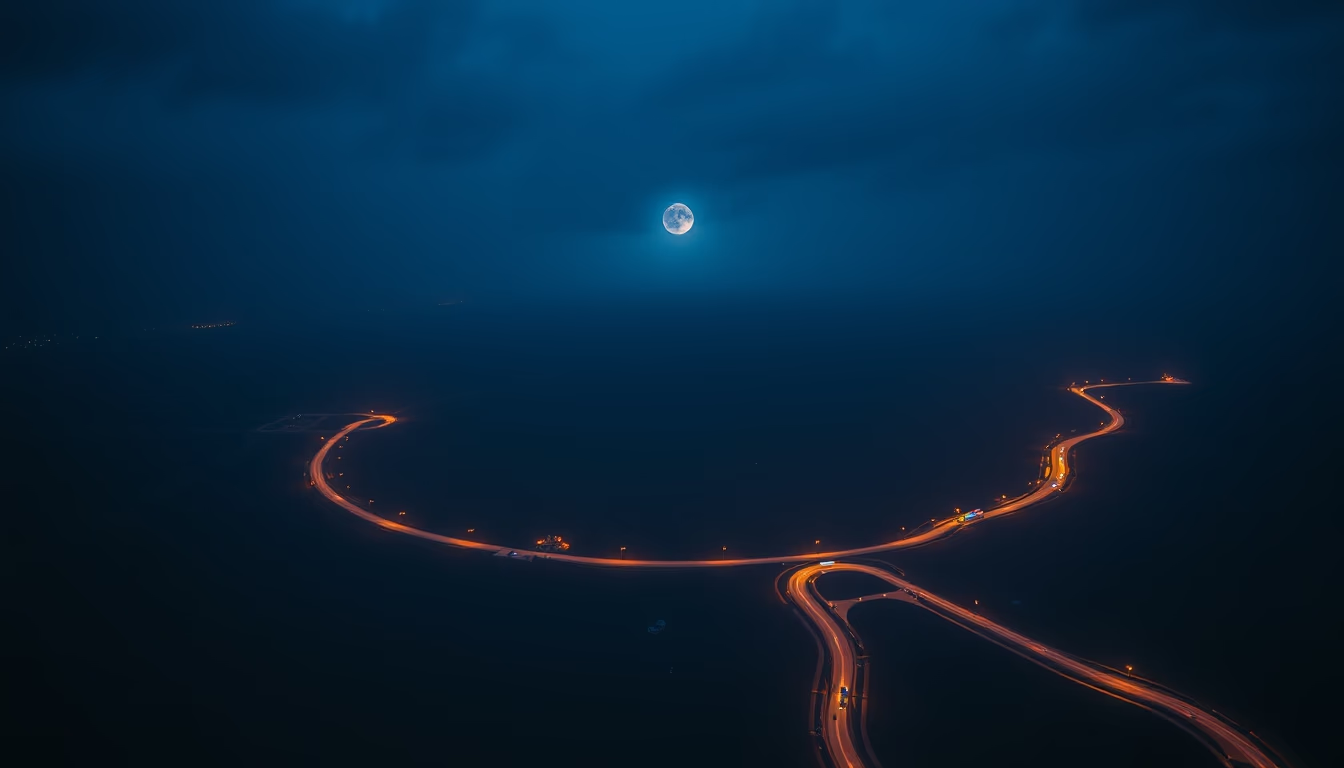
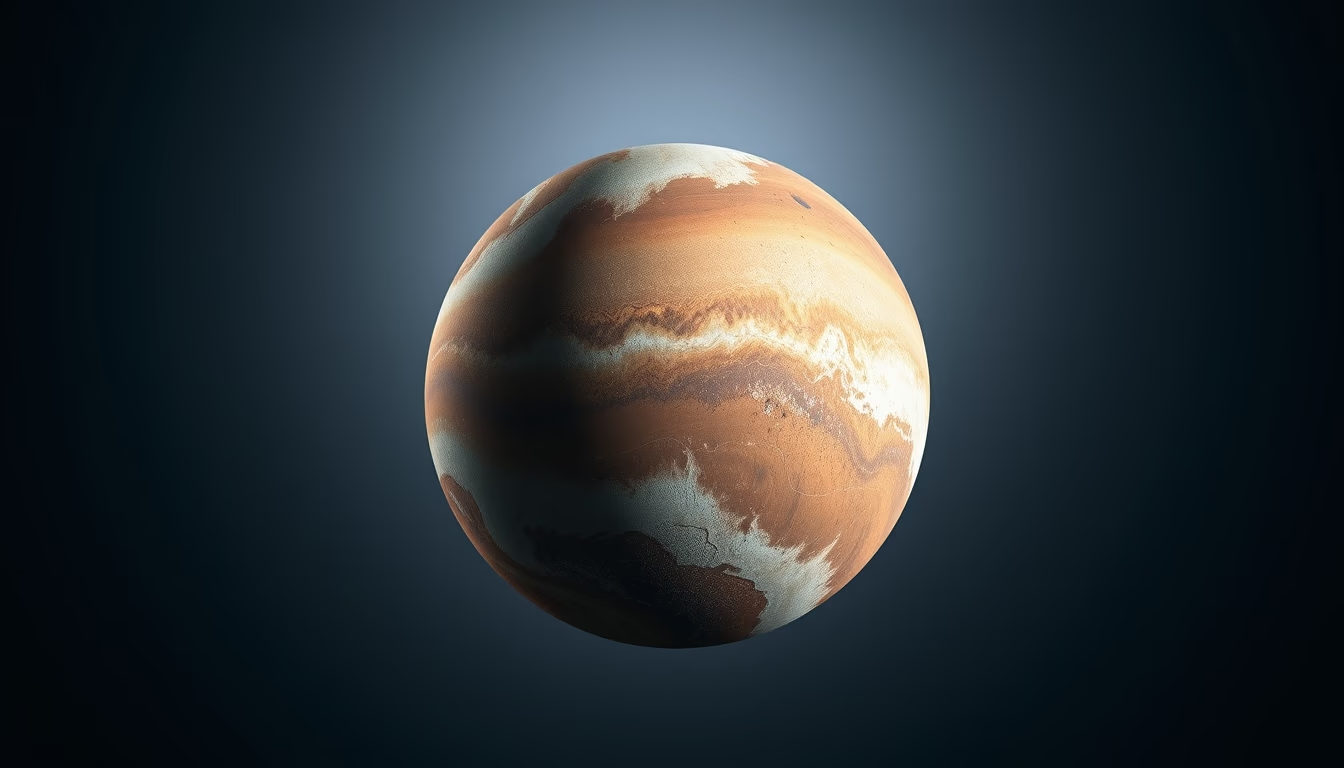
The Trappist-1 system hosts seven Earth-sized rocky planets, three in the habitable zone, orbiting an ultracool dwarf star 40 light-years away.
About this subject
Discovered in 2016 by the TRAPPIST (Transiting Planets and Planetesimals Small Telescope) at the European Southern Observatory, the Trappist-1 system lies in the constellation Aquarius about 40 light-years from Earth. It is one of the most remarkable planetary systems ever found: seven planets with sizes and masses similar to Earth and, crucially, three of them (e, f and g) orbit within the habitable zone, where temperatures could allow liquid water on the surface.
The host star, an ultracool dwarf of spectral type M8V, is much smaller and cooler than the Sun, emitting most of its energy in the infrared. The planets orbit extremely close to the star, all are closer than Mercury is to the Sun, completing their orbits in just a few days. Because of this proximity, they are likely tidally locked, always showing the same face to the star, creating extreme temperature contrasts between day and night sides.
The Trappist-1 system has become a prime target for exoplanet atmosphere studies. The James Webb Space Telescope has already conducted observations to detect potential compounds such as water vapor, methane, and carbon dioxide, searching for signs of habitability. Moreover, the compact configuration allows gravitational interactions between planets, providing clues about their formation and dynamical evolution. The discovery highlighted the possibility that ultracool dwarfs, abundant in the Milky Way, may be the best places to search for life beyond the Solar System.
Frequently Asked Questions
How many planets are in the Trappist-1 system?
Seven rocky planets, all similar in size to Earth. Three of them (e, f and g) orbit within the habitable zone.
How far is the Trappist-1 system from Earth?
Approximately 40 light-years away in the constellation Aquarius.
Why is the Trappist-1 system important for the search for extraterrestrial life?
Because it has multiple rocky planets in the habitable zone around an ultracool dwarf star, making it one of the most promising targets to study atmospheres and detect biosignatures with telescopes like the James Webb.
Direct URL
https://pub-c7d6a6ea828543ac903a74a341ccb2e1.r2.dev/imagens/trappist-1-system-art-rembrandt-lighting-dramatic-shadows-fresh17.avifHow to credit
Include a visible link back to UtilizAí. Copy one of the snippets below:
<a href="https://xn--utiliza-eza.com/en/midia/imagens/trappist-1-system-art-rembrandt-lighting-dramatic-shadows-fresh17">Trappist-1 system art</a> by <a href="https://xn--utiliza-eza.com">UtilizAí</a>, licensed under <a href="https://creativecommons.org/licenses/by/4.0/">CC BY 4.0</a>.
[Trappist-1 system art](https://xn--utiliza-eza.com/en/midia/imagens/trappist-1-system-art-rembrandt-lighting-dramatic-shadows-fresh17) by [UtilizAí](https://xn--utiliza-eza.com), CC BY 4.0
License: CC-BY-4.0