Tidal locked planet
1344×768 · AVIF · CC BY 4.0

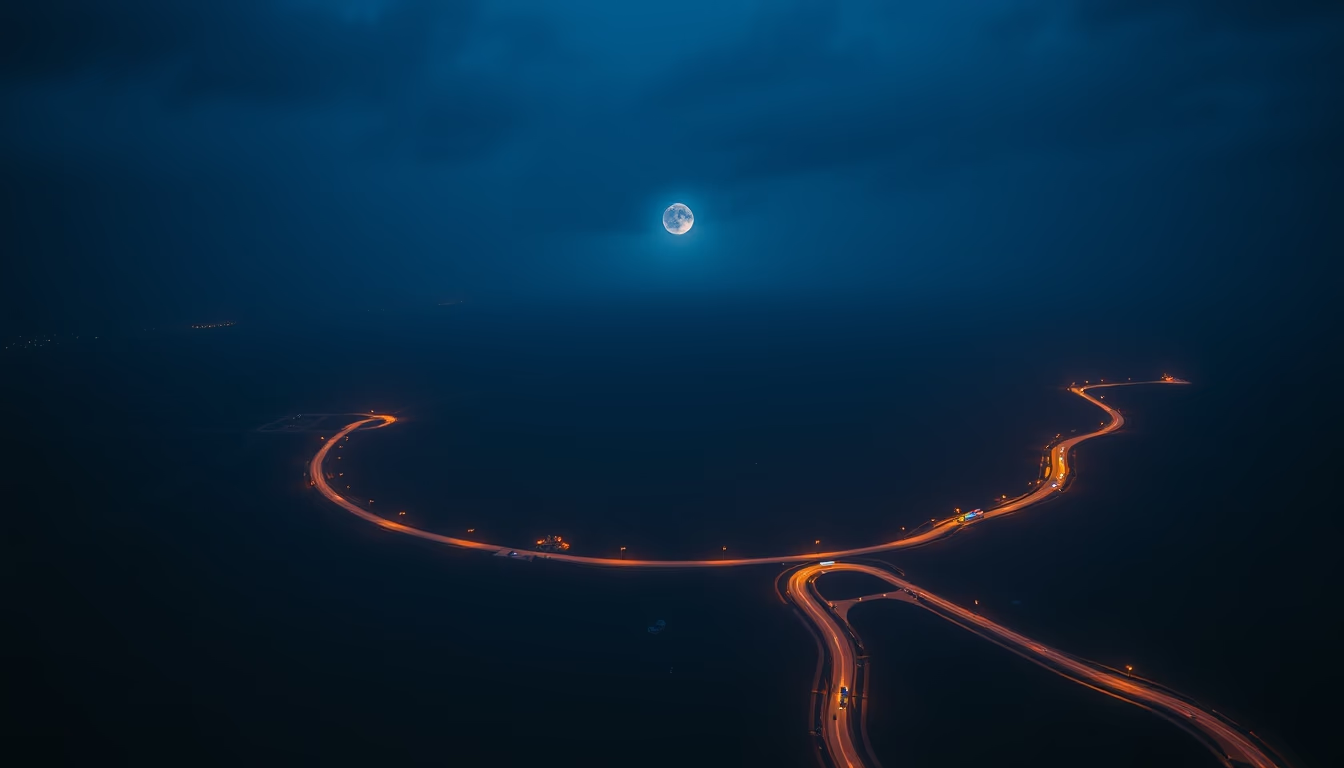
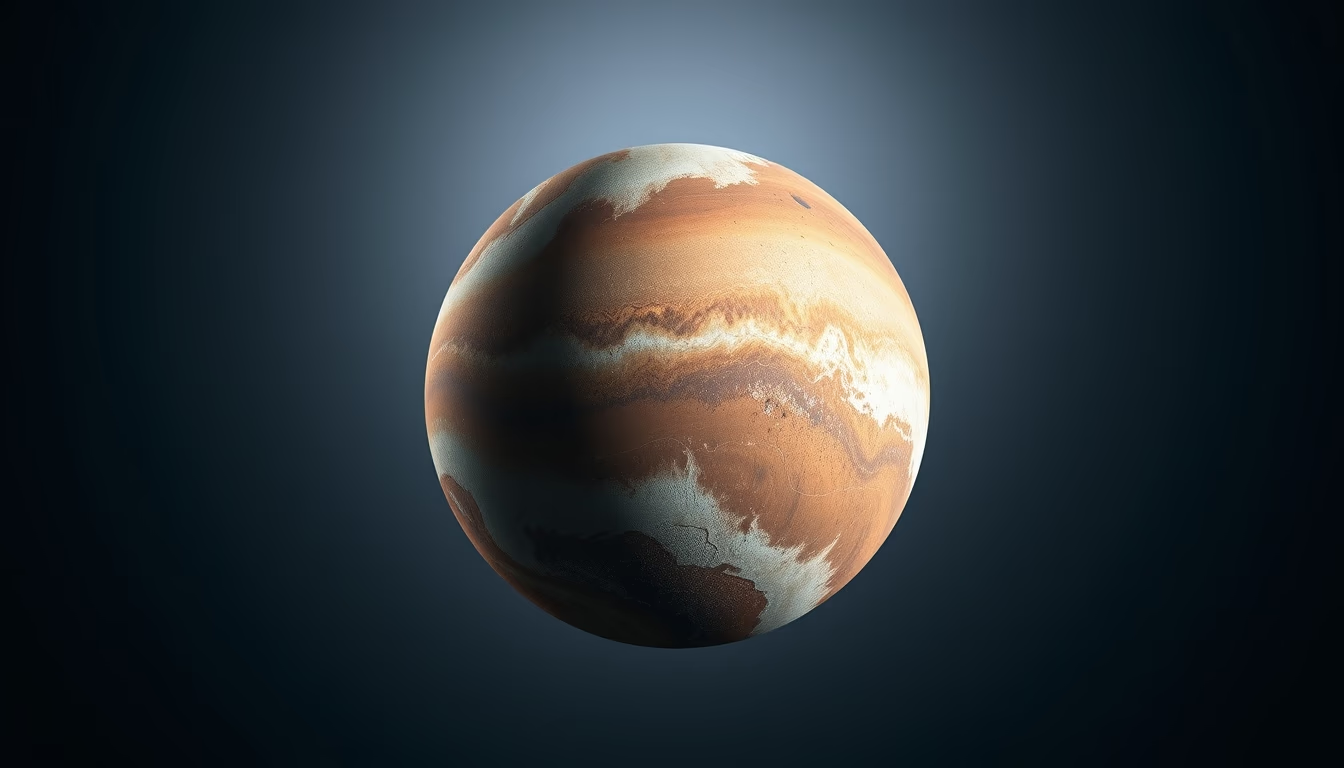
Tidally locked planets, common around red dwarf stars in the habitable zone, have a permanent dayside and nightside.
About this subject
Tidal locking is a gravitational phenomenon where a planet always shows the same face to its star, similar to the Moon's relationship with Earth. This effect is common among exoplanets orbiting very close to red dwarf stars, known as M-dwarfs, which are the most abundant stars in the Milky Way. In such orbits, the planet's rotation synchronizes with its orbit, resulting in a permanent dayside and a permanent nightside.
The habitable zone of these stars is extremely close, making tidal locking inevitable. This creates extreme conditions: on the dayside, temperatures can exceed 100°C, while on the nightside they can drop to tens of degrees below zero. The terminator line, the boundary between day and night, could have temperate conditions and be the only region where liquid water might exist on the surface. Climate models suggest that a thick atmosphere could redistribute heat, but whether this allows habitability remains uncertain.
Notable examples include the TRAPPIST-1 system, 40 light-years away, with seven Earth-sized worlds all likely tidally locked. Proxima Centauri b, the closest exoplanet to Earth, also orbits in the temperate zone of its red dwarf. Studies indicate that even with tidal locking, strong winds could transport clouds and heat to the dark side, stabilizing the climate. However, intense stellar radiation and frequent flares remain challenges for any potential life.
Frequently Asked Questions
What is tidal locking in exoplanets?
Tidal locking happens when the star's gravity causes the planet to rotate at the same rate it orbits, always showing the same face to the star. This results in a permanent dayside and nightside.
Can life exist on a tidally locked planet?
Yes, theoretically. Life could develop in the terminator zone with moderate temperatures. A thick atmosphere could redistribute heat, but challenges like stellar radiation and flares remain.
Which known exoplanets are tidally locked?
Likely all planets in the TRAPPIST-1 system, Proxima Centauri b, and many other rocky exoplanets in the habitable zone of red dwarfs. Direct confirmation is difficult, but models suggest yes.
Direct URL
https://pub-c7d6a6ea828543ac903a74a341ccb2e1.r2.dev/imagens/tidal-locked-planet-long-exposure-fresh10.avifHow to credit
Include a visible link back to UtilizAí. Copy one of the snippets below:
<a href="https://xn--utiliza-eza.com/en/midia/imagens/tidal-locked-planet-long-exposure-fresh10">Tidal locked planet</a> by <a href="https://xn--utiliza-eza.com">UtilizAí</a>, licensed under <a href="https://creativecommons.org/licenses/by/4.0/">CC BY 4.0</a>.
[Tidal locked planet](https://xn--utiliza-eza.com/en/midia/imagens/tidal-locked-planet-long-exposure-fresh10) by [UtilizAí](https://xn--utiliza-eza.com), CC BY 4.0
License: CC-BY-4.0