Tidal locked planet
1344×768 · AVIF · CC BY 4.0

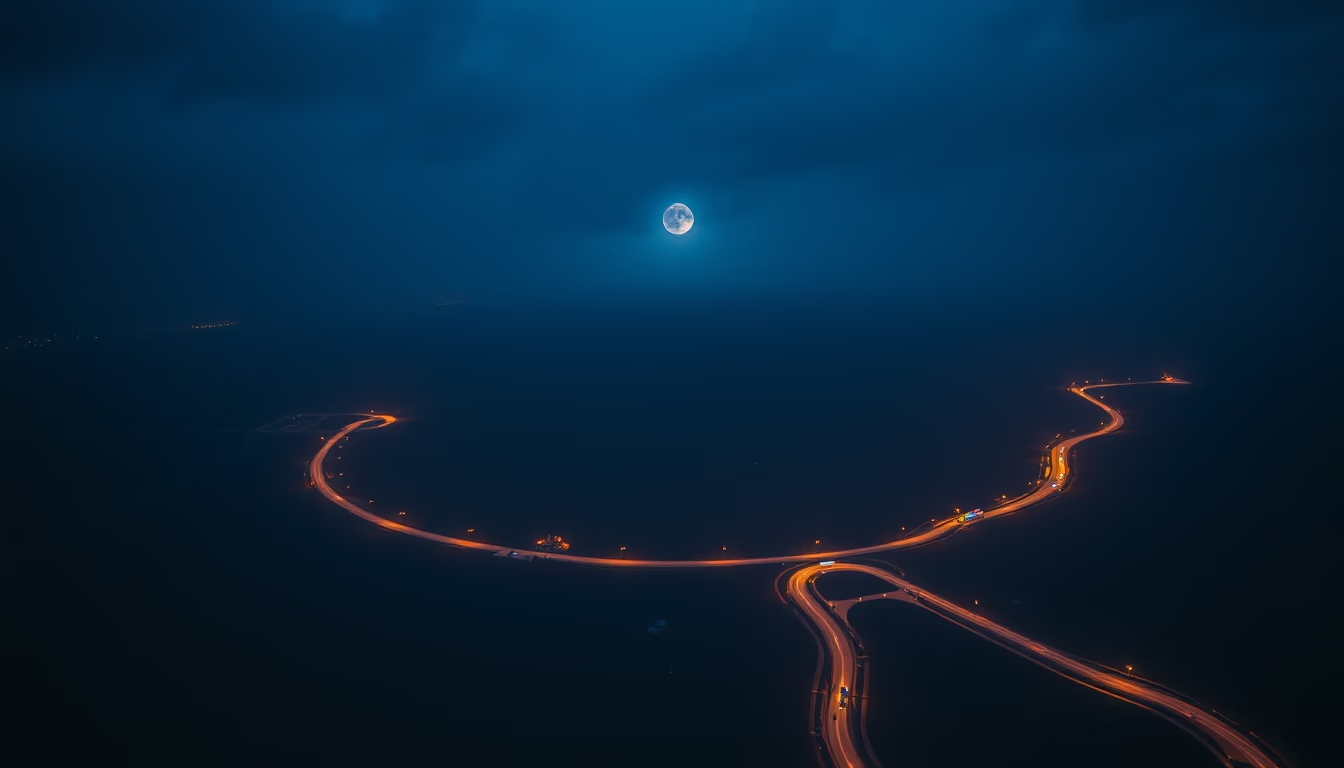
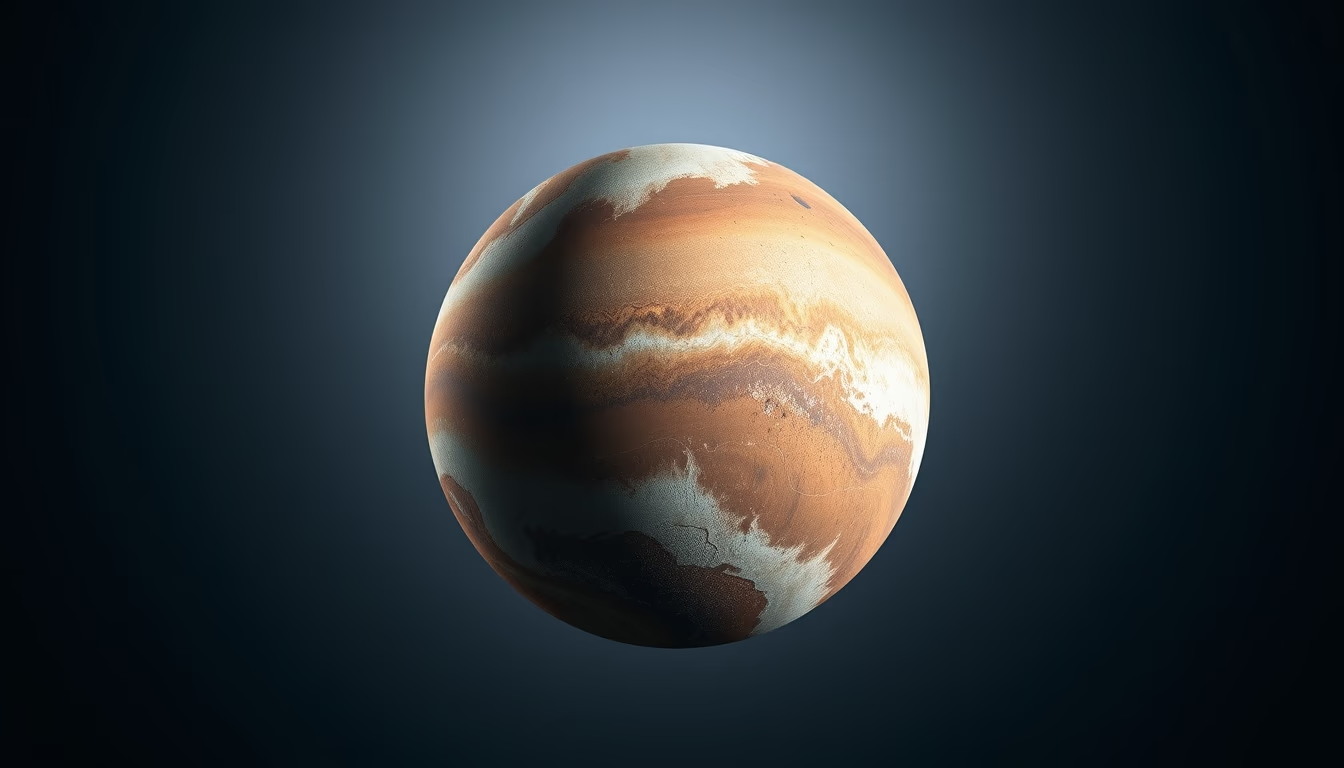
Tidally locked planets, such as those in the TRAPPIST-1 system, always keep the same face toward their star, creating extreme temperature contrasts.
About this subject
Tidal locking is an orbital phenomenon where a planet's rotation period matches its orbital period, causing one hemisphere to permanently face the star. This effect is common among exoplanets orbiting close to red dwarf stars, such as those in the TRAPPIST-1 system discovered in 2016, located 39 light-years away. On these worlds, the dayside can reach temperatures high enough to melt rock, while the nightside remains frozen and dark, with subzero temperatures.
The habitable zone of such planets often lies along the terminator, the boundary between day and night, where conditions might allow liquid water to exist if an atmosphere is present. Studies suggest that a thick atmosphere could redistribute heat, and observations from the James Webb Space Telescope are beginning to reveal the atmospheric composition of worlds like TRAPPIST-1e. Interestingly, Earth's Moon is also tidally locked, always showing the same face to Earth, though it is not locked to the Sun.
Scientists estimate that most rocky planets in the habitable zone of red dwarf stars are tidally locked, making these systems prime targets in the search for extraterrestrial life. Despite extreme conditions, climate models indicate that oceans and atmospheric currents could moderate global climates, potentially allowing life to thrive in narrow bands along the terminator. The discovery of exoplanets like Proxima Centauri b, announced in 2016, underscores the importance of understanding this phenomenon for future space missions.
Frequently Asked Questions
What is a tidally locked planet?
It is a planet whose rotation period equals its orbital period, so the same side always faces the star, creating a permanent dayside and nightside.
Why are many exoplanets near red dwarfs tidally locked?
The star's gravitational pull gradually slows the planet's rotation over billions of years until it becomes synchronized. Since red dwarfs are cool, their habitable zones are very close, enhancing the effect.
Could life exist on a tidally locked planet?
Yes, along the terminator line between day and night, temperatures can be moderate. With a suitable atmosphere and liquid water, this region could be habitable.
Direct URL
https://pub-c7d6a6ea828543ac903a74a341ccb2e1.r2.dev/imagens/tidal-locked-planet-documentary-photography-fresh15.avifHow to credit
Include a visible link back to UtilizAí. Copy one of the snippets below:
<a href="https://xn--utiliza-eza.com/en/midia/imagens/tidal-locked-planet-documentary-photography-fresh15">Tidal locked planet</a> by <a href="https://xn--utiliza-eza.com">UtilizAí</a>, licensed under <a href="https://creativecommons.org/licenses/by/4.0/">CC BY 4.0</a>.
[Tidal locked planet](https://xn--utiliza-eza.com/en/midia/imagens/tidal-locked-planet-documentary-photography-fresh15) by [UtilizAí](https://xn--utiliza-eza.com), CC BY 4.0
License: CC-BY-4.0