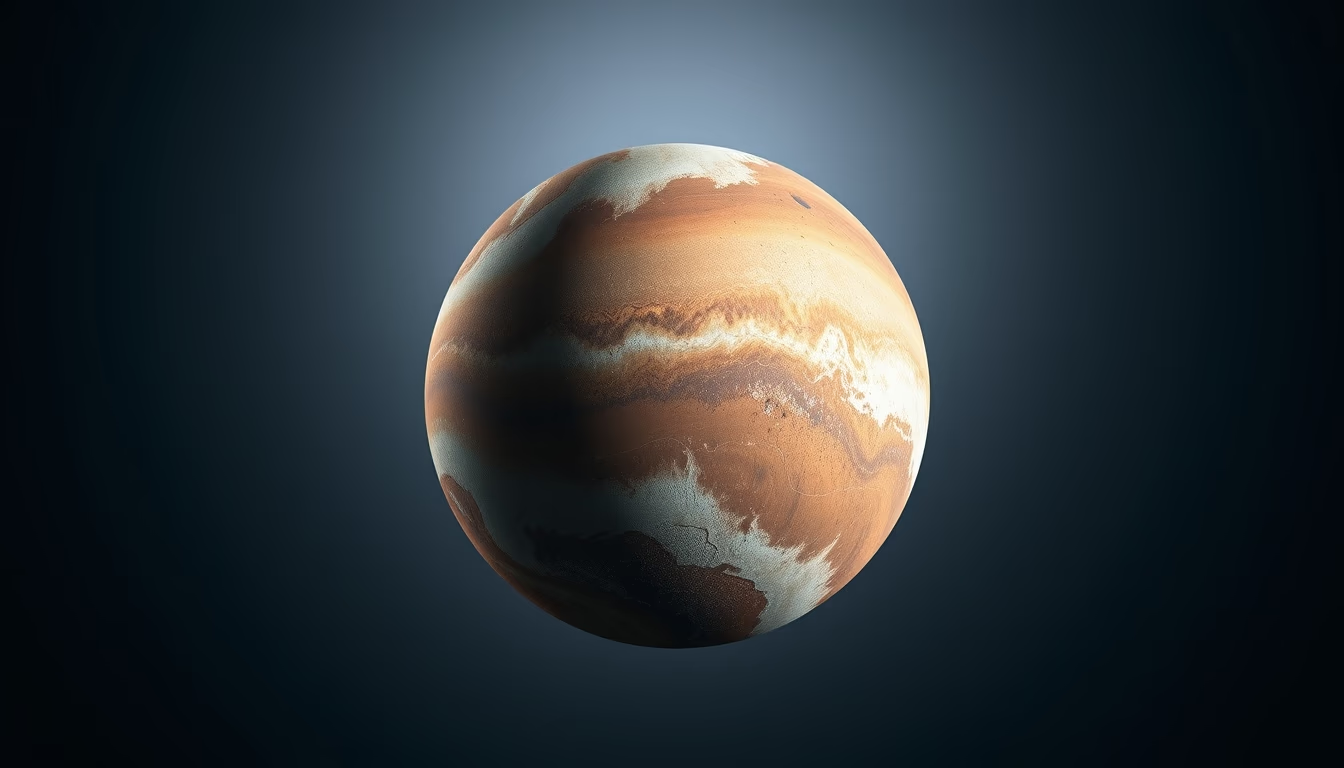
Kepler 186f earthlike concept
1344×768 · AVIF · CC BY 4.0

Kepler 186f is the first Earth-size exoplanet discovered in the habitable zone of a red dwarf star, located approximately 500 light-years away.
About this subject
Kepler 186f was detected in 2014 by NASA's Kepler space telescope, marking a milestone in the search for potentially habitable planets. It orbits the star Kepler 186, a red dwarf of spectral type M, in the constellation Cygnus. With an estimated radius of 1.1 times Earth's, the planet completes an orbit every 130 days. Its position in the habitable zone means it receives about one-third the energy Earth gets from the Sun, placing it near the outer edge of the region where liquid water could exist on the surface.
Kepler 186f's atmosphere remains unknown, and climate models suggest that depending on atmospheric composition and pressure, its average temperature could be compatible with the existence of liquid oceans. However, orbiting a red dwarf star exposes the planet to stellar flares and a redder light spectrum, which could affect photosynthesis and ozone formation. The discovery of Kepler 186f demonstrated that Earth-size planets are common in habitable zones around low-mass stars.
Kepler 186f's significance extends beyond its physical characteristics. It served as a prototype for the study of rocky exoplanets in habitable zones, influencing later missions such as TESS and the James Webb Space Telescope. Although it cannot be visited with current technology, it remains a symbol of the possibility of Earth-like worlds in the universe and a target for future searches for biosignatures.
Frequently Asked Questions
Could Kepler 186f support life?
It is possible but not confirmed. It lies in the habitable zone, but the presence of liquid water depends on factors like atmospheric composition and greenhouse effect. Additionally, orbiting a red dwarf may expose it to intense radiation.
How was Kepler 186f discovered?
It was discovered using the transit method by the Kepler telescope, which detected small dips in the star's brightness as the planet passed in front. Confirmation came from statistical analysis and follow-up observations.
How far is Kepler 186f from Earth?
It is approximately 500 light-years away, in the constellation Cygnus. This means that traveling at the speed of light, it would take 500 years to reach it.
Direct URL
https://pub-c7d6a6ea828543ac903a74a341ccb2e1.r2.dev/imagens/kepler-186f-earthlike-concept-high-fashion-editorial-fresh9.avifHow to credit
Include a visible link back to UtilizAí. Copy one of the snippets below:
<a href="https://xn--utiliza-eza.com/en/midia/imagens/kepler-186f-earthlike-concept-high-fashion-editorial-fresh9">Kepler 186f earthlike concept</a> by <a href="https://xn--utiliza-eza.com">UtilizAí</a>, licensed under <a href="https://creativecommons.org/licenses/by/4.0/">CC BY 4.0</a>.
[Kepler 186f earthlike concept](https://xn--utiliza-eza.com/en/midia/imagens/kepler-186f-earthlike-concept-high-fashion-editorial-fresh9) by [UtilizAí](https://xn--utiliza-eza.com), CC BY 4.0
License: CC-BY-4.0