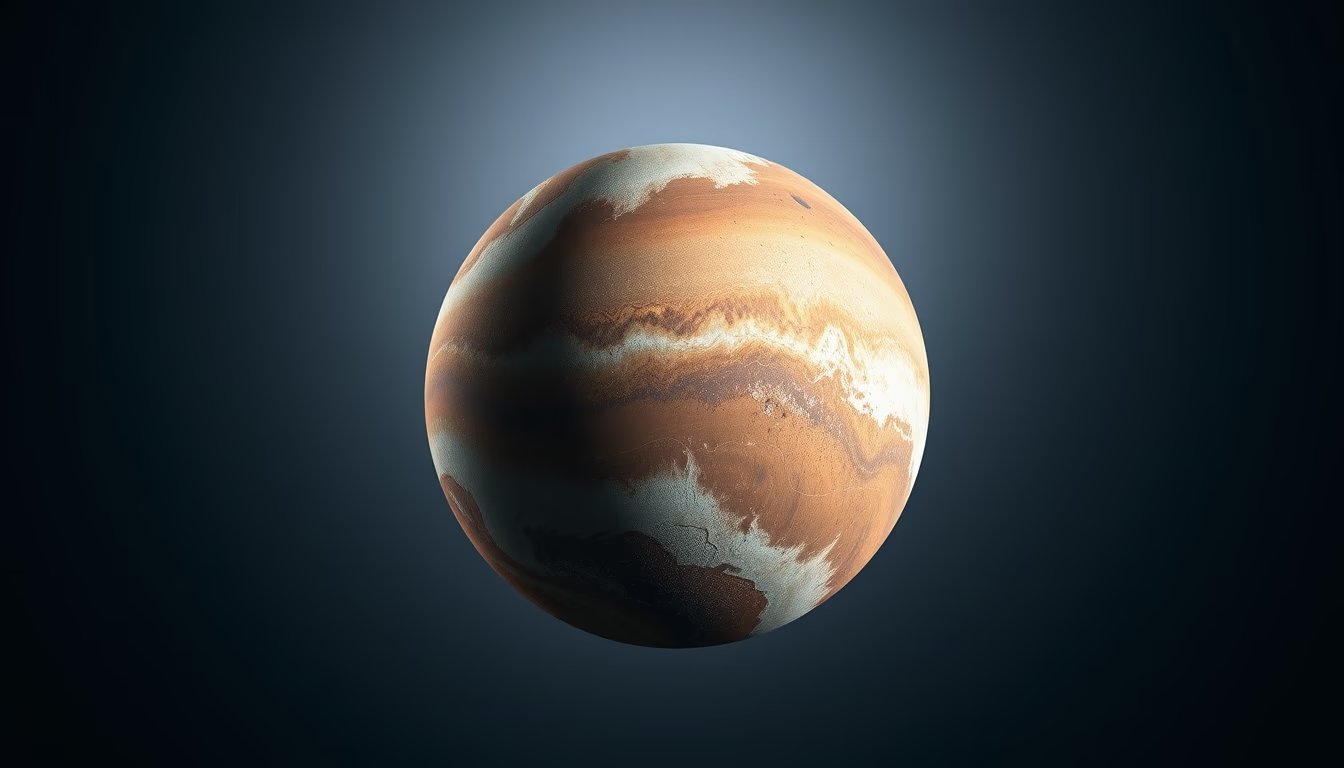
Gas giant ringed exoplanet
1344×768 · AVIF · CC BY 4.0
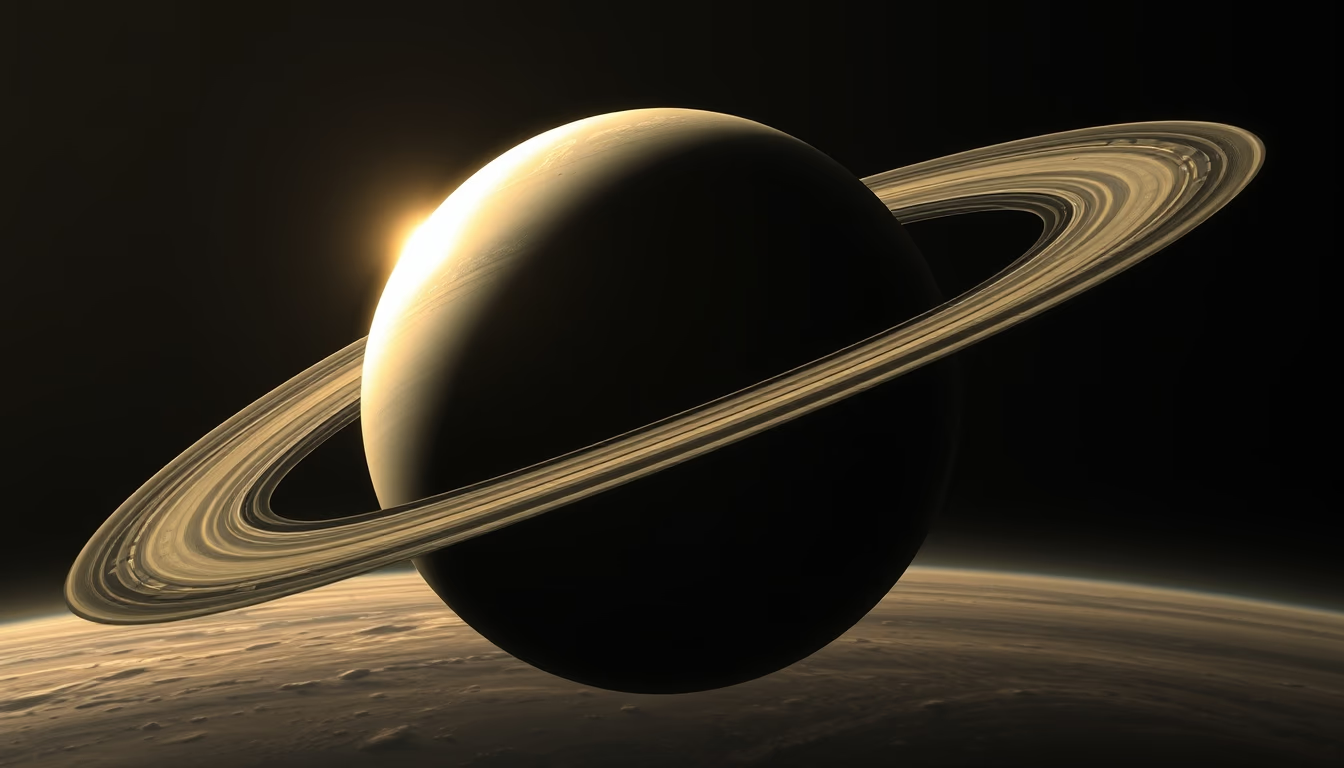
Gas giant exoplanets with ring systems, such as J1407b, represent scaled-up versions of Saturn and challenge planetary formation models.
About this subject
Gas giant exoplanets with rings are massive worlds, composed primarily of hydrogen and helium, that feature extensive ring systems around them. The most notable example is J1407b, discovered in 2012, whose ring system is about 200 times larger than Saturn's and contains gaps suggesting the presence of forming moons. These rings can be detected through transit photometry, when the host star's light is blocked irregularly by the ring structure, or by direct imaging at infrared wavelengths. Unlike Saturn's rings, which are relatively thin and composed of ice and rock, exoplanet rings can be massive and opaque, with diameters reaching tens of millions of kilometers. Astronomers estimate that around 1% to 10% of gas giants may harbor detectable rings, but most remain hidden due to observational limitations. Studying these systems is crucial for understanding the dynamics of satellite formation and the evolution of circumplanetary disks. The discovery of rings on exoplanets also helps refine models of angular momentum transfer and material accretion during the early stages of planetary systems. Observations with the James Webb Space Telescope and future missions promise to reveal more details about the composition and structure of these rings, potentially identifying forming moons. Although no ringed exoplanet has been confirmed via direct imaging, transit photometry has already provided strong evidence for candidates like K2-33b and HD 163296 b, which show signatures consistent with circumplanetary rings.
Frequently Asked Questions
What is a gas giant exoplanet with rings?
It is an extrasolar planet with large mass, composed mostly of hydrogen and helium, that possesses a ring system around it, similar to Saturn's rings but often much larger and more massive.
How are exoplanet rings detected?
Primarily through transit photometry, where the star's light dims irregularly as it passes through the rings, or by direct infrared imaging that captures the ring's thermal glow. Spectral signatures may also indicate the presence of ice or dust particles.
Why is studying ringed exoplanets important?
They help understand moon formation and the dynamics of circumplanetary disks. Additionally, they provide clues about the evolution of planetary systems and can reveal processes like accretion and planetary migration.
Direct URL
https://pub-c7d6a6ea828543ac903a74a341ccb2e1.r2.dev/imagens/gas-giant-ringed-exoplanet-rembrandt-lighting-dramatic-shadows-fresh15.avifHow to credit
Include a visible link back to UtilizAí. Copy one of the snippets below:
<a href="https://xn--utiliza-eza.com/en/midia/imagens/gas-giant-ringed-exoplanet-rembrandt-lighting-dramatic-shadows-fresh15">Gas giant ringed exoplanet</a> by <a href="https://xn--utiliza-eza.com">UtilizAí</a>, licensed under <a href="https://creativecommons.org/licenses/by/4.0/">CC BY 4.0</a>.
[Gas giant ringed exoplanet](https://xn--utiliza-eza.com/en/midia/imagens/gas-giant-ringed-exoplanet-rembrandt-lighting-dramatic-shadows-fresh15) by [UtilizAí](https://xn--utiliza-eza.com), CC BY 4.0
License: CC-BY-4.0