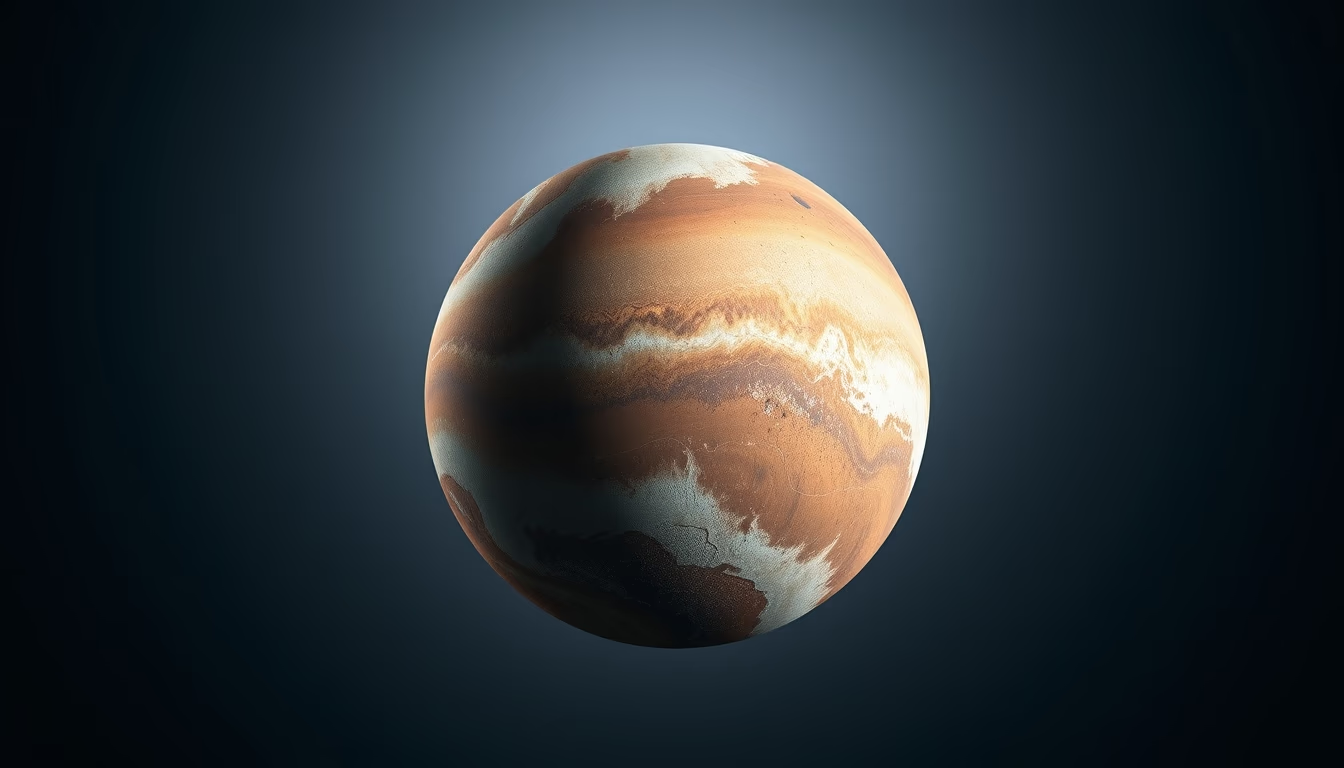
Gas giant ringed exoplanet
1344×768 · AVIF · CC BY 4.0
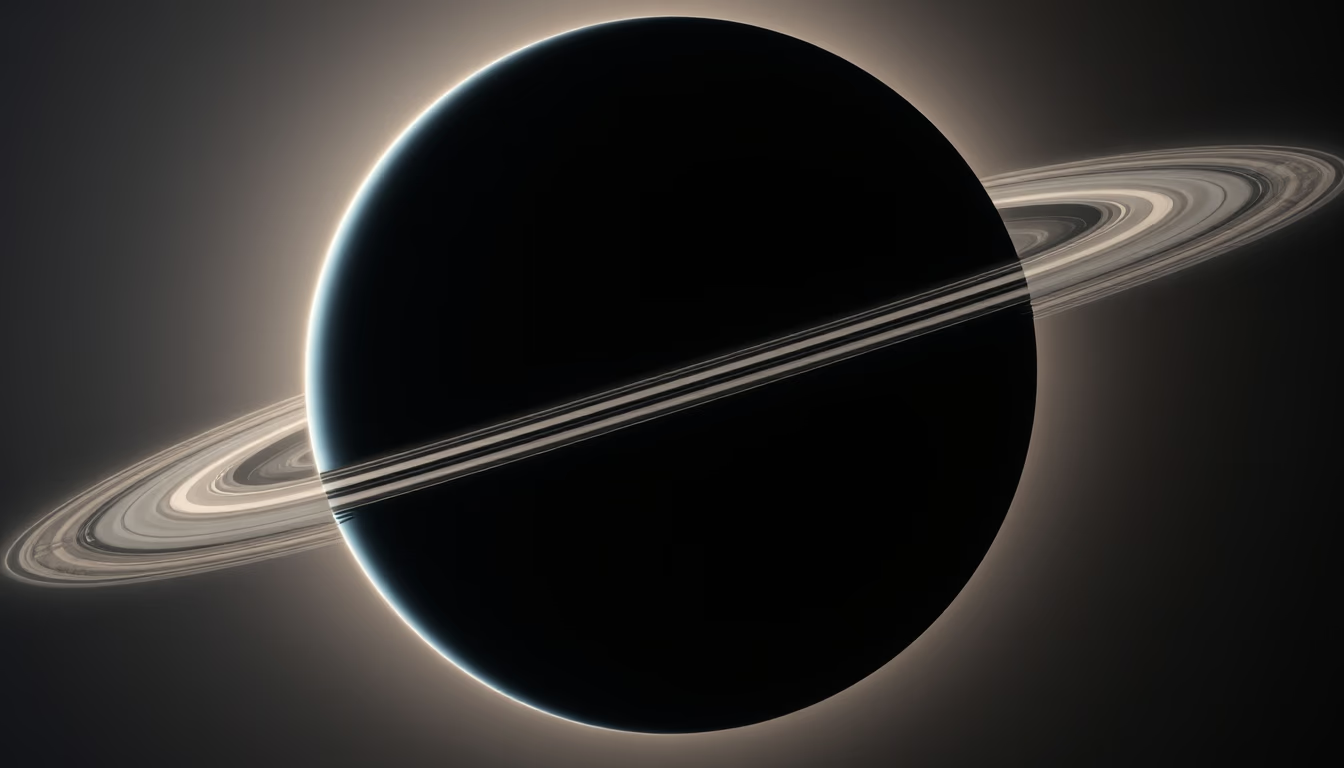
Ringed gas giant exoplanets are distant worlds that challenge our understanding of planetary formation and ring dynamics.
About this subject
Ringed gas giant exoplanets are gas giants with ring systems similar to Saturn's, but orbiting other stars. The first strong candidate was J1407b, discovered in 2007, with a ring system about 200 times larger than Saturn's. These rings are likely composed of dust, ice, and rocky debris, and their presence is inferred from light curves showing unusual eclipses and irregular dimming patterns when the planet transits its host star.
Detecting rings around exoplanets is challenging because current telescopes cannot directly resolve the structure. Instead, astronomers use the transit method and high-precision photometry to observe variations in starlight. The Kepler satellite and missions like TESS have contributed to identifying candidates, but confirmation requires detailed models of how rings affect the light curve. To date, fewer than a dozen exoplanets have strong evidence of rings, suggesting that massive ring systems may be rare or short-lived.
Ringed gas giants provide clues about planetary evolution. Rings are thought to form from debris of disintegrated moons, leftover material from planet formation, or even captured bodies from asteroid belts. Studying these systems helps understand processes like planetary migration and satellite dynamics. Additionally, rings can influence the habitability of nearby moons by blocking radiation or providing material for atmospheric formation.
Although no ringed exoplanet has been directly imaged in detail, future telescopes like the James Webb Space Telescope and missions such as PLATO may provide more precise observations. The search for rings also reveals the diversity of planetary systems, showing that structures like those in our Solar System are not unique. Each discovery refines theoretical models and expands our understanding of the cosmos' architecture.
Frequently Asked Questions
How many ringed exoplanets have been discovered?
Currently, fewer than a dozen exoplanets have strong evidence of rings. The most famous is J1407b, with other candidates including HIP 41378 f and Kepler-1625b.
How are rings around exoplanets detected?
Astronomers detect rings by observing variations in the light curve during a planet's transit. Asymmetric dimming patterns and multiple dips indicate the presence of rings.
Can ringed exoplanets be seen with amateur telescopes?
No. The rings are extremely faint and distant, requiring sensitive space telescopes like Kepler and TESS, along with advanced computer models, to infer their existence.
Direct URL
https://pub-c7d6a6ea828543ac903a74a341ccb2e1.r2.dev/imagens/gas-giant-ringed-exoplanet-documentary-photography-fresh16.avifHow to credit
Include a visible link back to UtilizAí. Copy one of the snippets below:
<a href="https://xn--utiliza-eza.com/en/midia/imagens/gas-giant-ringed-exoplanet-documentary-photography-fresh16">Gas giant ringed exoplanet</a> by <a href="https://xn--utiliza-eza.com">UtilizAí</a>, licensed under <a href="https://creativecommons.org/licenses/by/4.0/">CC BY 4.0</a>.
[Gas giant ringed exoplanet](https://xn--utiliza-eza.com/en/midia/imagens/gas-giant-ringed-exoplanet-documentary-photography-fresh16) by [UtilizAí](https://xn--utiliza-eza.com), CC BY 4.0
License: CC-BY-4.0