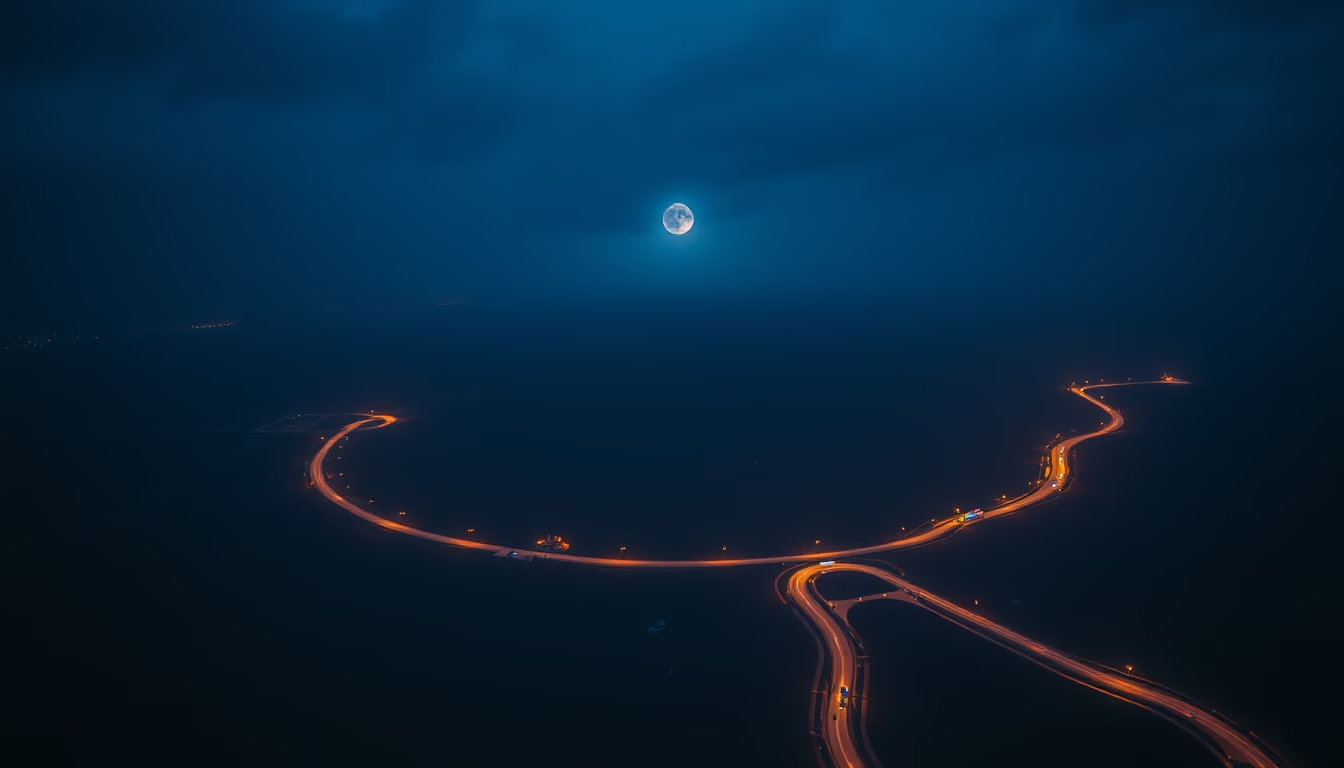
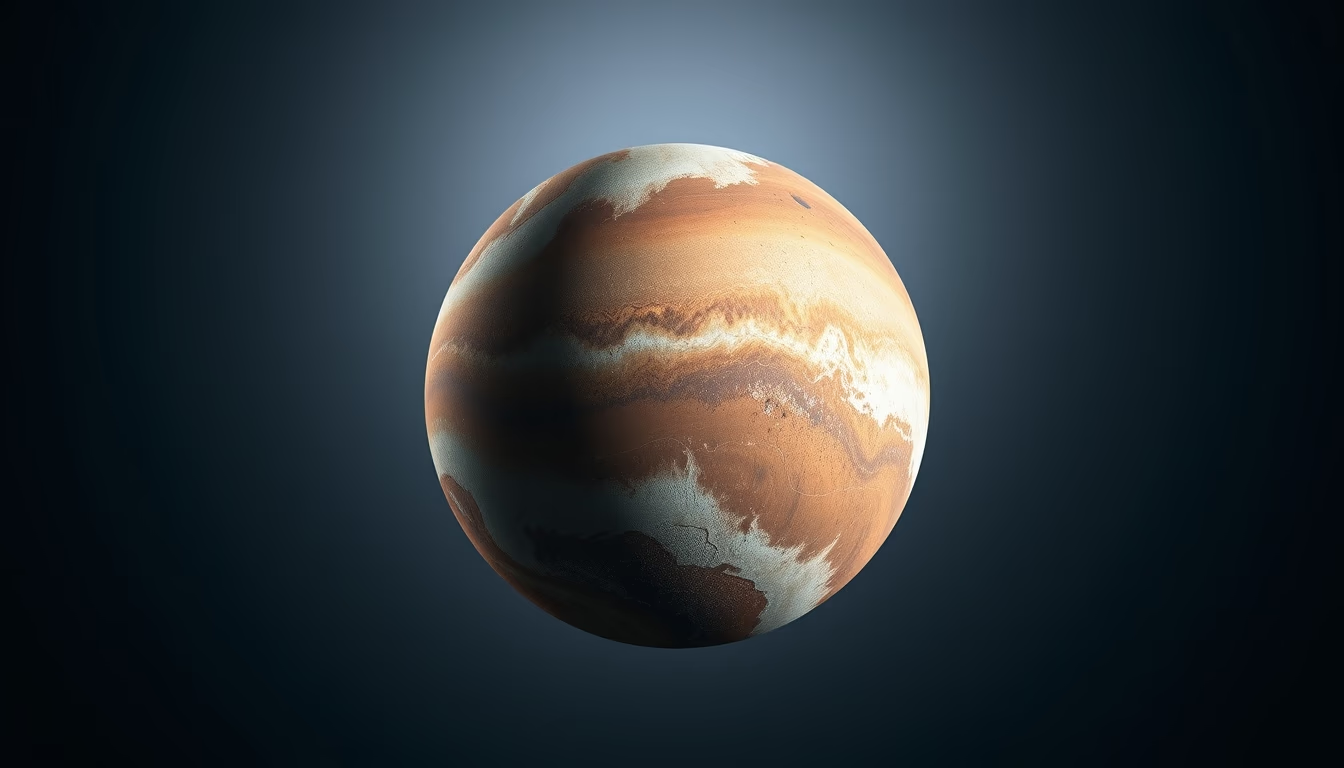
Trappist-1 system art
1344×768 · AVIF · CC BY 4.0

The TRAPPIST-1 system hosts seven rocky planets orbiting an ultracool dwarf star, located just 40 light-years away in the constellation Aquarius.
About this subject
The TRAPPIST-1 system, discovered in 2016 by the TRAPPIST telescope at La Silla Observatory in Chile, is one of the most remarkable planetary systems ever found. Its central star is an ultracool dwarf with about 8% of the Sun's mass and a surface temperature of approximately 2,550 K. The seven planets, all Earth-sized, were detected via the transit method, which measures tiny dips in the star's brightness as a planet crosses its face.
Three of these planets (TRAPPIST-1e, f, and g) lie within the habitable zone, where temperatures could allow liquid water on the surface. Climate modeling suggests worlds like TRAPPIST-1e might have global oceans, while others such as 1b and 1c likely suffer from a runaway greenhouse effect. The planets' densities indicate varied compositions, with some having thick atmospheres and others iron-rich cores.
A fascinating feature is the orbital resonance chain: the planets are locked in a 8:5, 5:3, 3:2, 3:2, 4:3, 3:2 sequence of periods. This arrangement suggests the system formed in a calm, orderly manner without major disruptions. The James Webb Space Telescope has already observed TRAPPIST-1 at multiple wavelengths, searching for atmospheric signatures like water vapor, methane, and carbon dioxide.
Due to its relative proximity, the TRAPPIST-1 system serves as a natural laboratory for studying exoplanet atmospheres and the potential for life beyond the Solar System. Its discovery boosted astrobiology and inspired future space missions focused on characterizing habitable worlds around cool dwarf stars.
Frequently Asked Questions
How many planets in the TRAPPIST-1 system are potentially habitable?
Three planets (TRAPPIST-1e, f, and g) are in the habitable zone. TRAPPIST-1e is considered the most promising, with conditions that could allow liquid water and a moderate atmosphere.
How were the TRAPPIST-1 planets discovered?
They were discovered via the transit method, monitoring the star with the TRAPPIST telescope. The small dips in brightness revealed the presence and orbital periods of the seven planets.
What is the distance of the TRAPPIST-1 system from Earth?
The system is located about 40 light-years away from Earth, in the constellation Aquarius. This proximity allows detailed observations with telescopes like the James Webb.
Direct URL
https://pub-c7d6a6ea828543ac903a74a341ccb2e1.r2.dev/imagens/trappist-1-system-art-minimalist-composition-fresh3.avifHow to credit
Include a visible link back to UtilizAí. Copy one of the snippets below:
<a href="https://xn--utiliza-eza.com/en/midia/imagens/trappist-1-system-art-minimalist-composition-fresh3">Trappist-1 system art</a> by <a href="https://xn--utiliza-eza.com">UtilizAí</a>, licensed under <a href="https://creativecommons.org/licenses/by/4.0/">CC BY 4.0</a>.
[Trappist-1 system art](https://xn--utiliza-eza.com/en/midia/imagens/trappist-1-system-art-minimalist-composition-fresh3) by [UtilizAí](https://xn--utiliza-eza.com), CC BY 4.0
License: CC-BY-4.0