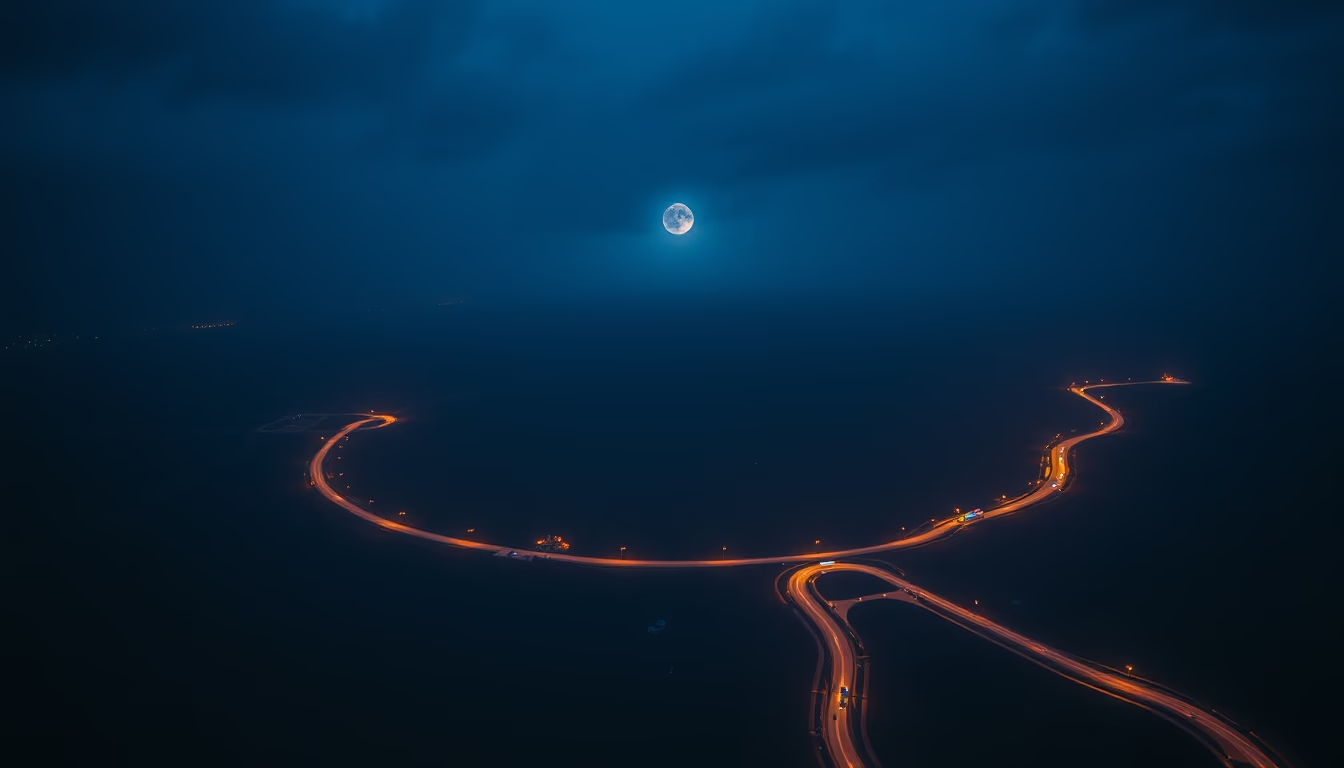
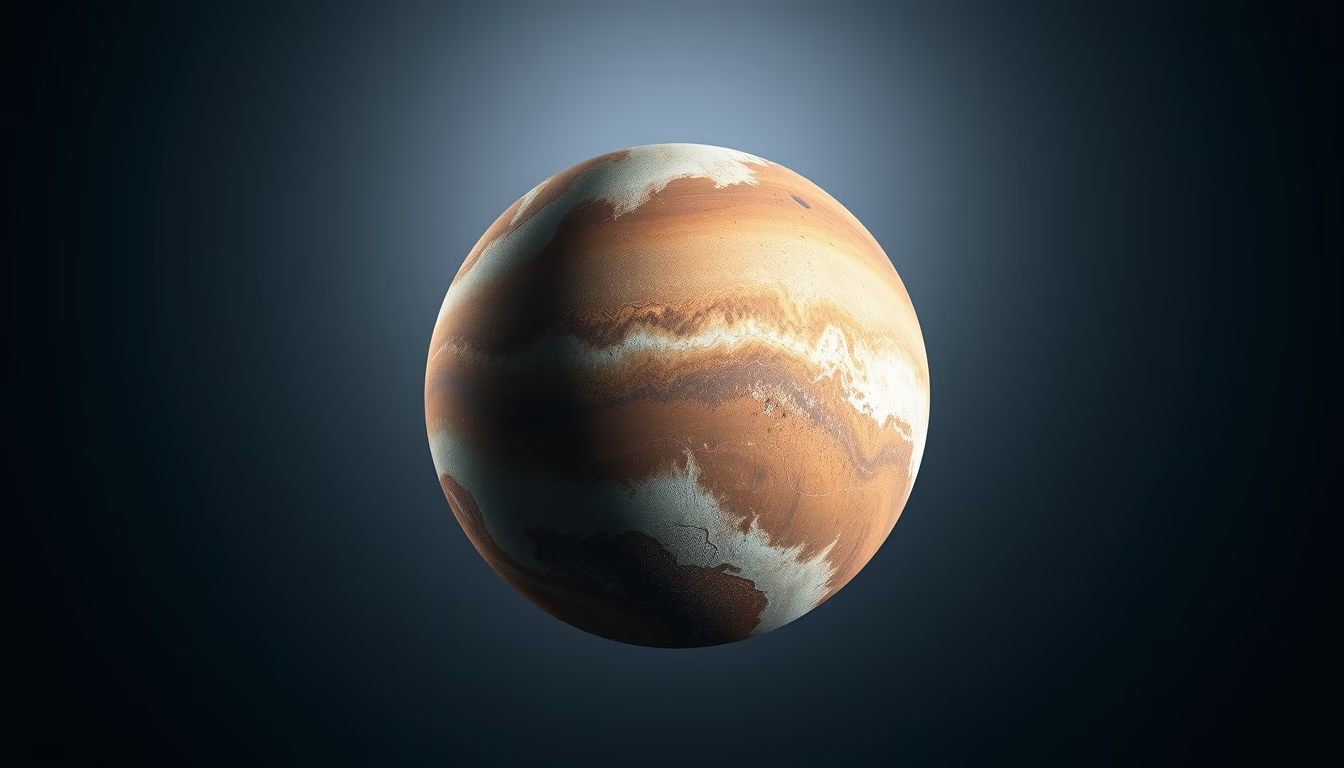
Trappist-1 system art
1344×768 · AVIF · CC BY 4.0

The TRAPPIST-1 system hosts seven Earth-sized rocky exoplanets, three in the habitable zone, located just 40 light-years away.
About this subject
The TRAPPIST-1 system is one of the most remarkable exoplanetary discoveries ever made. At its center lies an ultracool M-type dwarf star with only about 9% of the Sun's mass, located roughly 40 light-years away in the constellation Aquarius. The system was announced in 2017 by the TRAPPIST (Transiting Planets and Planetesimals Small Telescope) at the La Silla Observatory in Chile. It quickly captured global attention for hosting seven Earth-sized rocky planets, three of which orbit within the habitable zone, the region where liquid water could exist on the surface.
The planets, designated TRAPPIST-1b through h, have orbital periods ranging from 1.5 to 18.8 Earth days. Because they are so close to their star, they are tidally locked, meaning one side always faces the star while the other remains in permanent darkness. This creates extreme temperature contrasts, but temperate regions might exist along the terminator line. Observations by the James Webb Space Telescope (JWST) have already detected signs of atmospheres on TRAPPIST-1b and c, and further studies aim to analyze their chemical composition and potential water content.
The significance of TRAPPIST-1 extends beyond its planet count. Its proximity to Earth and the frequent transits of its planets make it an ideal natural laboratory for studying the atmospheres of rocky exoplanets. Astronomers speculate that if any of these worlds harbor life, the conditions in the habitable zone, particularly on planets e, f, and g, could support simple organisms. The discovery boosted astrobiology research and intensified the search for biosignatures beyond our solar system.
Interestingly, the name TRAPPIST is both a tribute to Belgian Trappist beer (the scientists are known fans) and an acronym for the project. In 2018, NASA released an artistic poster of the system, which popularized the image of these seven aligned worlds. With every new data release from JWST, anticipation grows: could any of these planets have once hosted, or still host, life?
Frequently Asked Questions
How many planets are in the TRAPPIST-1 system and how many are in the habitable zone?
The TRAPPIST-1 system has seven Earth-sized planets. Three of them (TRAPPIST-1e, f, and g) orbit within the habitable zone, where liquid water could exist.
How far is the TRAPPIST-1 system from Earth?
The TRAPPIST-1 system is about 40 light-years away from Earth, in the constellation Aquarius.
Has the James Webb Space Telescope studied TRAPPIST-1 planets?
Yes, the James Webb Space Telescope has observed TRAPPIST-1b and c, detecting hints of atmospheres. Future observations aim to search for water and other gases.
Direct URL
https://pub-c7d6a6ea828543ac903a74a341ccb2e1.r2.dev/imagens/trappist-1-system-art-macro-closeup-fresh2.avifHow to credit
Include a visible link back to UtilizAí. Copy one of the snippets below:
<a href="https://xn--utiliza-eza.com/en/midia/imagens/trappist-1-system-art-macro-closeup-fresh2">Trappist-1 system art</a> by <a href="https://xn--utiliza-eza.com">UtilizAí</a>, licensed under <a href="https://creativecommons.org/licenses/by/4.0/">CC BY 4.0</a>.
[Trappist-1 system art](https://xn--utiliza-eza.com/en/midia/imagens/trappist-1-system-art-macro-closeup-fresh2) by [UtilizAí](https://xn--utiliza-eza.com), CC BY 4.0
License: CC-BY-4.0