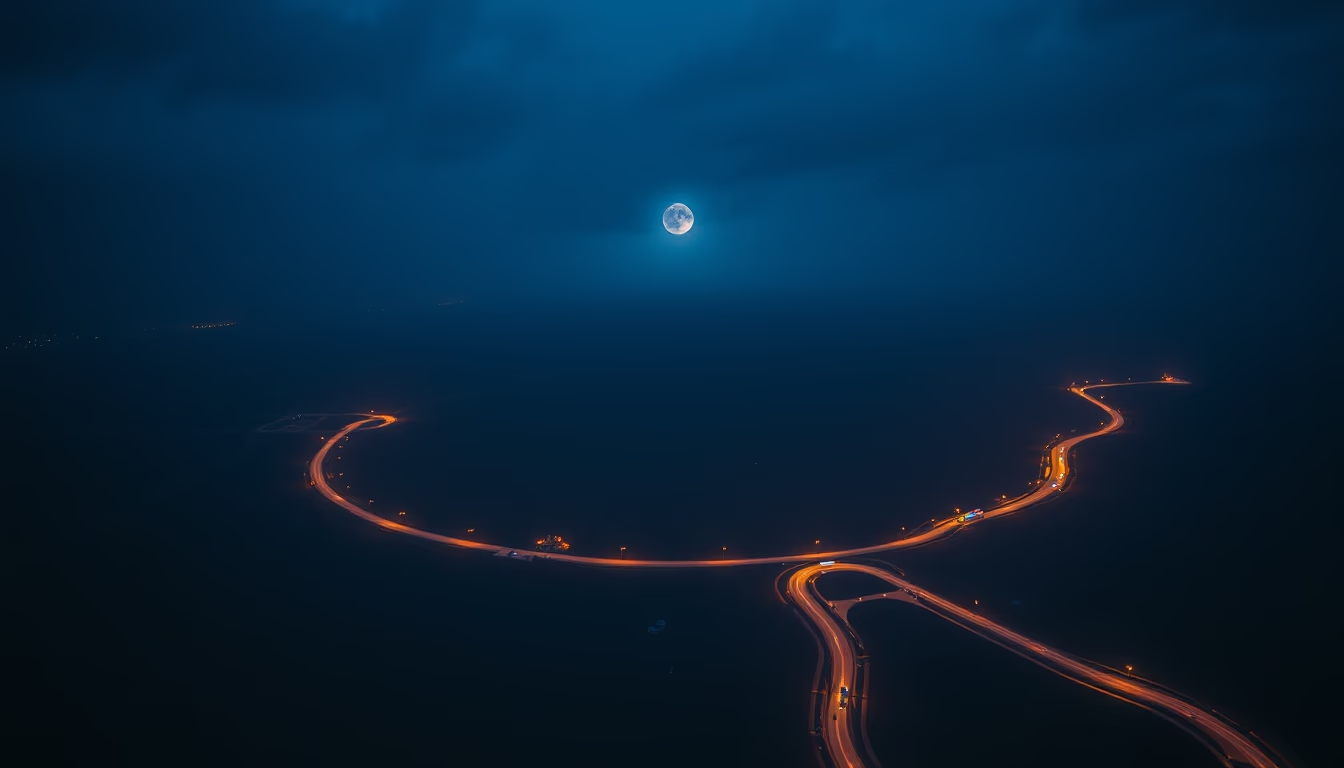
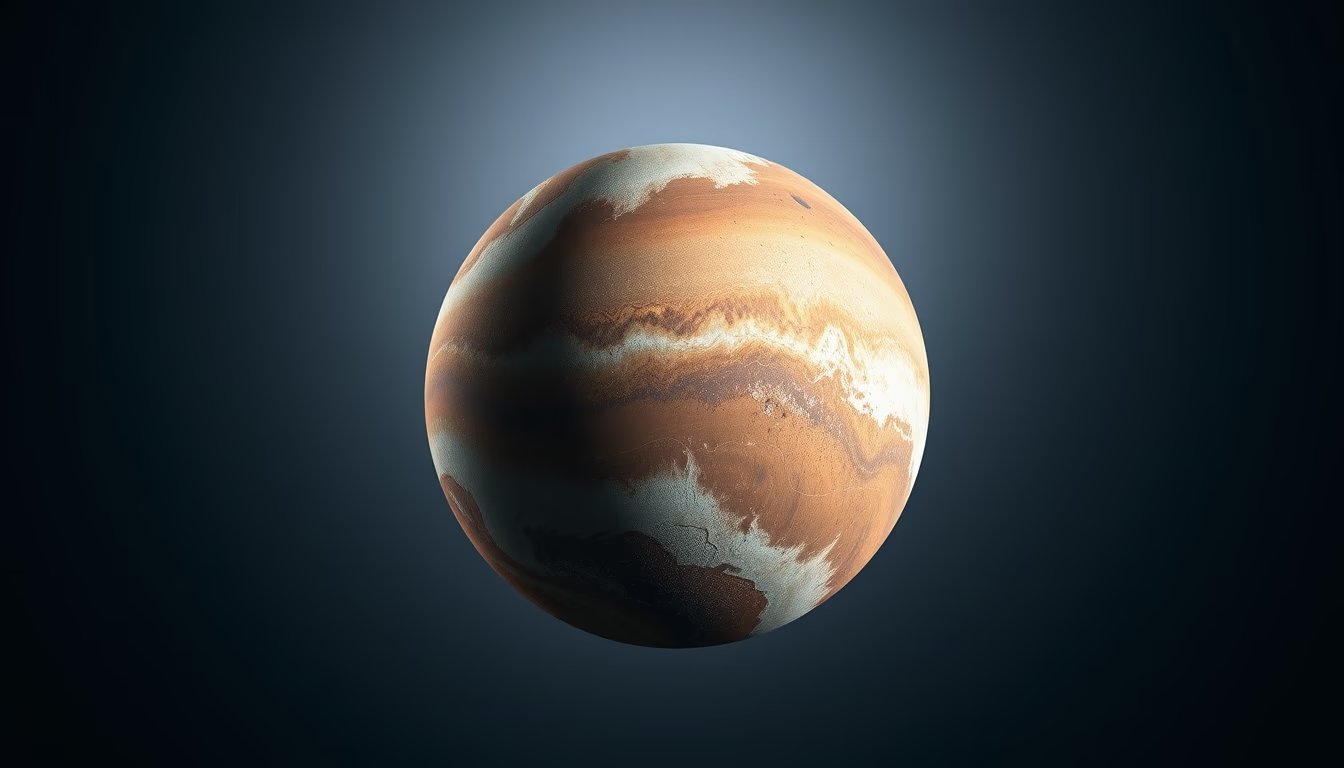
Tidal locked planet
1344×768 · AVIF · CC BY 4.0

Tidally locked planets always face the same side toward their star, creating extreme temperature contrasts and potential habitable zones along the terminator line.
About this subject
Tidal locking is a common phenomenon in planetary systems, especially for planets orbiting very close to their stars. The star's gravitational force slows the planet's rotation until its orbital and rotational periods match, causing one hemisphere to permanently face the star (dayside) and the other to face away (nightside). This is the case for Mercury in our Solar System, although it has a 3:2 resonance, illustrating the process. For exoplanets like Proxima Centauri b and those in the TRAPPIST-1 system, tidal locking is almost certain due to extremely short orbits, some lasting just a few Earth days. The implications for habitability are profound: the dayside can reach temperatures capable of melting rock, while the nightside may be deep ice. However, in a narrow strip between the two hemispheres, called the terminator, temperatures could be mild enough to allow liquid water, provided the planet's atmosphere can redistribute heat. Climate modeling studies suggest that if oceans or a thick atmosphere exist, heat can be transported to the nightside, potentially expanding the habitable zone. The discovery of these planets has revolutionized the search for extraterrestrial life, as they are prime candidates for atmospheric observation with telescopes like the James Webb Space Telescope. Tidal locking is therefore a critical factor in assessing the potential habitability of rocky exoplanets.
Frequently Asked Questions
What does it mean for a planet to be tidally locked?
It means the planet always shows the same face to its star, just like the Moon does to Earth. This happens because the planet's rotation has become equal to its orbital period due to the star's gravitational pull.
Is it possible for life to exist on a tidally locked planet?
Yes, it is possible, especially in the terminator region where temperatures can be milder. However, it depends on factors such as the presence of an atmosphere and its ability to redistribute heat. Some models suggest that global oceans could make the planet habitable.
What are some known examples of tidally locked planets?
Proxima Centauri b, which orbits the closest star to the Sun, and the planets in the TRAPPIST-1 system are strong candidates for tidal locking. All lie in their star's habitable zone, but the locked condition poses challenges for habitability.
Direct URL
https://pub-c7d6a6ea828543ac903a74a341ccb2e1.r2.dev/imagens/tidal-locked-planet-magazine-editorial-fresh2.avifHow to credit
Include a visible link back to UtilizAí. Copy one of the snippets below:
<a href="https://xn--utiliza-eza.com/en/midia/imagens/tidal-locked-planet-magazine-editorial-fresh2">Tidal locked planet</a> by <a href="https://xn--utiliza-eza.com">UtilizAí</a>, licensed under <a href="https://creativecommons.org/licenses/by/4.0/">CC BY 4.0</a>.
[Tidal locked planet](https://xn--utiliza-eza.com/en/midia/imagens/tidal-locked-planet-magazine-editorial-fresh2) by [UtilizAí](https://xn--utiliza-eza.com), CC BY 4.0
License: CC-BY-4.0