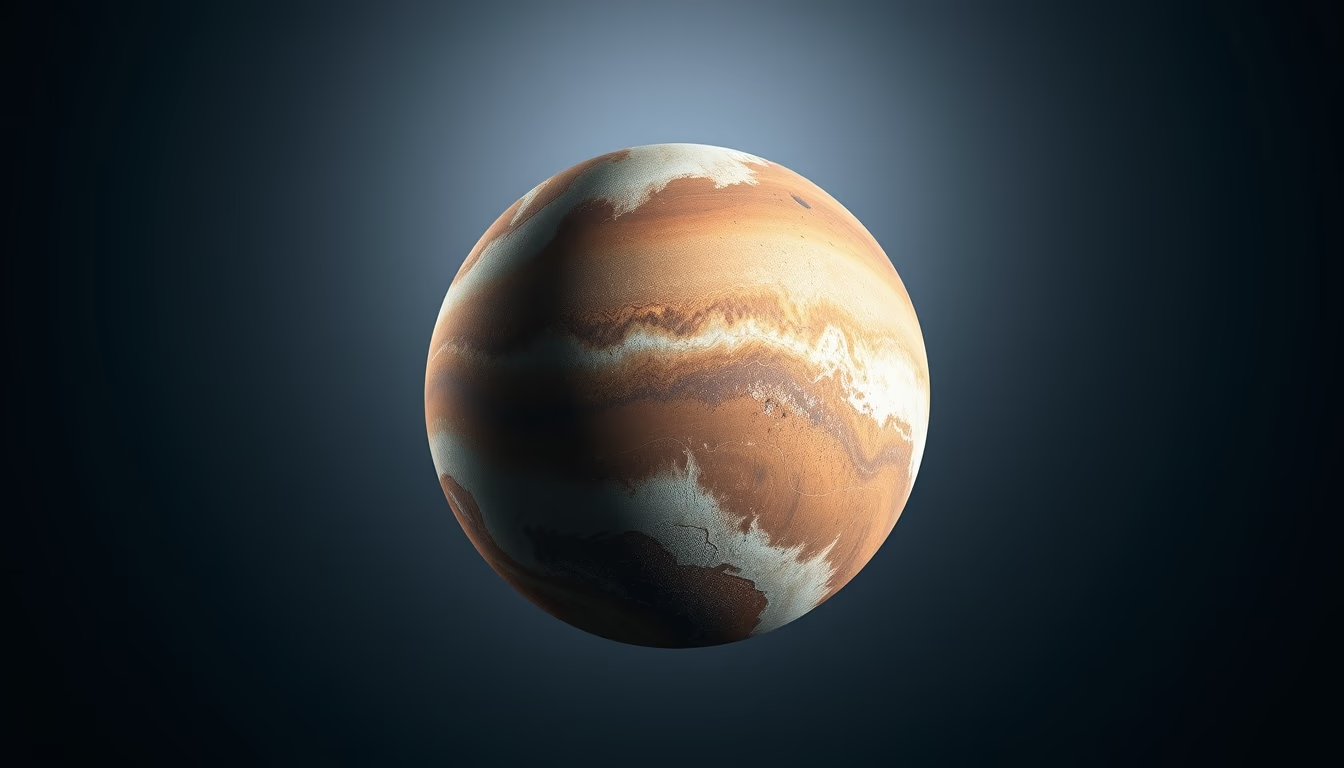
Tidal locked planet
1344×768 · AVIF · CC BY 4.0
Tidally locked planets keep one face permanently toward their star, creating extreme conditions and intriguing possibilities for astrobiology.
About this subject
A tidally locked planet has its rotation period equal to its orbital period, so the same hemisphere always faces its host star. This phenomenon is common among exoplanets orbiting close to red dwarf stars, such as those in the TRAPPIST-1 system. Earth's Moon is a classic example of tidal locking, but with respect to Earth.
On the permanent dayside, temperatures can be extremely high, while the permanent nightside freezes to cryogenic levels. The region between them, the terminator, may host moderate temperatures and potentially liquid surface water. This zone is a key target for astrobiology, combining thermal stability with some light.
The significance of these planets in the search for extraterrestrial life is immense. Red dwarfs are the most common stars in the universe, and their habitable zones are so close that tidal locking is almost inevitable. Exoplanets like Proxima b and those in the TRAPPIST-1 system are in this category. Atmospheric circulation, if present, could redistribute heat and prevent total freezing of the dark side, creating more temperate climates.
Interestingly, tidal locking also generates intense tidal forces that can heat the planetary interior, sustaining geological activity and possibly volcanism. This, combined with the potential presence of liquid water, makes these worlds natural laboratories for understanding habitability under extreme conditions.
Frequently Asked Questions
What does it mean for a planet to be tidally locked?
It means the planet takes the same time to rotate on its axis and to orbit its star, resulting in one hemisphere always facing the star (eternal day) and the other always in darkness (eternal night).
Why are tidally locked planets important in the search for life?
They are common in the habitable zones of red dwarf stars, the most abundant stars in the universe. The terminator region may offer suitable conditions for liquid water and life despite the thermal extremes.
How can the atmosphere of a tidally locked planet affect its climate?
A thick atmosphere can circulate heat from the dayside to the nightside, moderating temperatures. Without an atmosphere, the nightside freezes and the dayside overheats, making surface life impossible.
Direct URL
https://pub-c7d6a6ea828543ac903a74a341ccb2e1.r2.dev/imagens/tidal-locked-planet-commercial-product-photography-fresh3.avifHow to credit
Include a visible link back to UtilizAí. Copy one of the snippets below:
<a href="https://xn--utiliza-eza.com/en/midia/imagens/tidal-locked-planet-commercial-product-photography-fresh3">Tidal locked planet</a> by <a href="https://xn--utiliza-eza.com">UtilizAí</a>, licensed under <a href="https://creativecommons.org/licenses/by/4.0/">CC BY 4.0</a>.
[Tidal locked planet](https://xn--utiliza-eza.com/en/midia/imagens/tidal-locked-planet-commercial-product-photography-fresh3) by [UtilizAí](https://xn--utiliza-eza.com), CC BY 4.0
License: CC-BY-4.0