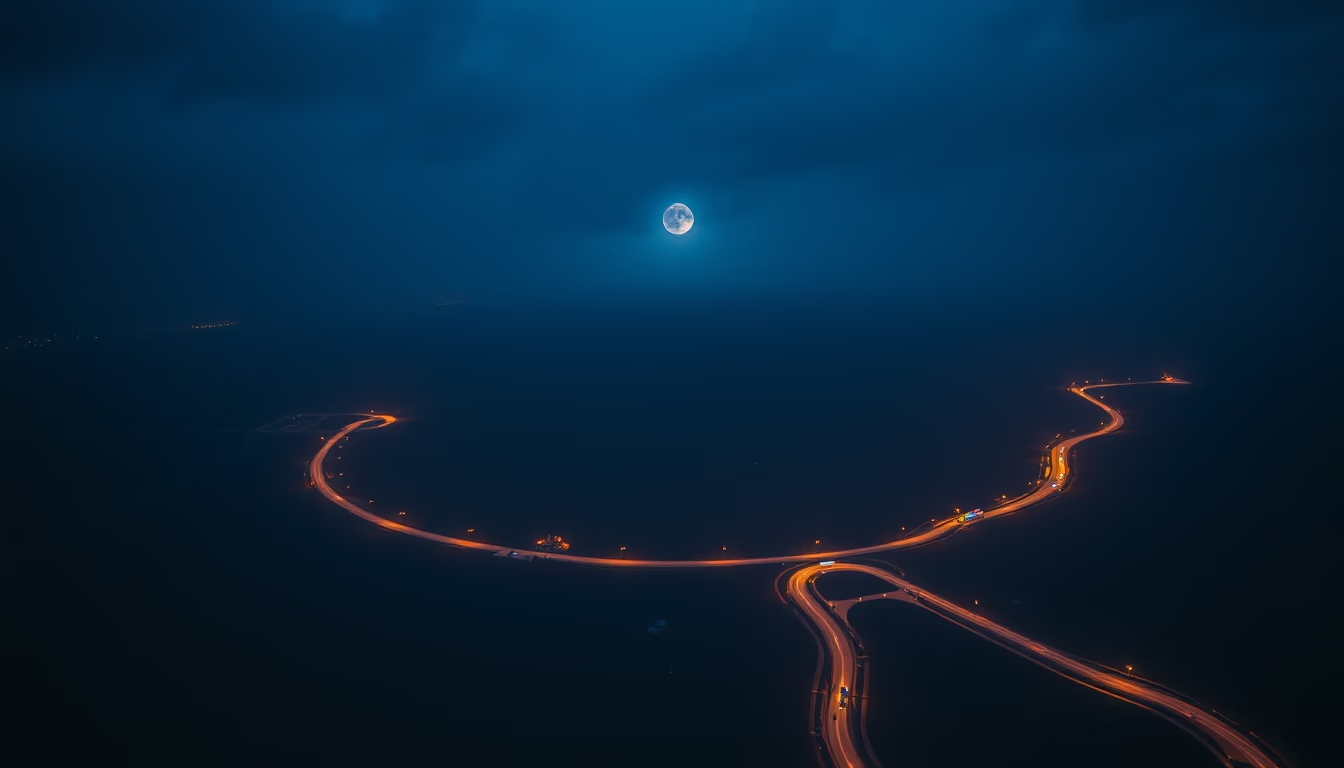
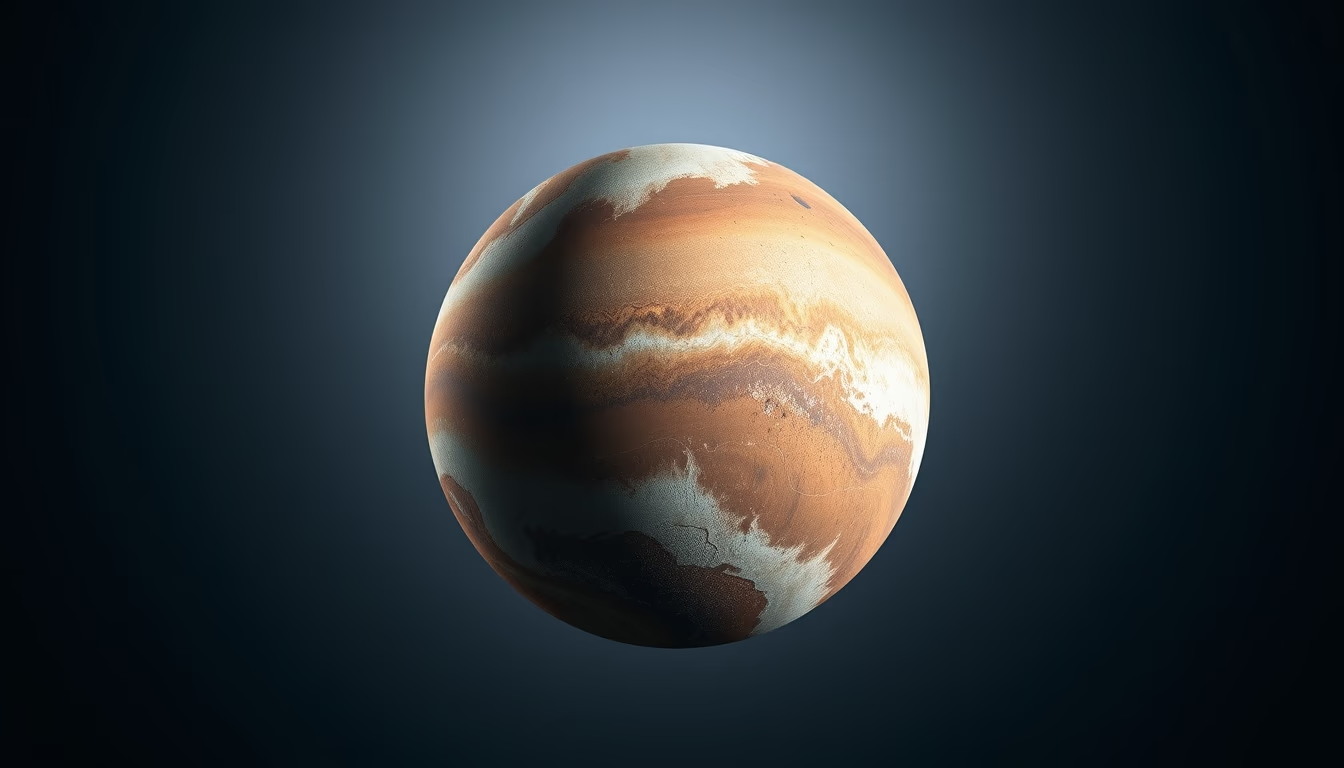
Rogue planet darkness
1344×768 · AVIF · CC BY 4.0

Rogue planets, or free-floating planets, drift through space without orbiting any star, plunged into perpetual darkness.
About this subject
Rogue planets are celestial bodies with planetary mass that are not gravitationally bound to any star. They wander freely through the galaxy, receiving no starlight, making them extremely difficult to detect. They are believed to form in two main ways: either they are ejected from their natal planetary systems due to unstable gravitational interactions, or they form directly from the collapse of gas and dust clouds, similar to brown dwarfs but with lower mass.
These solitary worlds are immersed in near-total darkness, as the only possible light source would be the faint residual glow from their formation or, in rare cases, indirect light from distant stars. Estimates suggest there are billions of rogue planets in the Milky Way alone, possibly outnumbering stars. Some studies propose that for every star in the galaxy, there could be up to 100,000 orphan planets, though most are small and rocky.
Detecting rogue planets is a technical challenge. Common methods include gravitational microlensing, where a planet passing near a distant star bends and magnifies its light, or infrared observations, capturing the planet's residual heat. In 2020, astronomers announced the discovery of a Mars-sized rogue planet candidate in the Milky Way, and in 2021, the Hubble Space Telescope confirmed a massive orphan planet about 100 light-years from Earth.
The study of rogue planets is crucial for understanding planetary formation and solar system evolution. They might also be candidates for harboring life if they possess subsurface oceans heated by geothermal activity, similar to Jupiter's moons. However, the lack of light and extremely low temperatures (near absolute zero) make surface life unlikely. These objects serve as natural laboratories for testing astrophysical theories under extreme conditions.
Frequently Asked Questions
What is a rogue planet?
A rogue planet, also known as a free-floating planet, is a celestial body with planetary mass that does not orbit any star, drifting through space alone.
How are rogue planets detected?
The main methods are gravitational microlensing, which detects the bending of light from distant stars, and infrared observations to capture the planet's residual heat.
How many rogue planets are in the Milky Way?
Estimates indicate billions of rogue planets in the Milky Way, possibly outnumbering stars. Some studies suggest up to 100,000 orphan planets per star.
Direct URL
https://pub-c7d6a6ea828543ac903a74a341ccb2e1.r2.dev/imagens/rogue-planet-darkness-fish-eye-wide-angle-fresh11.avifHow to credit
Include a visible link back to UtilizAí. Copy one of the snippets below:
<a href="https://xn--utiliza-eza.com/en/midia/imagens/rogue-planet-darkness-fish-eye-wide-angle-fresh11">Rogue planet darkness</a> by <a href="https://xn--utiliza-eza.com">UtilizAí</a>, licensed under <a href="https://creativecommons.org/licenses/by/4.0/">CC BY 4.0</a>.
[Rogue planet darkness](https://xn--utiliza-eza.com/en/midia/imagens/rogue-planet-darkness-fish-eye-wide-angle-fresh11) by [UtilizAí](https://xn--utiliza-eza.com), CC BY 4.0
License: CC-BY-4.0