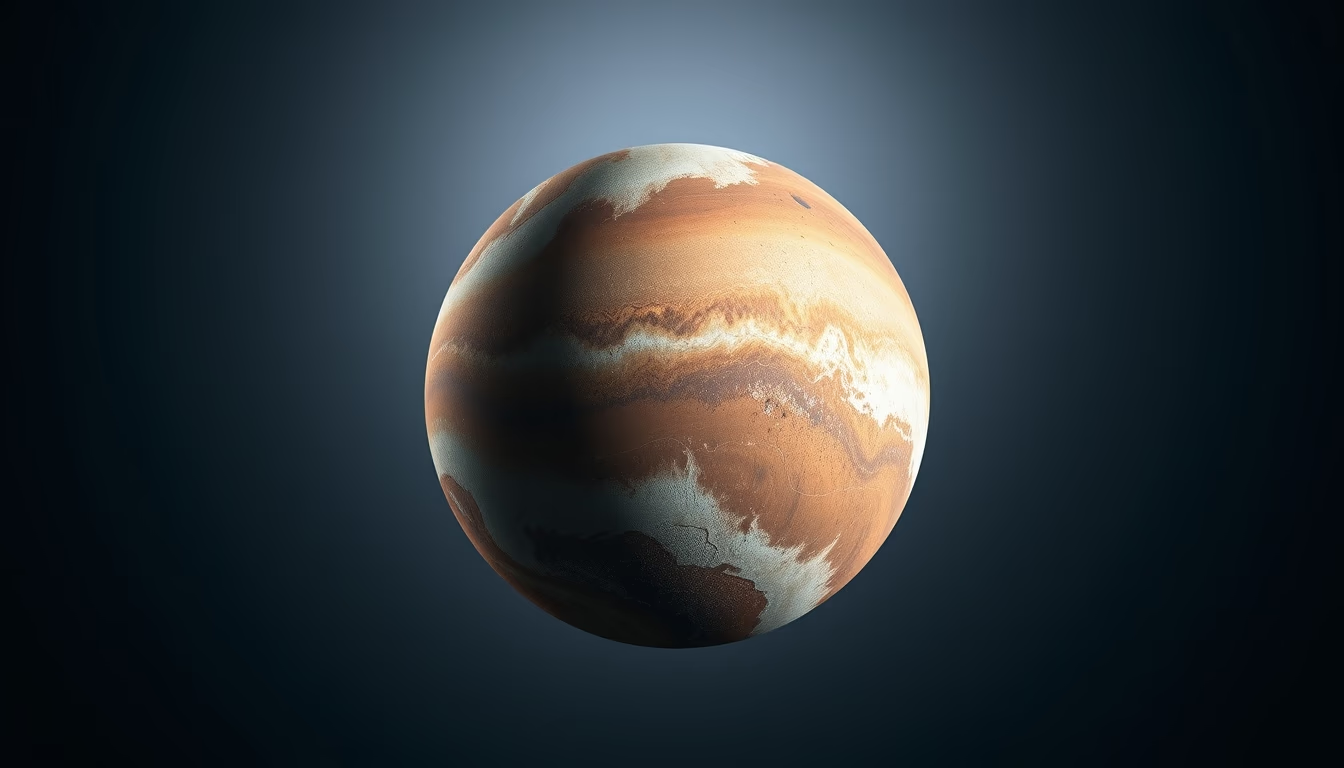
Rogue planet darkness
1344×768 · AVIF · CC BY 4.0
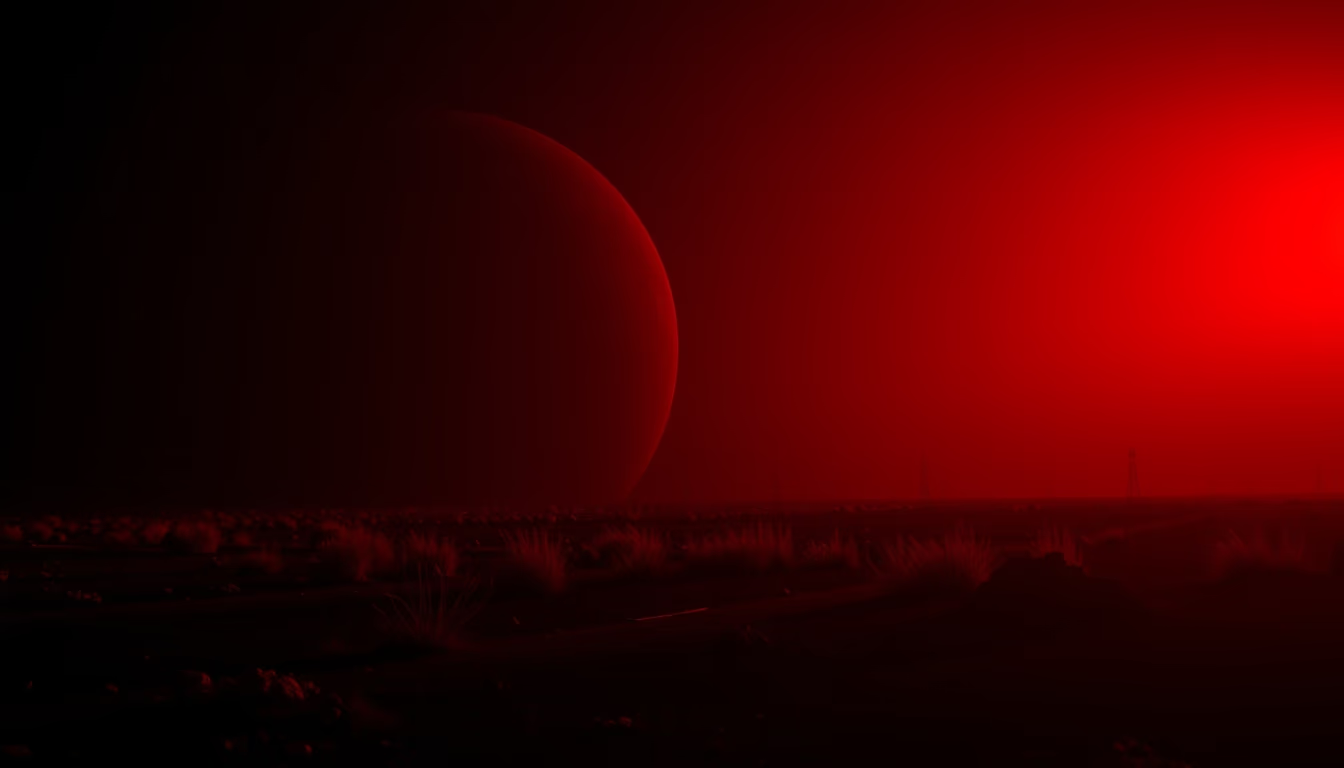
Rogue planets, starless worlds, wander in the darkness of interstellar space. Discover their characteristics and mysteries.
About this subject
Rogue planets, also known as interstellar or orphan planets, are celestial bodies with planetary mass that do not orbit any star. They wander freely through the galaxy, immersed in the darkness of interstellar space. It is estimated that billions exist in the Milky Way alone, possibly outnumbering stars. Most were ejected from their original planetary systems due to gravitational interactions with other planets or stars.
Detecting rogue planets is extremely challenging, as they emit no visible light and are small and cold. The most common methods include gravitational microlensing, which observes the bending of light from distant stars caused by the planet's gravity, and infrared observation, which captures the faint residual heat from their formation. The James Webb Space Telescope has contributed to identifying candidates for these dark worlds.
The surface temperature of a rogue planet is extremely low, ranging from 2.7 K (the cosmic microwave background) to a few tens of Kelvin, depending on its age and internal mass. Without starlight, its atmosphere can freeze and collapse onto the surface. However, young or internally hot rogue planets can retain heat for billions of years, and some may even host subsurface oceans warmed by geothermal activity.
The possibility of life on rogue planets is speculative but intriguing. If a planet has a thick atmosphere and an internal heat source, such as radioactive decay or tidal forces from a large moon, liquid oceans could exist beneath an icy crust. Examples like Jupiter's moon Europa show that dark, cold environments can be habitable. Thus, rogue planets represent a fascinating frontier in the search for extraterrestrial life.
Frequently Asked Questions
What is a rogue planet?
A rogue planet is a celestial body with planetary mass that does not orbit any star. It wanders freely through interstellar space, unbound to any stellar system.
How are rogue planets detected?
They are detected mainly via gravitational microlensing (bending of light from distant stars) and infrared observations, which capture their residual heat.
Is there a possibility of life on rogue planets?
Yes, it is possible. If the planet has an internal heat source, such as geothermal activity, subsurface oceans could exist, creating potentially habitable environments similar to the icy moons of Jupiter and Saturn.
Direct URL
https://pub-c7d6a6ea828543ac903a74a341ccb2e1.r2.dev/imagens/rogue-planet-darkness-fine-art-photography-fresh0.avifHow to credit
Include a visible link back to UtilizAí. Copy one of the snippets below:
<a href="https://xn--utiliza-eza.com/en/midia/imagens/rogue-planet-darkness-fine-art-photography-fresh0">Rogue planet darkness</a> by <a href="https://xn--utiliza-eza.com">UtilizAí</a>, licensed under <a href="https://creativecommons.org/licenses/by/4.0/">CC BY 4.0</a>.
[Rogue planet darkness](https://xn--utiliza-eza.com/en/midia/imagens/rogue-planet-darkness-fine-art-photography-fresh0) by [UtilizAí](https://xn--utiliza-eza.com), CC BY 4.0
License: CC-BY-4.0