Navajo blanket pattern
1344×768 · AVIF · CC BY 4.0
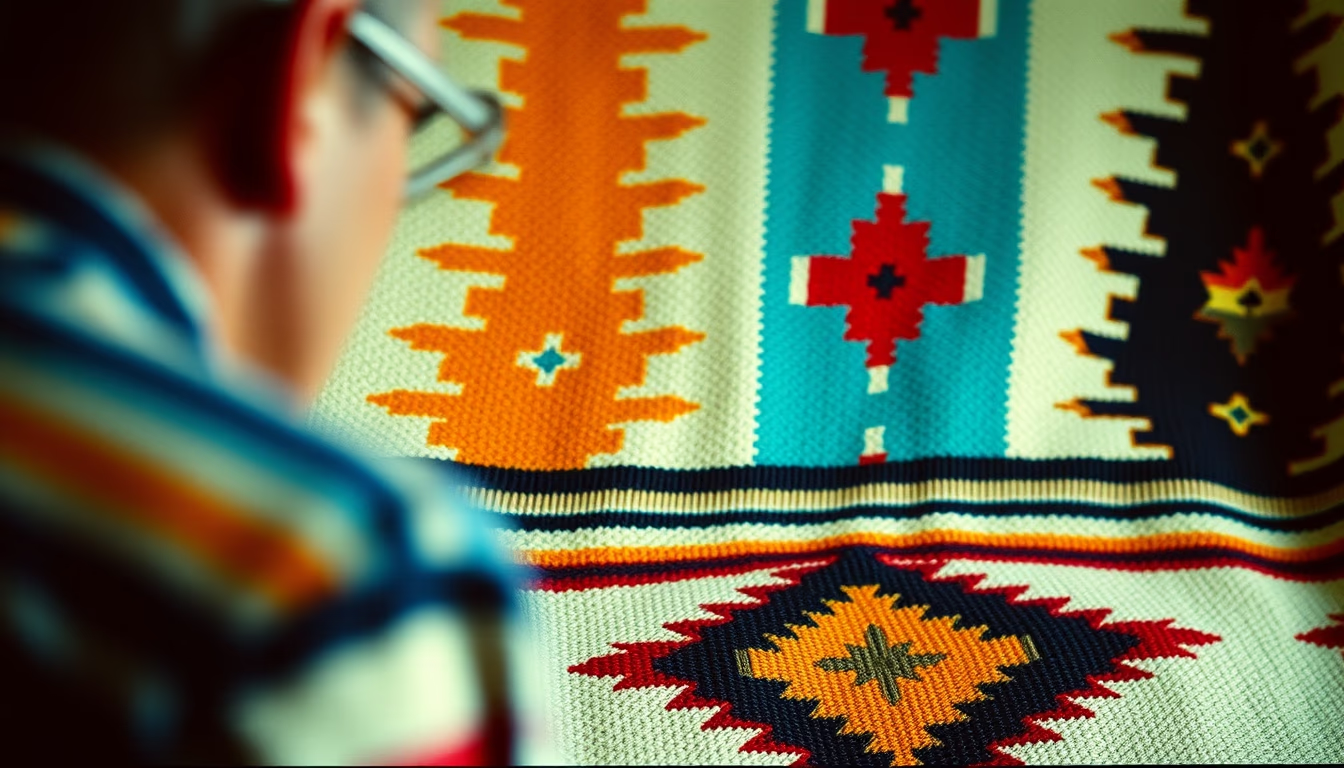
The Navajo blanket pattern, handwoven with naturally dyed wool, carries centuries of tradition, spiritual symbolism, and cultural identity of the Diné people.
About this subject
The Navajo blanket patterns, also known as Diné textiles, represent an ancient artistic tradition that combines refined technique with deep cultural significance. Originating in the Southwestern United States, the Navajo learned weaving from the Pueblo people in the 17th century, developing their own style on vertical looms. Each pattern is woven from memory, without sketches, and reflects elements of nature such as mountains, lightning, stars, and animals, along with spiritual concepts like balance and harmony. Traditional dyes came from plants, minerals, and insects: indigo for blue, cochineal for red, and herbs for yellow and green. After Spanish colonization and the introduction of churro sheep, wool became the primary material. In the 19th century, trade with merchants like J. L. Hubbell popularized Navajo blankets, which were also produced for sale while retaining sacred motifs. Every pattern is meaningful: geometric designs like diamonds and zigzags represent creation stories and protection. The weaver, usually a woman, is considered a guardian of knowledge, and completing a blanket can take months. Today, Navajo weaving is recognized worldwide but faces preservation challenges amid industrial production. Yet contemporary weavers like D. Y. Begay innovate without breaking tradition, keeping the legacy of the patterns alive.
Frequently Asked Questions
What do Navajo blanket patterns mean?
Patterns carry spiritual and cultural symbolism: diamonds may represent the sacred mountain, zigzags symbolize lightning or life's journey, and stripes evoke rainbows or paths. Each design is unique and often tells a story or invokes protection.
How are Navajo blankets traditionally made?
They are woven on a vertical loom using hand-spun wool yarn dyed with natural pigments. The weaver works from memory, without written patterns, using techniques like ‘weaving in the round’ to create firm edges. The process can take months of daily work.
Are Navajo patterns still produced today?
Yes, many Navajo artisans continue to weave blankets and rugs with traditional patterns, along with contemporary designs. Direct sales at fairs and craft shops help preserve the technique, but industrial production and cultural appropriation threaten authenticity.
Direct URL
https://pub-c7d6a6ea828543ac903a74a341ccb2e1.r2.dev/imagens/navajo-blanket-pattern-lo-fi-disposable-camera-fresh11.avifHow to credit
Include a visible link back to UtilizAí. Copy one of the snippets below:
<a href="https://xn--utiliza-eza.com/en/midia/imagens/navajo-blanket-pattern-lo-fi-disposable-camera-fresh11">Navajo blanket pattern</a> by <a href="https://xn--utiliza-eza.com">UtilizAí</a>, licensed under <a href="https://creativecommons.org/licenses/by/4.0/">CC BY 4.0</a>.
[Navajo blanket pattern](https://xn--utiliza-eza.com/en/midia/imagens/navajo-blanket-pattern-lo-fi-disposable-camera-fresh11) by [UtilizAí](https://xn--utiliza-eza.com), CC BY 4.0
License: CC-BY-4.0