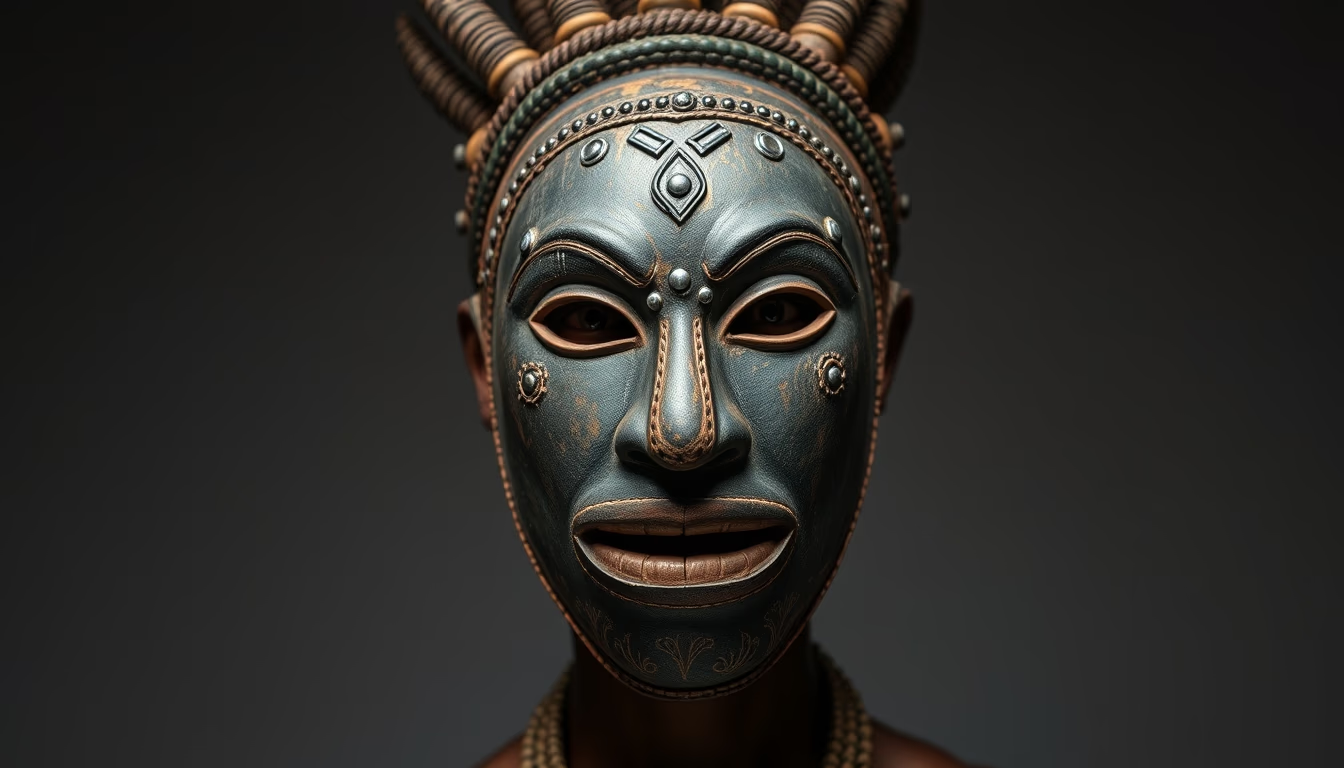
Maori carving pacific
1344×768 · AVIF · CC BY 4.0
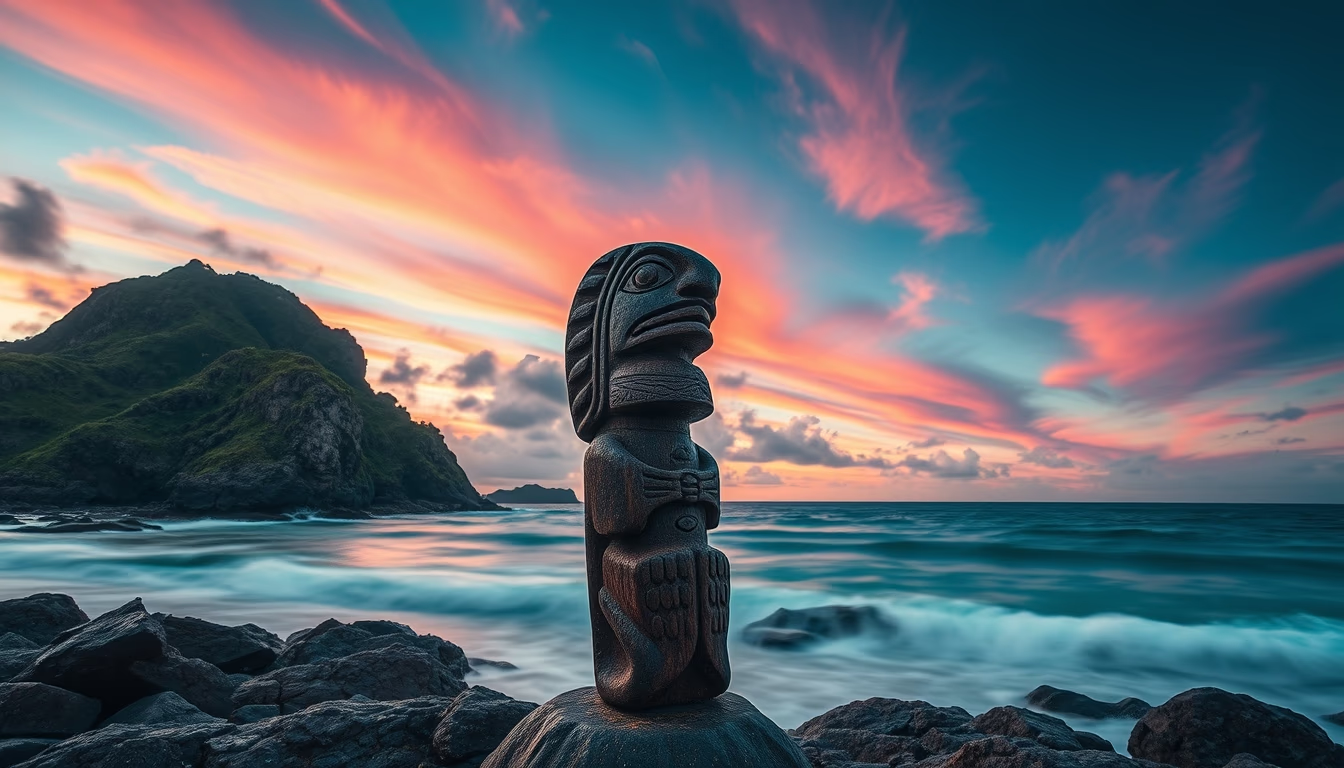
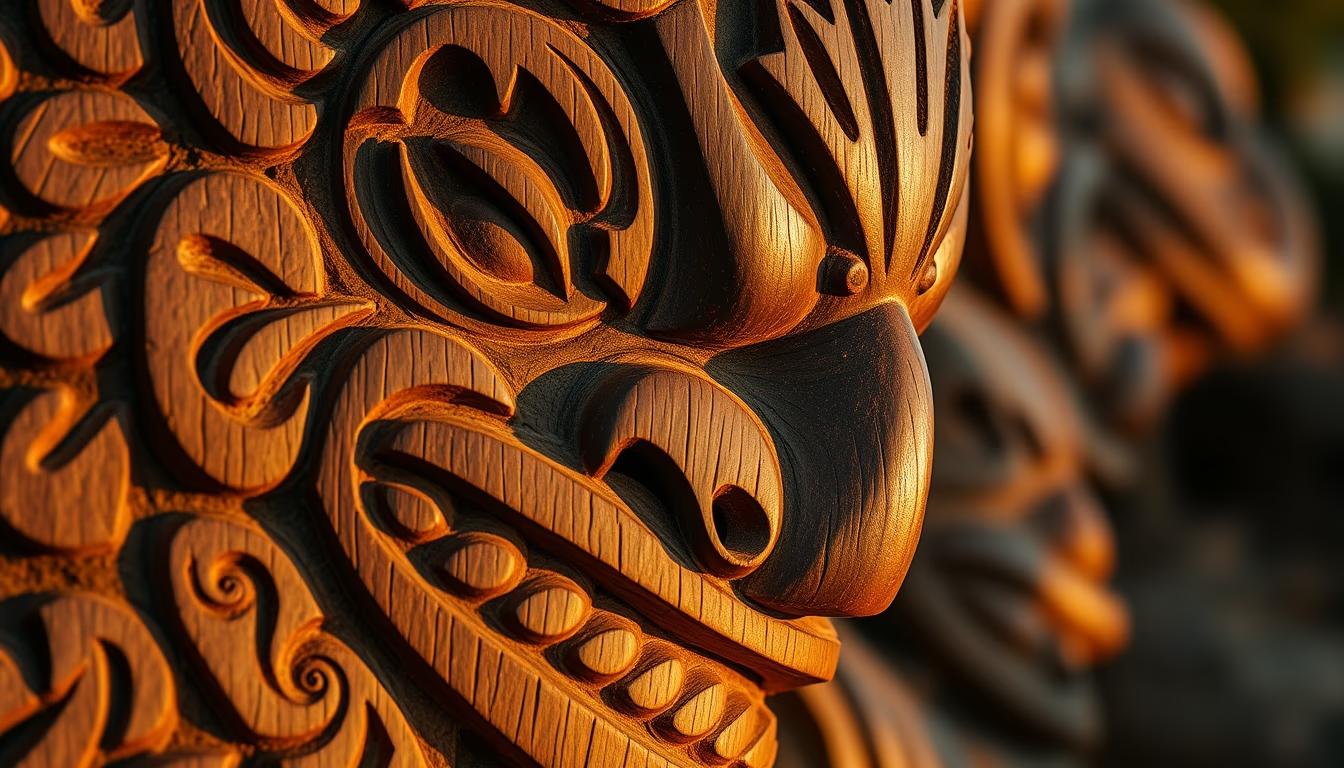
Maori carving, or whakairo, is a traditional art form that expresses the genealogy and stories of the Maori people of the Pacific.
About this subject
Maori carving, known as whakairo, is an art form deeply rooted in the Polynesian culture of New Zealand. Traditionally carved from wood, jade (pounamu), or bone, each piece carries spiritual and historical meanings, representing ancestors, gods, and significant events. Figures often feature the tiki, a stylized human form symbolizing the first man in Maori mythology, and the koru, a spiral evoking the cycle of life and nature.
Carving techniques are passed down through generations, using stone or metal chisels and no nails, with pieces fitted precisely. The patterns are not merely decorative: each curve and notch tells a part of the tribe's (iwi) or family's (whānau) story. Traditional colors like red (kōkōwai) and black are obtained from natural pigments.
In the Pacific context, Maori art shares similarities with other Polynesian cultures but developed a distinct style emphasizing intricate details and symmetry. Today, carvings are found on marae (meeting grounds), in museums worldwide, and in contemporary jewelry. Artists like Cliff Whiting and Rangi Kipa are recognized for keeping this tradition alive, adapting it to new materials and contexts.
Preservation of whakairo is crucial, as many old pieces have been damaged or lost. Restoration efforts and the continuous practice of carving ensure this cultural heritage remains relevant. Additionally, Maori art has inspired artistic movements in New Zealand and abroad, celebrating indigenous identity and the connection to the Pacific Ocean.
Frequently Asked Questions
What does the koru symbol mean in Maori culture?
The koru is a spiral representing the cycle of life, renewal, and growth. Inspired by the shape of a fern frond, it symbolizes the beginning of a new phase.
What is the difference between a tiki and a hei tiki?
A tiki is a stylized human figure carved, while a hei tiki is a pendant made of jade or bone worn as an amulet. Both represent ancestors and are symbols of protection and fertility.
How are Maori carvings preserved today?
Many ancient pieces are in museums with controlled humidity and light. There are restoration projects and carving schools teaching traditional techniques to keep the practice alive.
Direct URL
https://pub-c7d6a6ea828543ac903a74a341ccb2e1.r2.dev/imagens/maori-carving-pacific-long-exposure-fresh12.avifHow to credit
Include a visible link back to UtilizAí. Copy one of the snippets below:
<a href="https://xn--utiliza-eza.com/en/midia/imagens/maori-carving-pacific-long-exposure-fresh12">Maori carving pacific</a> by <a href="https://xn--utiliza-eza.com">UtilizAí</a>, licensed under <a href="https://creativecommons.org/licenses/by/4.0/">CC BY 4.0</a>.
[Maori carving pacific](https://xn--utiliza-eza.com/en/midia/imagens/maori-carving-pacific-long-exposure-fresh12) by [UtilizAí](https://xn--utiliza-eza.com), CC BY 4.0
License: CC-BY-4.0