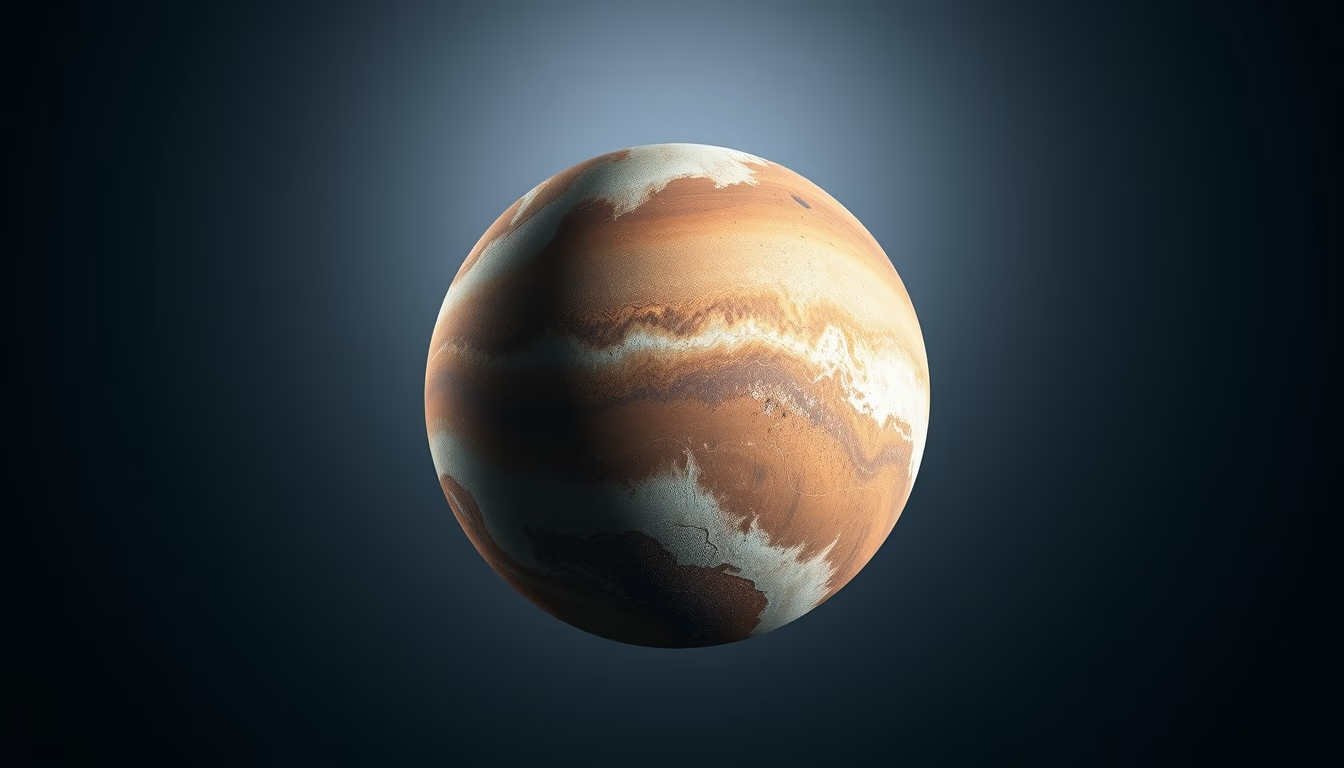
Kepler 186f earthlike concept
1344×768 · AVIF · CC BY 4.0

Kepler-186f, the first Earth-sized exoplanet found in the habitable zone of its star, orbits a red dwarf 500 light-years away.
About this subject
Kepler-186f is an exoplanet that marks a milestone in astronomy: it was the first Earth-sized planet discovered within the habitable zone of its star. Discovered in 2014 by NASA's Kepler space telescope, it orbits the red dwarf star Kepler-186, located about 500 light-years away in the constellation Cygnus. With a radius approximately 1.1 times that of Earth, Kepler-186f receives about one-third the energy that Earth receives from the Sun, placing it at the outer edge of the habitable zone, the region where liquid water could exist on the surface.
The star Kepler-186 is a red dwarf of spectral type M1V, smaller and cooler than the Sun, with a surface temperature of about 3,700 K. The planet completes an orbit every 130 days, at a distance of approximately 0.36 AU (astronomical units) from its star. Due to its proximity to the star, Kepler-186f is likely tidally locked, meaning one side always faces the star (dayside) and the other is in permanent darkness (nightside). This phenomenon, known as tidal locking, could create extreme temperature contrasts but also potentially temperate regions along the terminator.
The composition and atmosphere of Kepler-186f remain unknown. Theoretical models suggest that, depending on atmospheric composition, the planet could retain liquid water on its surface. However, because it orbits an active red dwarf, it may be subject to intense stellar flares that could erode its atmosphere. The discovery of Kepler-186f boosted the search for potentially habitable exoplanets, serving as a prototype for future missions such as the James Webb Space Telescope, which could analyze the atmospheres of similar planets for biosignatures.
Interestingly, the Kepler-186 system hosts four other planets (Kepler-186b, c, d, e), all smaller than Neptune and with inner orbits, completing revolutions in 4 to 22 days. Kepler-186f is the fifth and outermost known planet in the system. Despite being one of the first candidates for an 'Earth twin', later studies suggest it may be more like a 'Super-Earth' or 'Mega-Earth', depending on its actual mass, which has not yet been directly measured.
Frequently Asked Questions
Is Kepler-186f truly habitable?
The habitability of Kepler-186f is uncertain. It is located in the habitable zone of its star, so it could theoretically have liquid water. However, because it orbits an active red dwarf and is likely tidally locked, extreme conditions may make life as we know it difficult.
How far is Kepler-186f from Earth?
Kepler-186f is about 500 light-years away from Earth, in the constellation Cygnus. This distance is immense for interstellar travel but allows detailed telescopic observations.
How was Kepler-186f discovered?
The planet was discovered using the transit method with NASA's Kepler space telescope. When the planet passed in front of its star, it blocked a small fraction of the light, allowing astronomers to detect its presence and estimate its size and orbit.
Direct URL
https://pub-c7d6a6ea828543ac903a74a341ccb2e1.r2.dev/imagens/kepler-186f-earthlike-concept-magazine-editorial-fresh6.avifHow to credit
Include a visible link back to UtilizAí. Copy one of the snippets below:
<a href="https://xn--utiliza-eza.com/en/midia/imagens/kepler-186f-earthlike-concept-magazine-editorial-fresh6">Kepler 186f earthlike concept</a> by <a href="https://xn--utiliza-eza.com">UtilizAí</a>, licensed under <a href="https://creativecommons.org/licenses/by/4.0/">CC BY 4.0</a>.
[Kepler 186f earthlike concept](https://xn--utiliza-eza.com/en/midia/imagens/kepler-186f-earthlike-concept-magazine-editorial-fresh6) by [UtilizAí](https://xn--utiliza-eza.com), CC BY 4.0
License: CC-BY-4.0