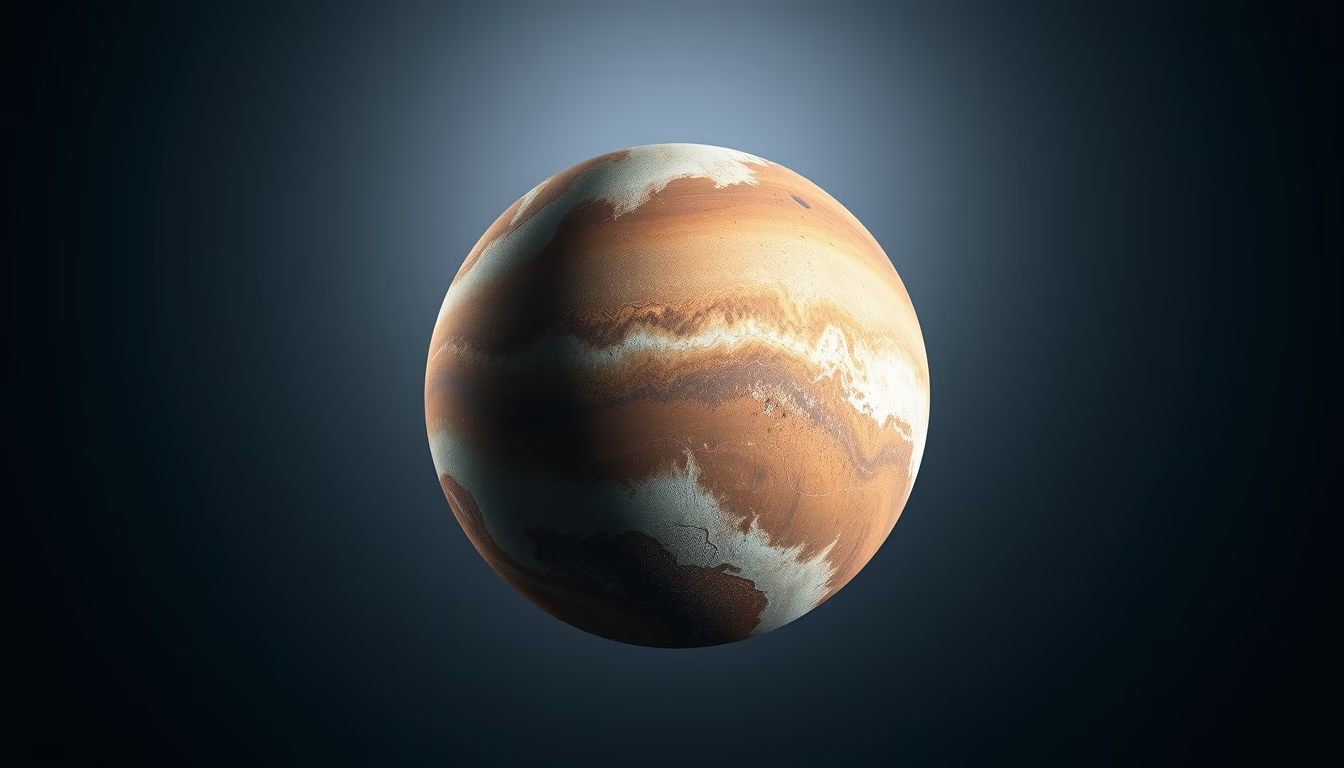
Kepler 186f earthlike concept
1344×768 · AVIF · CC BY 4.0

Kepler-186f is the first Earth-sized exoplanet found in the habitable zone of its star, located 500 light-years away.
About this subject
Kepler-186f is an exoplanet discovered by NASA's Kepler space telescope in 2014. It orbits the red dwarf star Kepler-186 in the constellation Cygnus, approximately 500 light-years from Earth. Its size is only 10% larger than Earth, making it one of the most Earth-like planets found to date. It lies within the habitable zone of its star, the region where temperatures allow liquid water to exist on the surface, a prerequisite for life as we know it.
Kepler-186 is an M1-type red dwarf, cooler and smaller than the Sun. The planet completes one orbit every 130 days. Due to its close proximity to its star, Kepler-186f is likely tidally locked, with one side permanently facing the star and the other in perpetual darkness, which could affect its climate and potential habitability. However, theoretical models suggest that depending on its atmospheric composition, portions of the planet could sustain liquid water.
The discovery of Kepler-186f was a milestone in the search for habitable worlds. Previously, exoplanets found in the habitable zone were gas giants or super-Earths with much larger masses. Kepler-186f showed that Earth-sized rocky planets can exist in temperate zones around red dwarf stars, the most common star type in the galaxy. This increases the chances of finding potentially habitable worlds in our cosmic neighborhood.
Interesting facts: Kepler-186f receives about one-third the energy from its star compared to Earth from the Sun. This places it near the outer edge of the habitable zone, where it might be colder, but atmospheres rich in greenhouse gases could warm it. To date, the exact composition of its atmosphere or surface is unknown, keeping the planet a subject of intense study and scientific speculation.
Frequently Asked Questions
Is Kepler-186f actually habitable?
The habitability of Kepler-186f remains uncertain. It lies in the habitable zone, but near the outer edge, so it may be too cold. Liquid water depends on factors like atmospheric composition and greenhouse effect. We lack direct data on its atmosphere.
How far is Kepler-186f from Earth?
Kepler-186f is about 500 light-years away in the constellation Cygnus. Any interstellar journey would take thousands of years with current technology.
How was Kepler-186f discovered?
Kepler-186f was discovered by NASA's Kepler space telescope using the transit method. The telescope detected tiny dips in the brightness of star Kepler-186 as the planet passed in front of it. This revealed the planet's size and orbital period.
Direct URL
https://pub-c7d6a6ea828543ac903a74a341ccb2e1.r2.dev/imagens/kepler-186f-earthlike-concept-commercial-product-photography-fresh7.avifHow to credit
Include a visible link back to UtilizAí. Copy one of the snippets below:
<a href="https://xn--utiliza-eza.com/en/midia/imagens/kepler-186f-earthlike-concept-commercial-product-photography-fresh7">Kepler 186f earthlike concept</a> by <a href="https://xn--utiliza-eza.com">UtilizAí</a>, licensed under <a href="https://creativecommons.org/licenses/by/4.0/">CC BY 4.0</a>.
[Kepler 186f earthlike concept](https://xn--utiliza-eza.com/en/midia/imagens/kepler-186f-earthlike-concept-commercial-product-photography-fresh7) by [UtilizAí](https://xn--utiliza-eza.com), CC BY 4.0
License: CC-BY-4.0