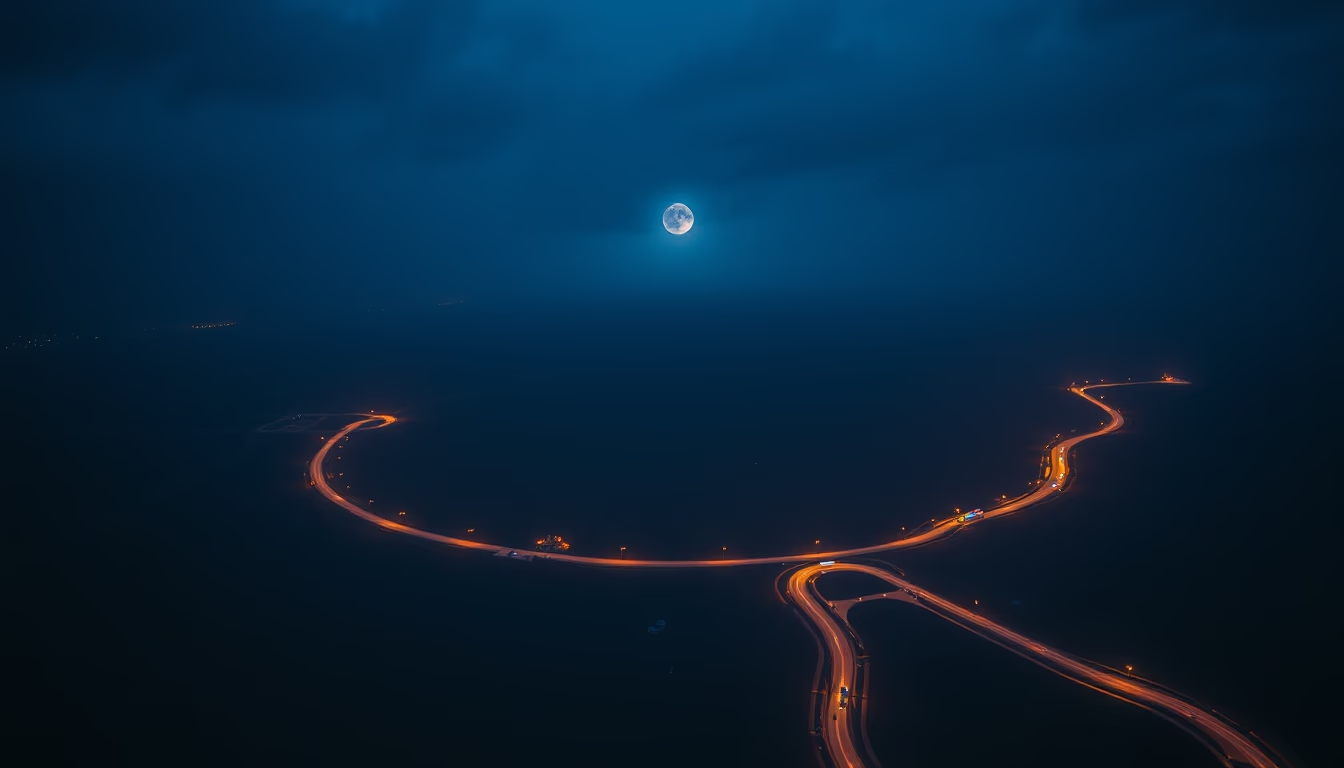
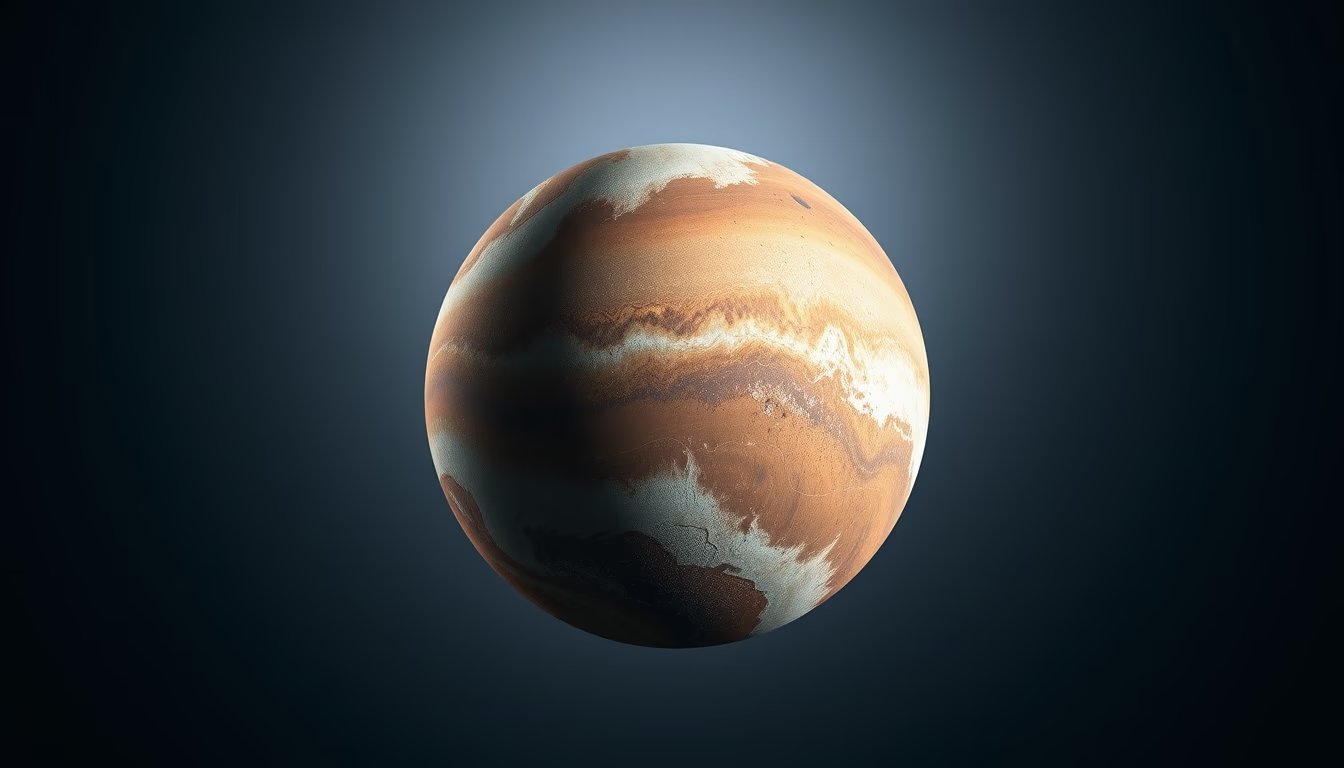
Binary star sunset
1344×768 · AVIF · CC BY 4.0

Sunset on a planet orbiting a binary star system: what colors and shadows would look like in a world with two suns?
About this subject
Binary star systems consist of two stars orbiting a common center of mass. They are extremely common in the Milky Way: about half of all stars are estimated to be in multiple systems. When a planet orbits a binary system, the spectacle of a sunset can be dramatically different from Earth's. Instead of a single star setting, an observer would see two suns, possibly with occultations, eclipses, and brightness variations as orbits align.
The color of the sky would depend on the spectral types of the stars. A cool M-type red dwarf would produce deep orange hues, while a hot A or B star would shine with bluish light. In close systems, differential heating could generate intense atmospheric winds and exotic weather patterns. The most famous fictional example is Tatooine from Star Wars, but real circumbinary planets have been discovered, such as Kepler-16b, which orbits two orange dwarfs.
The visibility of a binary sunset depends on orbital geometry. If the planet is in a circumbinary orbit (around both stars), both suns may set simultaneously or at different times, creating prolonged twilights. In an orbit around only one star (S-type), the second star would appear as a bright point in the sky, like Venus from Earth but more intense.
Curiously, in systems where stars are very close, tidal effects can distort one star, causing variable brightness. A planet's temperature in such a scenario would also oscillate in complex ways, potentially leading to seasons very different from Earth's. Astronomers use the transit method to detect these planets, measuring tiny brightness dips when a planet passes in front of one of the stars.
Frequently Asked Questions
What is a binary star system?
It is a system where two stars orbit a common center of mass. They can be Sun-like or different types, such as red dwarfs and blue giants.
Are there real planets in binary systems?
Yes. The first discovered was Kepler-16b, orbiting two orange dwarfs. Dozens of circumbinary planets and others orbiting just one star of the pair have been confirmed.
What would the sky color be like during a binary sunset?
It depends on the stars. A cool star gives orange hues, while a hot star gives blue tones. The combination can produce complex colors like purple or green, depending on the planetary atmosphere.
Direct URL
https://pub-c7d6a6ea828543ac903a74a341ccb2e1.r2.dev/imagens/binary-star-sunset-macro-closeup-fresh1.avifHow to credit
Include a visible link back to UtilizAí. Copy one of the snippets below:
<a href="https://xn--utiliza-eza.com/en/midia/imagens/binary-star-sunset-macro-closeup-fresh1">Binary star sunset</a> by <a href="https://xn--utiliza-eza.com">UtilizAí</a>, licensed under <a href="https://creativecommons.org/licenses/by/4.0/">CC BY 4.0</a>.
[Binary star sunset](https://xn--utiliza-eza.com/en/midia/imagens/binary-star-sunset-macro-closeup-fresh1) by [UtilizAí](https://xn--utiliza-eza.com), CC BY 4.0
License: CC-BY-4.0