Binary star sunset
1344×768 · AVIF · CC BY 4.0
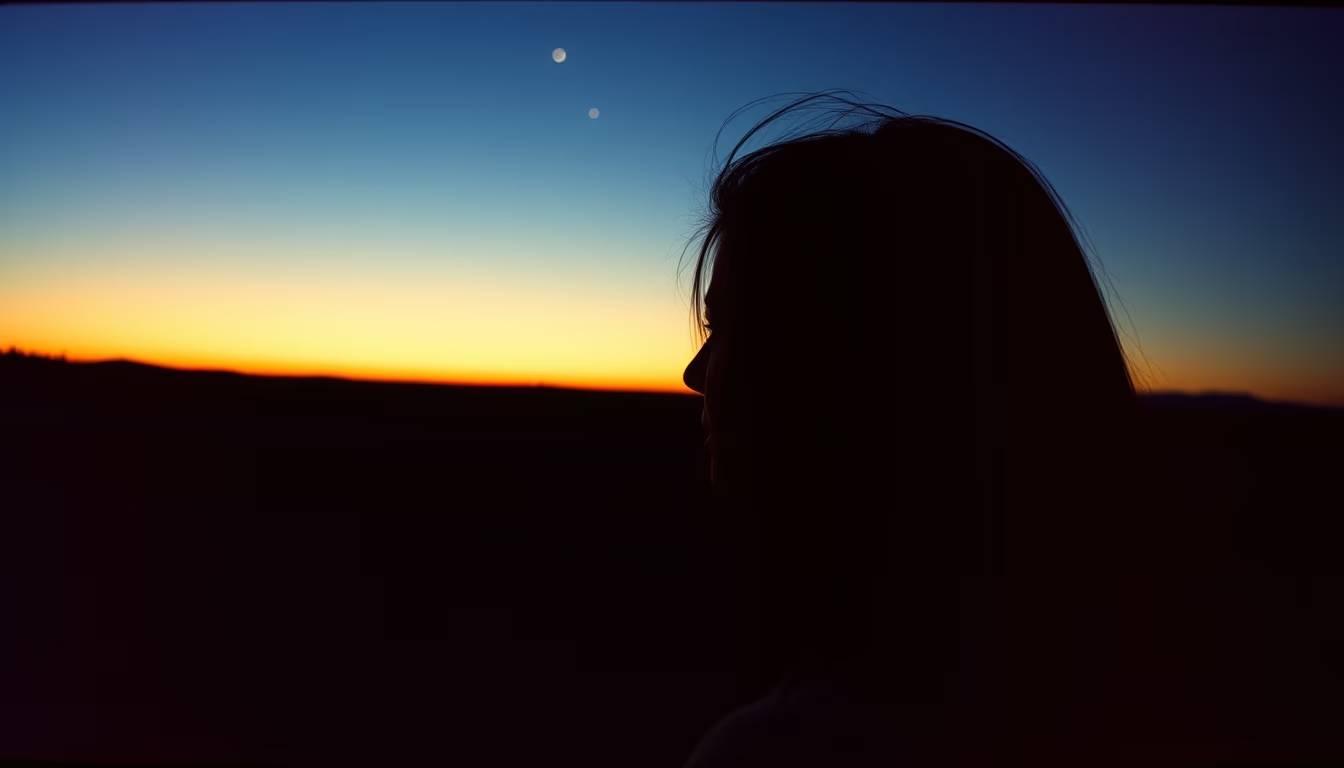
A sunset on a planet orbiting a binary star system, with two suns setting on the horizon.
About this subject
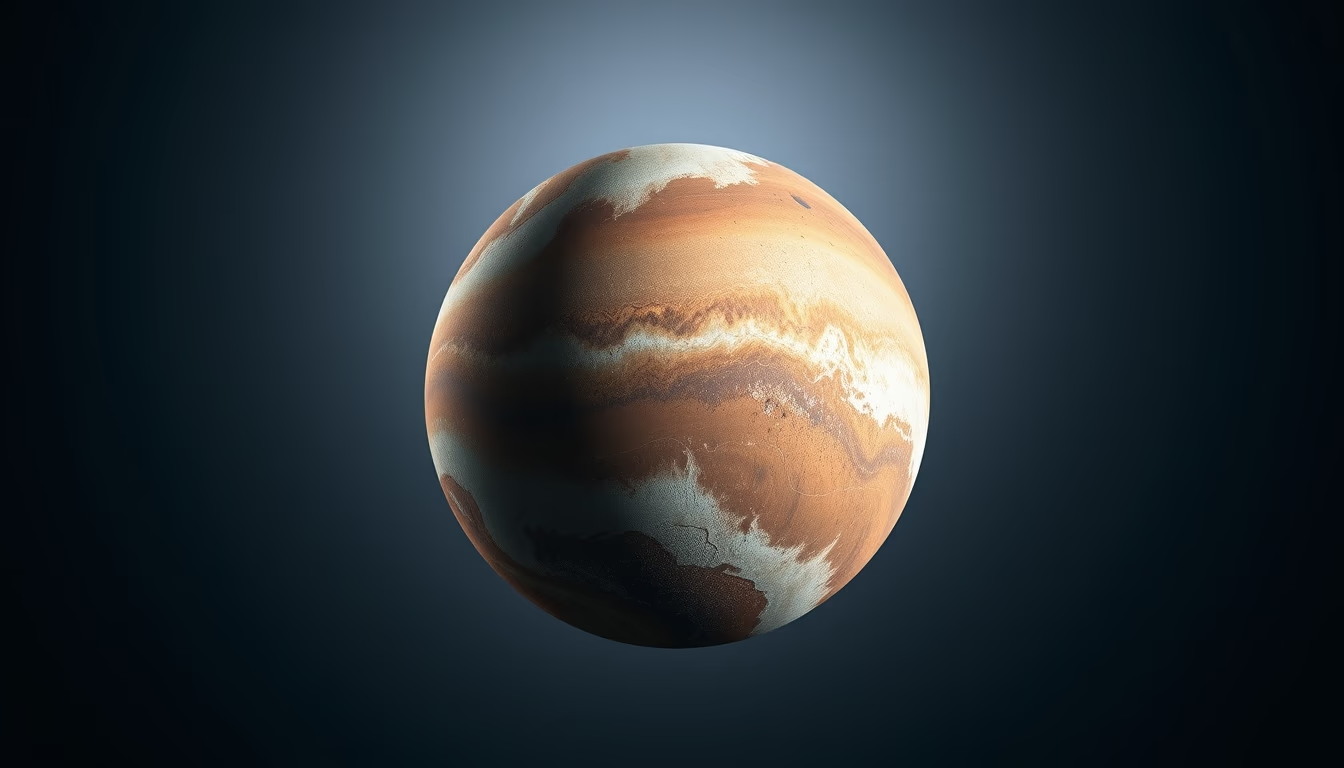
Binary star systems are common in the Milky Way, accounting for about half of all stars. When a planet orbits such a system, the sky can display unique phenomena, such as two suns setting in sequence or simultaneously, depending on the orbital configuration. The most famous example in popular culture is the planet Tatooine from Star Wars, but real exoplanets have been discovered in binary systems, such as Kepler-16b, a Saturn-sized planet orbiting two dwarf stars. Orbital stability in these systems depends on the distance between the stars and the planet's position: too close, and the planet may be ejected or have a chaotic orbit. The habitable zone of a binary can be complex, with variations in received radiation throughout the year. Astronomers estimate that planets in binary systems may be as common as those around single stars, expanding the possibilities for worlds with spectacular skies.
Frequently Asked Questions
How stable are orbits for planets in binary star systems?
Planets can orbit one star (S-type) or both (P-type). Stability depends on distance: in P-type orbits, the planet must be far enough to avoid gravitational perturbations. Known examples include Kepler-16b and Kepler-47c.
Is it possible for life to exist on planets with two suns?
Yes, theoretically. The habitable zone can be stable in certain configurations, such as when the stars are close and the planet orbits both. Variable radiation may affect climate but does not preclude liquid water.
How many planets in binary systems have been discovered?
Currently, over a dozen circumbinary planets have been confirmed, mainly by the Kepler telescope. Most are gas giants, but detecting rocky planets remains challenging.
Direct URL
https://pub-c7d6a6ea828543ac903a74a341ccb2e1.r2.dev/imagens/binary-star-sunset-lo-fi-disposable-camera-fresh10.avifHow to credit
Include a visible link back to UtilizAí. Copy one of the snippets below:
<a href="https://xn--utiliza-eza.com/en/midia/imagens/binary-star-sunset-lo-fi-disposable-camera-fresh10">Binary star sunset</a> by <a href="https://xn--utiliza-eza.com">UtilizAí</a>, licensed under <a href="https://creativecommons.org/licenses/by/4.0/">CC BY 4.0</a>.
[Binary star sunset](https://xn--utiliza-eza.com/en/midia/imagens/binary-star-sunset-lo-fi-disposable-camera-fresh10) by [UtilizAí](https://xn--utiliza-eza.com), CC BY 4.0
License: CC-BY-4.0