Binary star sunset
1344×768 · AVIF · CC BY 4.0
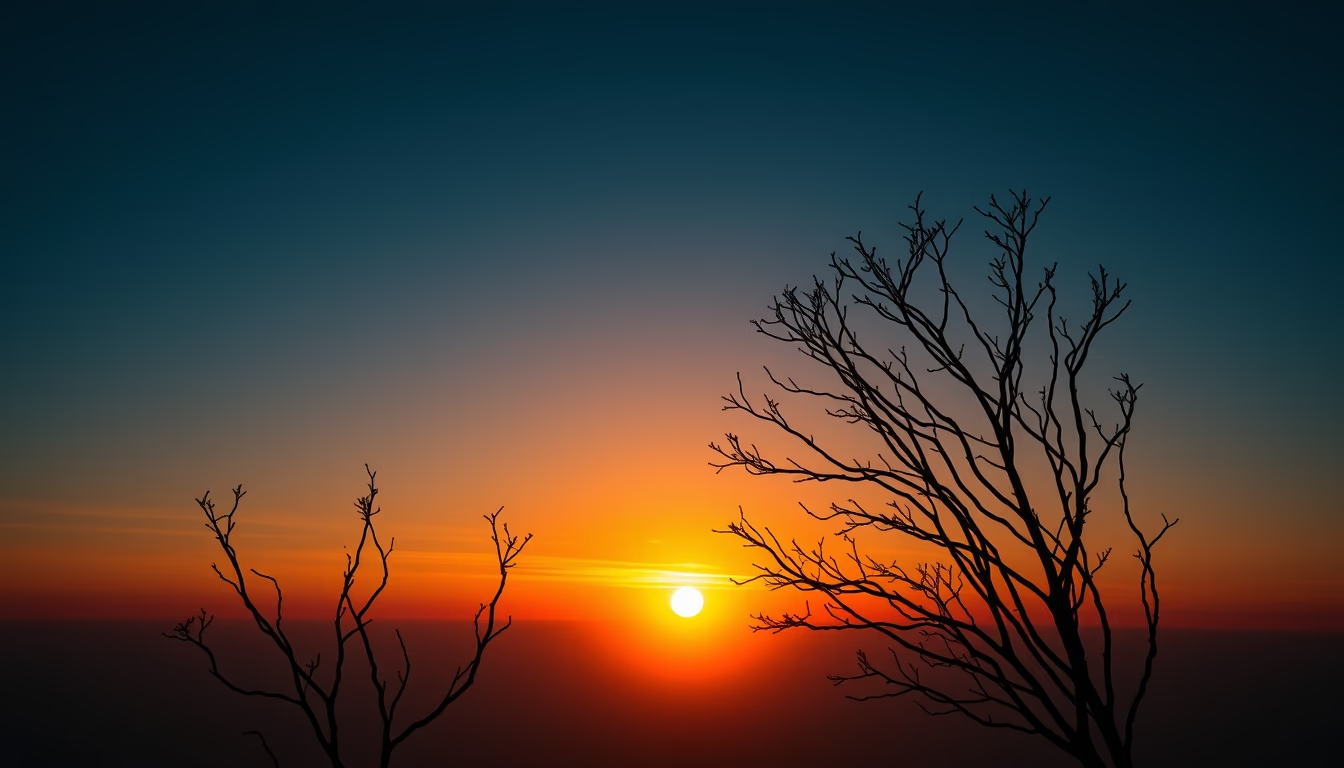
In binary systems, sunsets can be double: two stars illuminate exoplanets orbiting a stellar pair, a common phenomenon in the Milky Way.
About this subject
About half of Sun-like stars reside in binary or multiple systems. In such configurations, planets can orbit one star (S-type orbit) or both (P-type orbit, like Tatooine). A binary sunset is a visual spectacle that varies depending on the masses, colors, and distances of the stars. For instance, a red dwarf and a yellow star create distinct orange and red hues.
Confirmed exoplanets in binary systems include Kepler-16b, discovered in 2011, which orbits a pair of stars about 200 light-years away. It completes an orbit in 229 days and has an estimated surface temperature of -85°C. Another example is Kepler-47b, in a triple-star system. The habitable zone in binaries is complex: radiation from two sources can sterilize life or, if well positioned, provide stable warmth.
Orbital dynamics in binaries are challenging. Planets must maintain stable orbits within a critical radius (typically 1/3 of the distance between the stars). Simulations suggest about 40% of binary systems can host planets in the habitable zone. ESA's PLATO mission, scheduled for launch in 2026, will search for exoplanets in multiple systems, helping to understand the frequency and habitability of these worlds.
Frequently Asked Questions
What is a binary star system?
It is a pair of stars that orbit a common center of mass, bound by gravity. About half of all stars in the Milky Way are part of binary or multiple systems.
Are there known exoplanets in binary systems?
Yes, the most famous is Kepler-16b, discovered in 2011, which orbits two stars. Other examples include Kepler-47 (with three stars) and TOI-1338b.
What would a binary sunset look like from a planet's surface?
It depends on the stars' colors and angles. If the stars have different colors (e.g., one blue and one red), the sky might show two suns setting in complementary hues, creating double shadows.
Direct URL
https://pub-c7d6a6ea828543ac903a74a341ccb2e1.r2.dev/imagens/binary-star-sunset-isometric-flat-lay-fresh13.avifHow to credit
Include a visible link back to UtilizAí. Copy one of the snippets below:
<a href="https://xn--utiliza-eza.com/en/midia/imagens/binary-star-sunset-isometric-flat-lay-fresh13">Binary star sunset</a> by <a href="https://xn--utiliza-eza.com">UtilizAí</a>, licensed under <a href="https://creativecommons.org/licenses/by/4.0/">CC BY 4.0</a>.
[Binary star sunset](https://xn--utiliza-eza.com/en/midia/imagens/binary-star-sunset-isometric-flat-lay-fresh13) by [UtilizAí](https://xn--utiliza-eza.com), CC BY 4.0
License: CC-BY-4.0