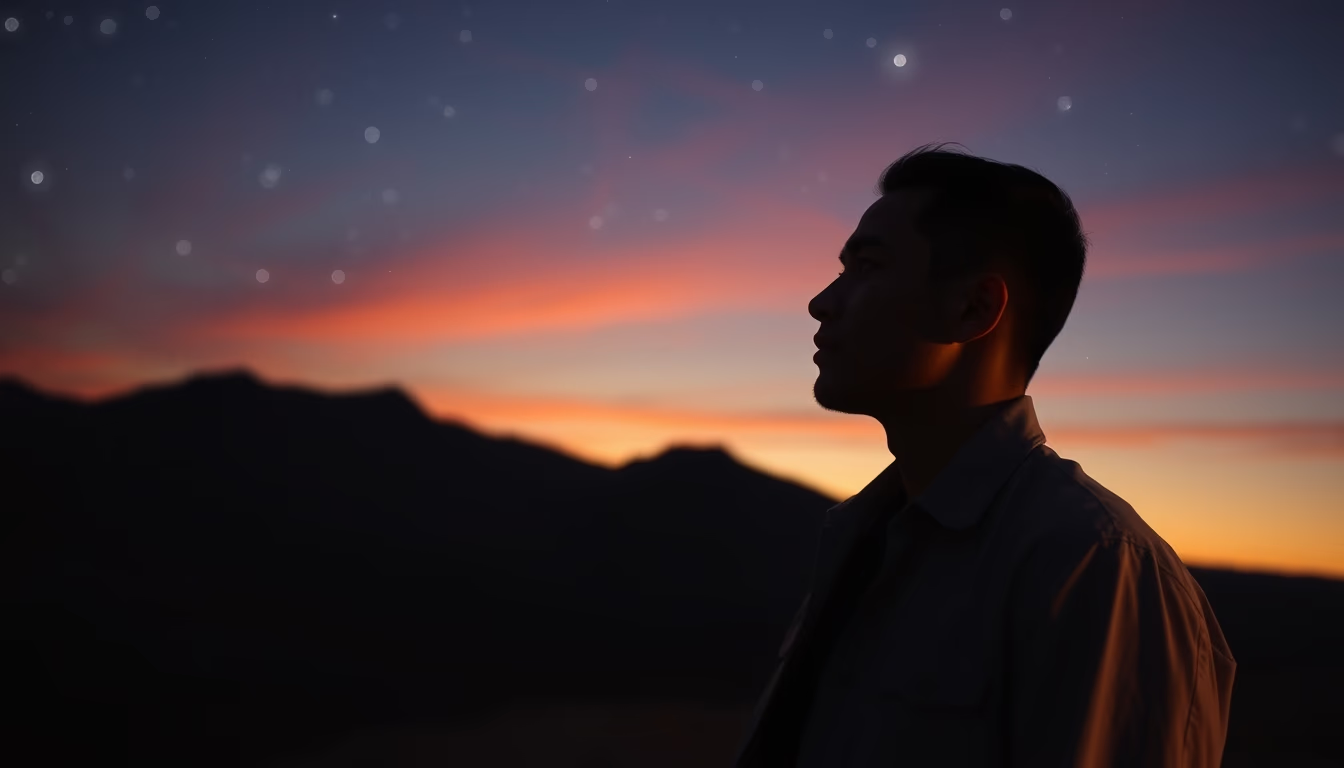
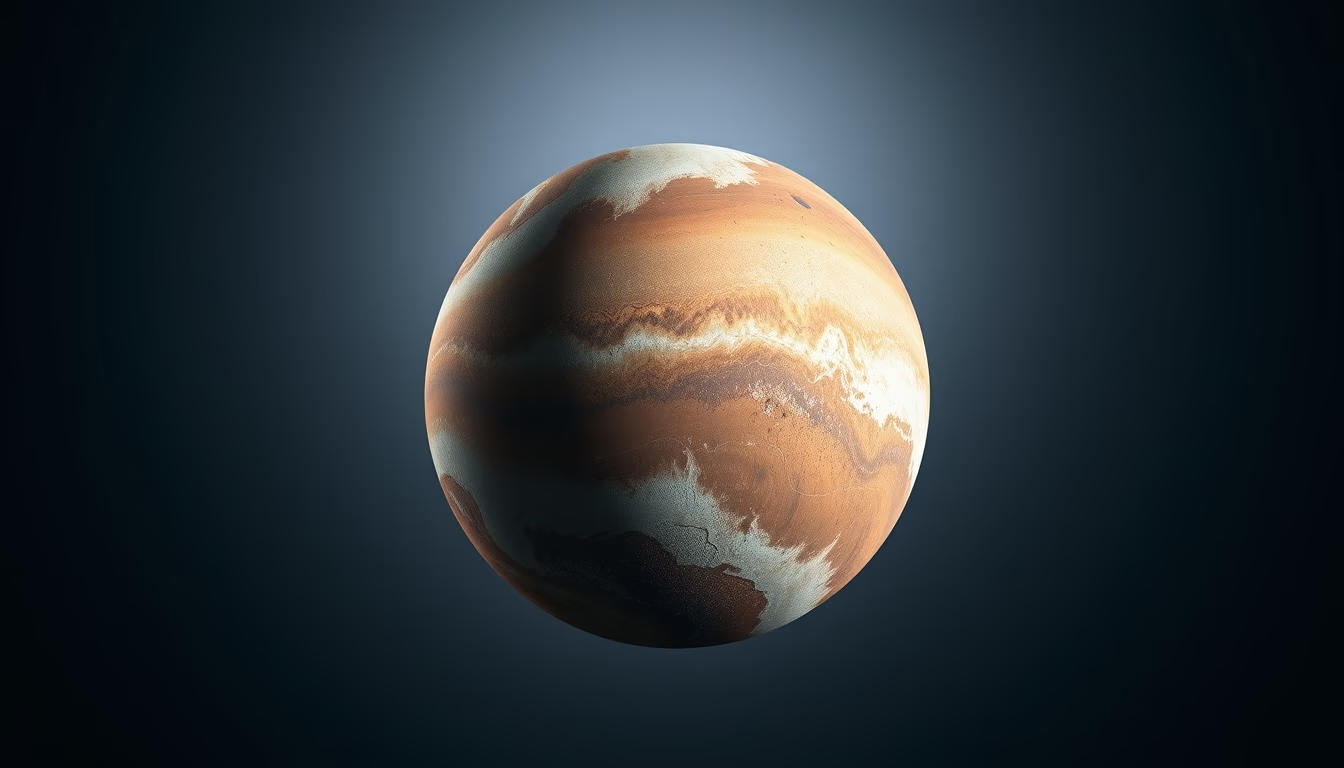
Binary star sunset
1344×768 · AVIF · CC BY 4.0
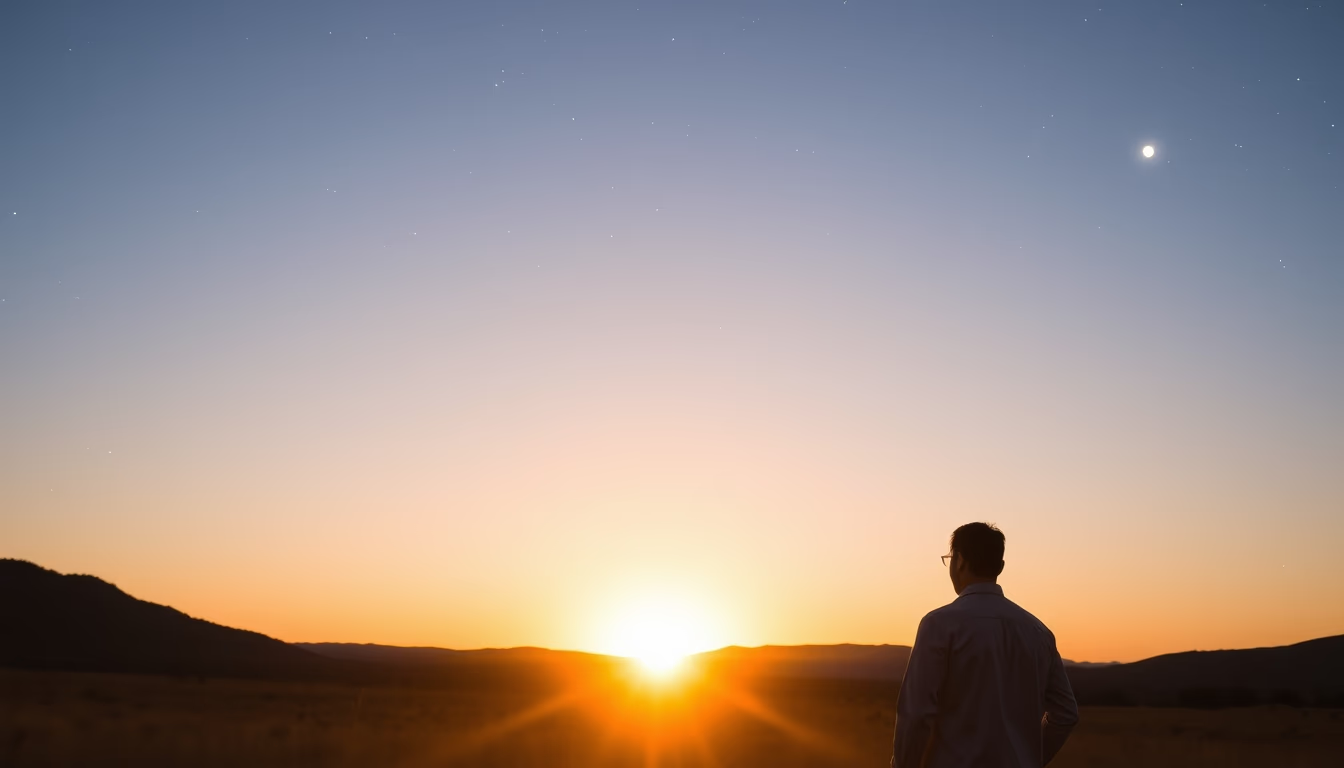
Binary star sunsets captivate astronomers, as protoplanetary disks and exoplanets can orbit double stars, creating unique celestial landscapes.
About this subject
Binary star systems, where two stars orbit a common center of mass, are common in the Milky Way. About half of Sun-like stars are estimated to be part of multiple systems. Studying these systems is crucial for understanding planet formation, as gas and dust disks around binary stars can give rise to exoplanets. A iconic example is the Kepler-16 system, where a Saturn-sized planet orbits two dwarf stars, inspiring imaginations with double sunset scenarios.
Habitability in binary systems depends on factors such as the distance between the stars and the planet's orbit. In P-type systems, where the planet orbits both stars externally, the received radiation can vary, influencing climate. In S-type systems, the planet orbits one star, and the other star acts as a bright point in the sky. The habitable zone, where liquid water can exist, is more complex to define in such environments.
Interestingly, the famous fictional planet Tatooine from Star Wars popularized the idea of a double sunset. In reality, astronomers have confirmed several exoplanets in binary systems, such as Kepler-47 and OGLE-2006-BLG-109L. Observations with telescopes like the James Webb may reveal details about the atmospheres of these worlds, including possible effects of dual illumination on clouds and sky color. These studies help understand the diversity of planetary environments in the Universe.
Frequently Asked Questions
How is a sunset with two stars possible?
In binary systems, if a planet orbits both stars (P-type orbit), both can be seen in the sky, creating a double sunset. This occurs when the planet is in a stable orbit around the pair's center of mass.
Are there real planets in binary systems?
Yes, several exoplanets have been confirmed in binary systems, such as Kepler-16b, Kepler-47b and c, and PH1b. They orbit double stars in various configurations.
Could a planet with two stars be habitable?
Potentially, yes. The habitable zone in binary systems depends on orbital stability and the amount of radiation received. Some systems, like Kepler-47, have planets in the habitable zone, but we don't yet know if they host life.
Direct URL
https://pub-c7d6a6ea828543ac903a74a341ccb2e1.r2.dev/imagens/binary-star-sunset-documentary-photography-fresh17.avifHow to credit
Include a visible link back to UtilizAí. Copy one of the snippets below:
<a href="https://xn--utiliza-eza.com/en/midia/imagens/binary-star-sunset-documentary-photography-fresh17">Binary star sunset</a> by <a href="https://xn--utiliza-eza.com">UtilizAí</a>, licensed under <a href="https://creativecommons.org/licenses/by/4.0/">CC BY 4.0</a>.
[Binary star sunset](https://xn--utiliza-eza.com/en/midia/imagens/binary-star-sunset-documentary-photography-fresh17) by [UtilizAí](https://xn--utiliza-eza.com), CC BY 4.0
License: CC-BY-4.0