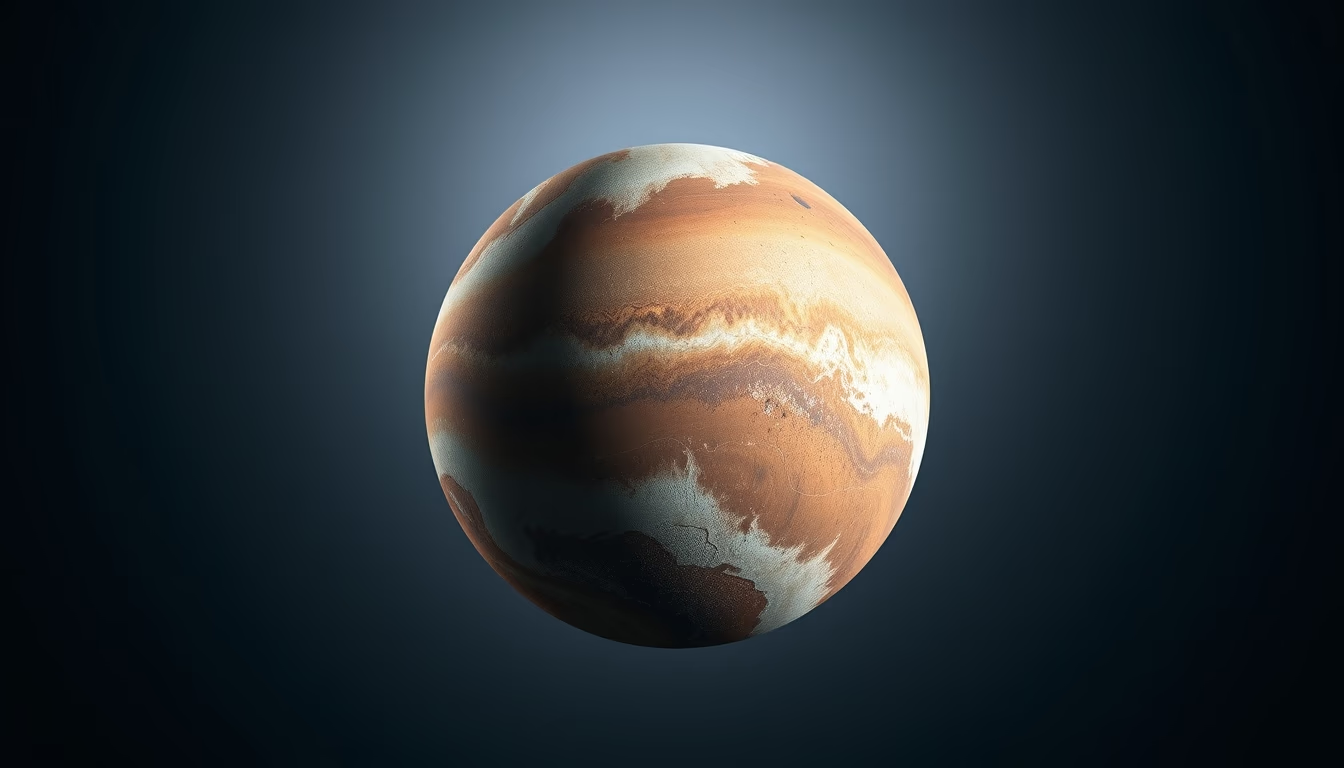
Binary star sunset
1344×768 · AVIF · CC BY 4.0
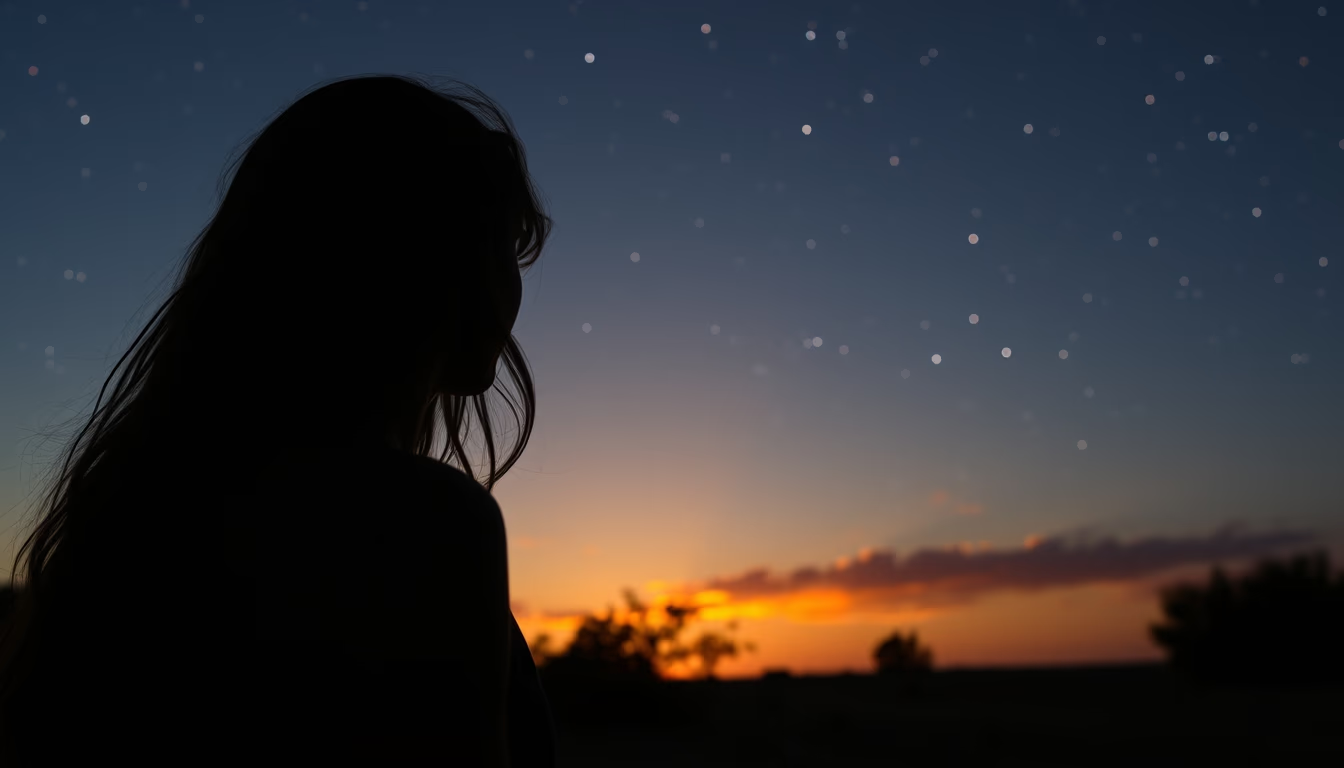
In binary star systems, sunsets feature two suns on the horizon, a phenomenon that influences the climate and habitability of exoplanets.
About this subject
More than half of the stars in the Milky Way are part of binary or multiple systems, where two or more stars orbit a common center of mass. Exoplanets discovered in such systems, like Kepler-16b, Kepler-34b, and Kepler-35b, are called circumbinary planets, orbiting not a single star but the entire pair. In these configurations, the sunset is double, with both stars setting at different times or simultaneously, depending on the planet's orbit.
The radiation and gravity of two stars create complex day and seasonal cycles. The planet's orbital period, combined with the orbital motion of the stellar pair, produces variations in distance and received light intensity. For example, on Kepler-16b, two stars, an orange dwarf and a red dwarf, create a reddish, ever-changing twilight. The planet's temperature can vary drastically over a year, affecting the stability of atmospheres and oceans.
Beyond the visual spectacle, the environment of a binary planet poses challenges for habitability. The habitable zone (where liquid water can exist) in binary systems is dynamic, shifting as the stars move closer or farther apart. Stable circumbinary planets are thought to need to be at least 3 to 4 times the separation distance of the stars to avoid orbital perturbations. Still, some studies suggest that life could adapt to these extreme cycles, analogous to tidal zones on moons like Europa.
Interestingly, the double sunset phenomenon is not just science fiction: it was immortalized in the movie Star Wars with the planet Tatooine, but science shows reality is even richer. Observatories like Kepler and TESS continue to discover new binary exoplanets, expanding our understanding of the diversity of worlds in the universe.
Frequently Asked Questions
Is it possible for life to exist on a planet with two suns?
Yes, it is theoretically possible. Life would need to adapt to variable light and temperature cycles, but stable habitable zones exist in binary systems, especially in circumbinary orbits far from the stars.
What are seasons like on a binary planet?
Seasons are more complex than on Earth, depending both on the planet's orbit around the stellar pair and the stars' orbits around each other. This can lead to multiple summers or winters within a single planetary year.
What is the most famous discovered binary planet?
Kepler-16b, discovered in 2011, is the most famous. It orbits two dwarf stars and was the first confirmed circumbinary planet, located about 245 light-years from Earth.
Direct URL
https://pub-c7d6a6ea828543ac903a74a341ccb2e1.r2.dev/imagens/binary-star-sunset-documentary-nature-style-fresh6.avifHow to credit
Include a visible link back to UtilizAí. Copy one of the snippets below:
<a href="https://xn--utiliza-eza.com/en/midia/imagens/binary-star-sunset-documentary-nature-style-fresh6">Binary star sunset</a> by <a href="https://xn--utiliza-eza.com">UtilizAí</a>, licensed under <a href="https://creativecommons.org/licenses/by/4.0/">CC BY 4.0</a>.
[Binary star sunset](https://xn--utiliza-eza.com/en/midia/imagens/binary-star-sunset-documentary-nature-style-fresh6) by [UtilizAí](https://xn--utiliza-eza.com), CC BY 4.0
License: CC-BY-4.0