Amazonian basketry
1344×768 · AVIF · CC BY 4.0
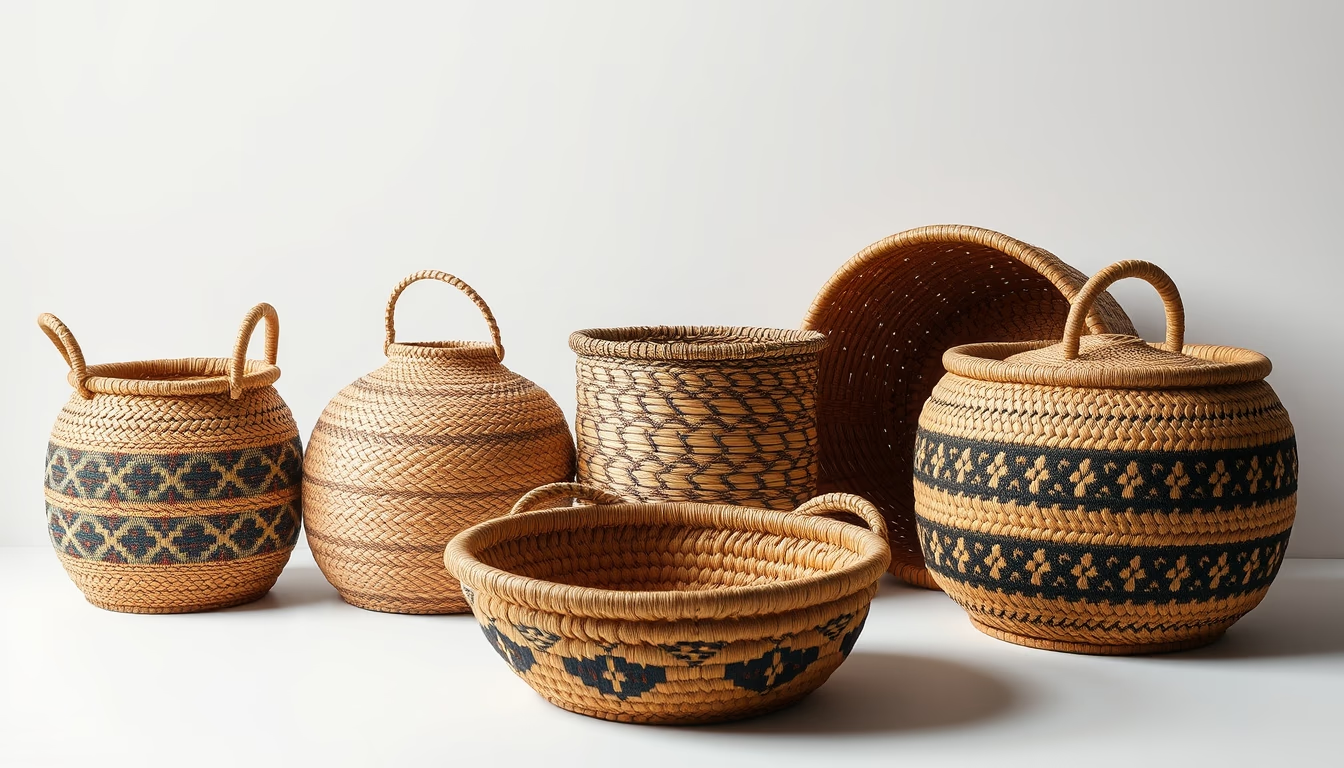
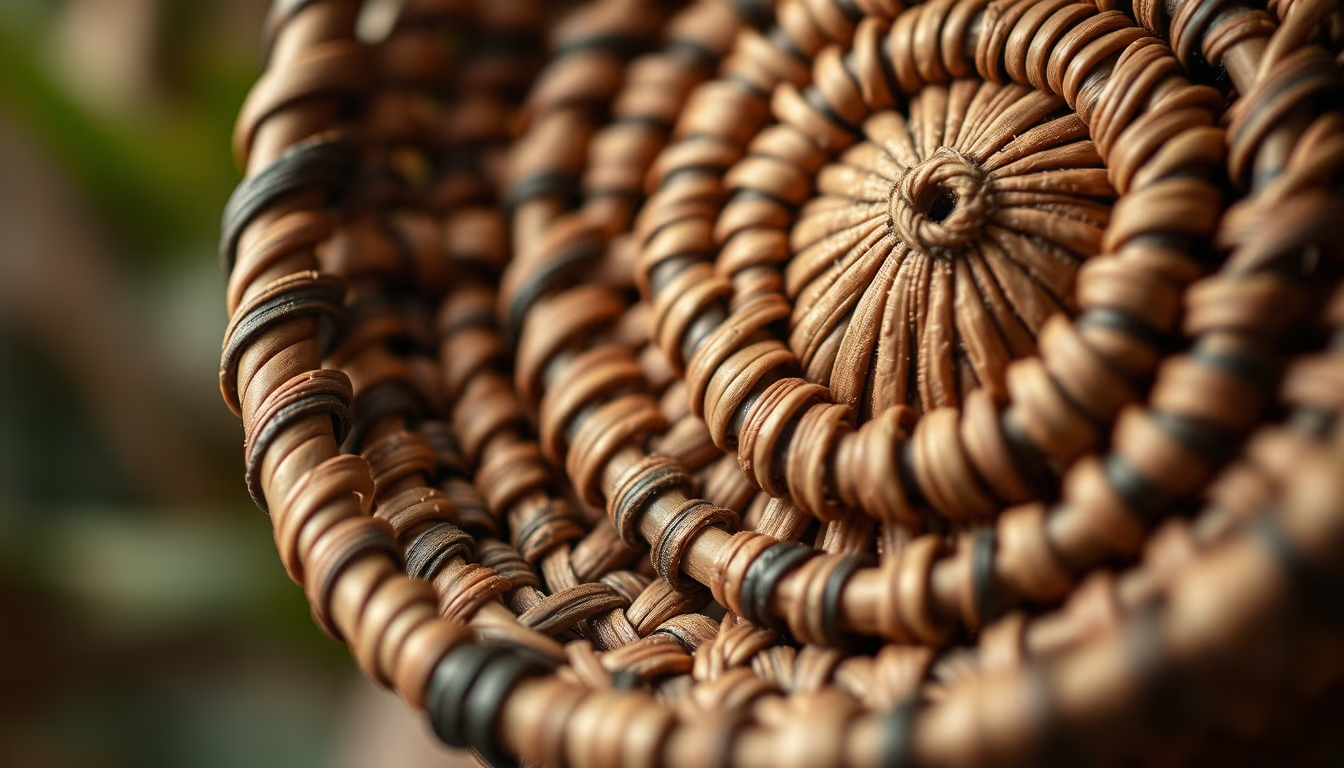
Amazonian basketry, practiced by Indigenous peoples such as the Baniwa and Yanomami, transforms plant fibers into highly complex utilitarian and ceremonial pieces.
About this subject
Amazonian basketry is one of the oldest and most sophisticated artistic expressions of the Indigenous peoples in the region. Using fibers extracted from palms such as arumã (Ischnosiphon polyphyllus) and tucum (Astrocaryum aculeatum), artisans create everything from everyday baskets to ritual objects and adornments. The technique involves harvesting, drying, and natural dyeing of fibers with pigments from seeds, bark, and leaves. Each Indigenous group has specific patterns that carry cosmological and social meanings. Geometric designs, for instance, can represent animals, myths, or the organization of the universe. Weaving is done manually with continuous twining, without seams, resulting in durable and lightweight pieces. Beyond practical use, basketry plays a key role in rituals: baskets are used to carry offerings, store ceremonial foods, or serve as seats for spiritual leaders. Today, Amazonian basketry has gained global recognition, exhibited in museums and sold as high-value cultural handicrafts. However, knowledge transmission faces challenges due to urbanization and land loss. Initiatives promoting cultural valorization and fair trade aim to preserve this ancient art, providing income for communities and keeping ancestral heritage alive. The diversity of styles is immense: while the Baniwa produce baskets with open, light weaves, the Yanomami use thicker fibers for robust pieces. Each Amazonian region developed variations adapted to available raw materials and daily needs, making basketry a reflection of rich biodiversity and Indigenous cultures.
Frequently Asked Questions
Which plant fibers are most commonly used in Amazonian basketry?
The most common fibers are from arumã (Ischnosiphon polyphyllus) and tucum (Astrocaryum aculeatum); also used are buriti and piaçava straws. Each fiber offers specific strength and flexibility.
How are basketry techniques passed down through generations?
Knowledge is transmitted orally and through practice, from parents to children, usually with boys learning from fathers and girls from mothers. Children observe and imitate elders from an early age.
What is the cultural significance of basketry beyond practical use?
Baskets carry spiritual and social meanings; geometric patterns tell myths and stories. In rituals, they are used in healing ceremonies, festivals, and as offerings, representing the connection to the supernatural.
Direct URL
https://pub-c7d6a6ea828543ac903a74a341ccb2e1.r2.dev/imagens/amazonian-basketry-studio-still-life-fresh8.avifHow to credit
Include a visible link back to UtilizAí. Copy one of the snippets below:
<a href="https://xn--utiliza-eza.com/en/midia/imagens/amazonian-basketry-studio-still-life-fresh8">Amazonian basketry</a> by <a href="https://xn--utiliza-eza.com">UtilizAí</a>, licensed under <a href="https://creativecommons.org/licenses/by/4.0/">CC BY 4.0</a>.
[Amazonian basketry](https://xn--utiliza-eza.com/en/midia/imagens/amazonian-basketry-studio-still-life-fresh8) by [UtilizAí](https://xn--utiliza-eza.com), CC BY 4.0
License: CC-BY-4.0