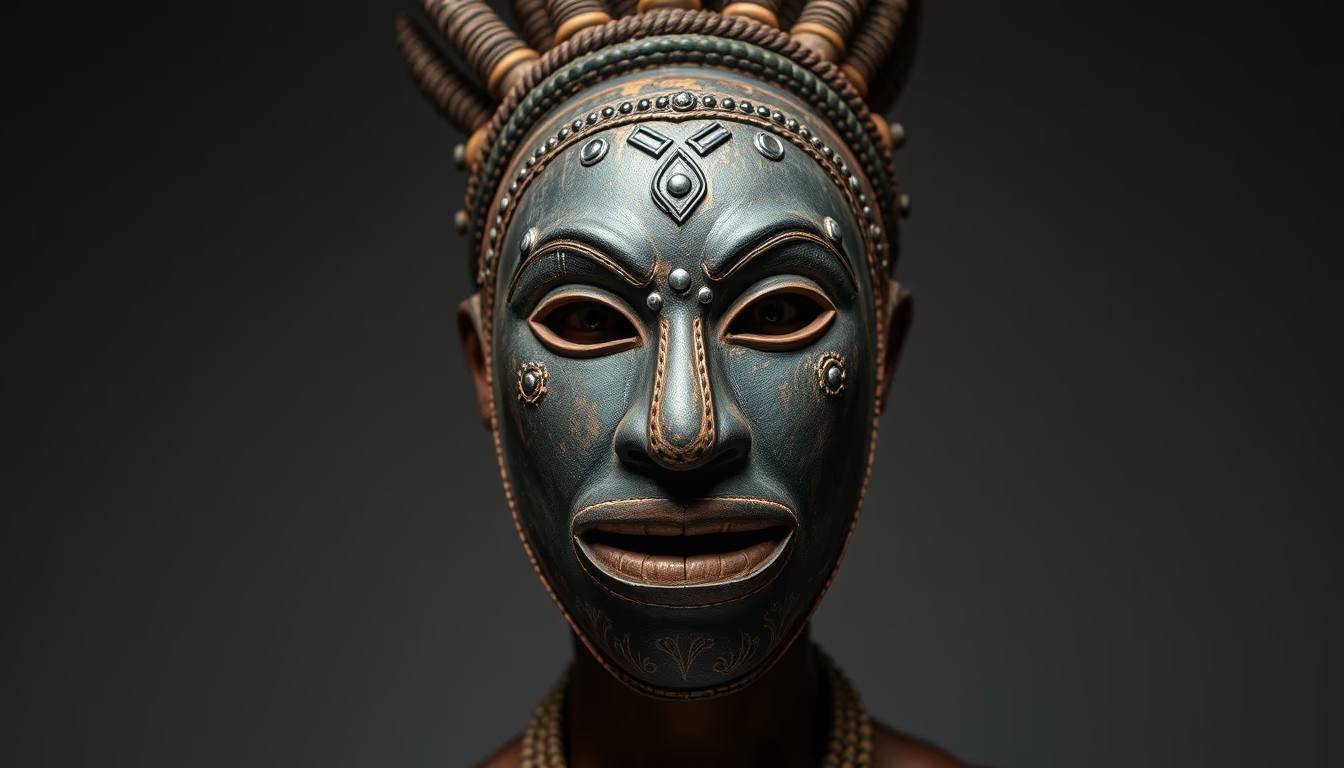
Aboriginal dot painting
1344×768 · AVIF · CC BY 4.0
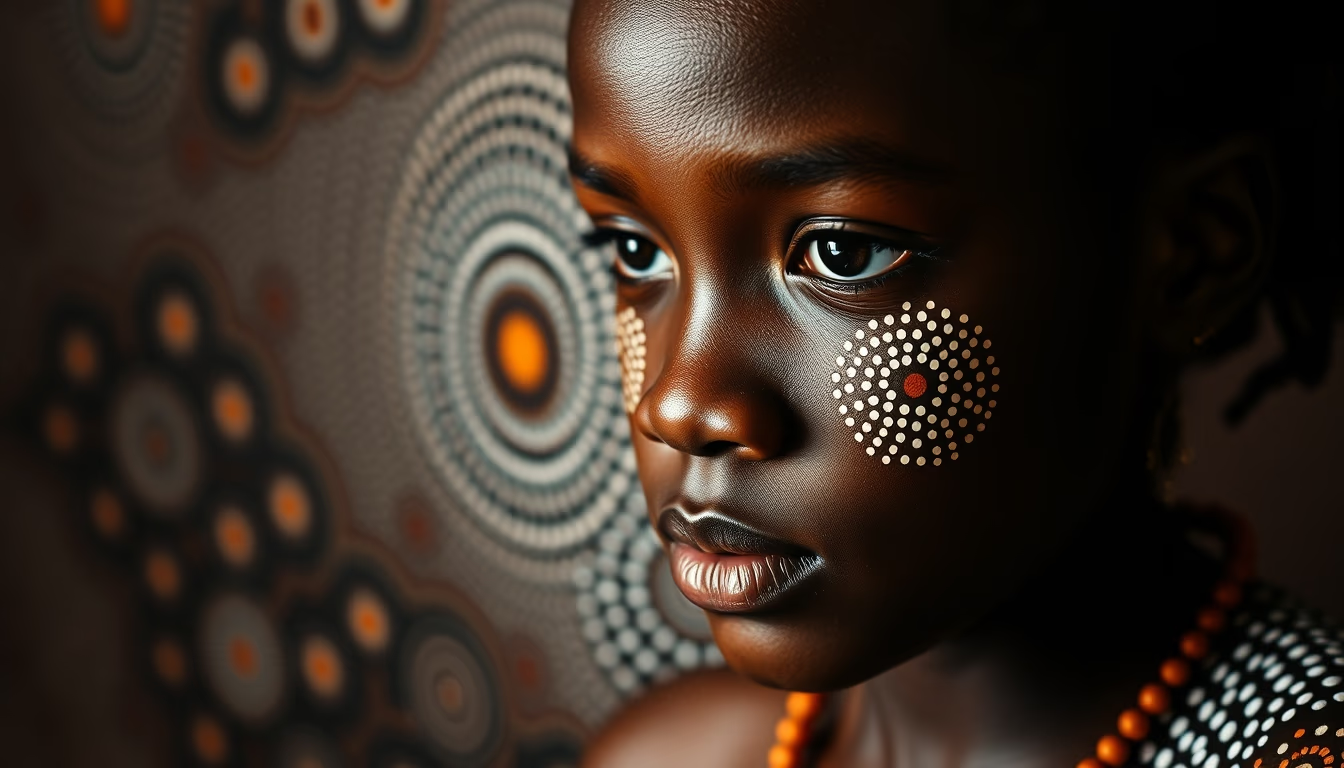
Aboriginal dot painting is an Indigenous Australian art form that uses dot patterns to tell Dreamtime stories, carrying deep cultural and spiritual significance.
About this subject
Aboriginal dot painting, a traditional art form of Indigenous Australians, originated in the Central Desert region, particularly among the Pintupi, Warlpiri, and Anangu peoples. It emerged in the 1970s at Papunya, Northern Territory, when teacher Geoffrey Bardon encouraged local elders to record their sacred stories on canvas. Previously, ceremonial sand drawings were ephemeral, but the shift to acrylic on canvas allowed preservation and global recognition.
The dots are applied with fine brushes or sticks, creating patterns that depict landscape features such as rivers, mountains, waterholes, and animals, as well as Dreamtime narratives, the ancestral creation period. Each dot can represent seeds, animal tracks, stars, or ritual markings. Traditional colors include ochre, red, yellow, white, and black from natural pigments. With modern acrylics, the palette expanded, and artists like Emily Kame Kngwarreye and Clifford Possum Tjapaltjarri gained international acclaim.
Dot painting is not merely decorative; it carries deep cultural and spiritual significance, often restricted to initiated members. Some sacred designs are kept secret or adapted for public viewing. These paintings also serve as maps of the land, conveying knowledge about water sources, hunting routes, and ceremonial sites. Today, dot painting is one of the most iconic Australian art forms, symbolizing Indigenous cultural resilience and providing economic benefits to remote communities.
Frequently Asked Questions
What does the Dreamtime mean in Aboriginal dot painting?
The Dreamtime is the Aboriginal cosmology of creation, where ancestral beings shaped the world. Dot paintings depict these stories through patterns, connecting the present to ancestral past.
What materials are used in Aboriginal dot painting?
Traditionally, natural pigments like ochre, clay, and charcoal were used. Today, many artists use modern acrylic paints on canvas or bark, applying dots with fine brushes or sticks.
Are there restrictions on reproducing Aboriginal dot paintings?
Yes, some designs are sacred and may only be reproduced by initiated members or with permission. Artists often adapt motifs for the public to protect restricted cultural knowledge.
Direct URL
https://pub-c7d6a6ea828543ac903a74a341ccb2e1.r2.dev/imagens/aboriginal-dot-painting-fine-art-photography-fresh6.avifHow to credit
Include a visible link back to UtilizAí. Copy one of the snippets below:
<a href="https://xn--utiliza-eza.com/en/midia/imagens/aboriginal-dot-painting-fine-art-photography-fresh6">Aboriginal dot painting</a> by <a href="https://xn--utiliza-eza.com">UtilizAí</a>, licensed under <a href="https://creativecommons.org/licenses/by/4.0/">CC BY 4.0</a>.
[Aboriginal dot painting](https://xn--utiliza-eza.com/en/midia/imagens/aboriginal-dot-painting-fine-art-photography-fresh6) by [UtilizAí](https://xn--utiliza-eza.com), CC BY 4.0
License: CC-BY-4.0