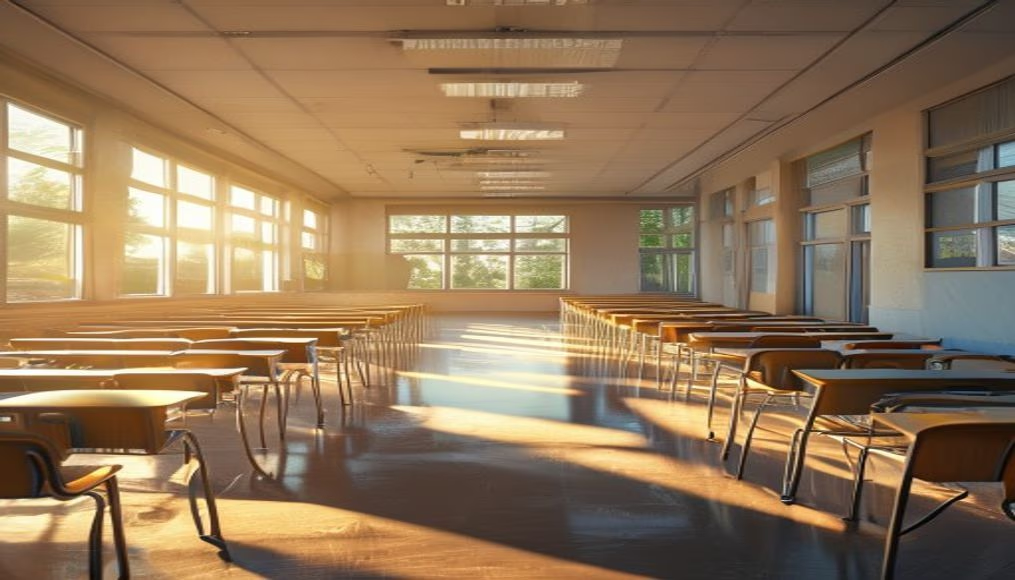
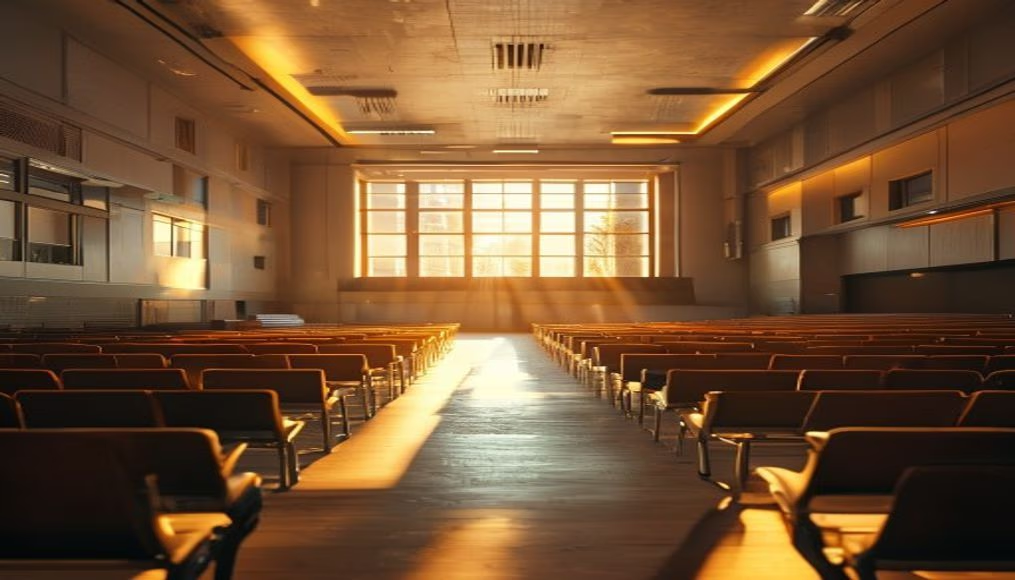
University lecture hall empty
1344×768 · AVIF · CC BY 4.0
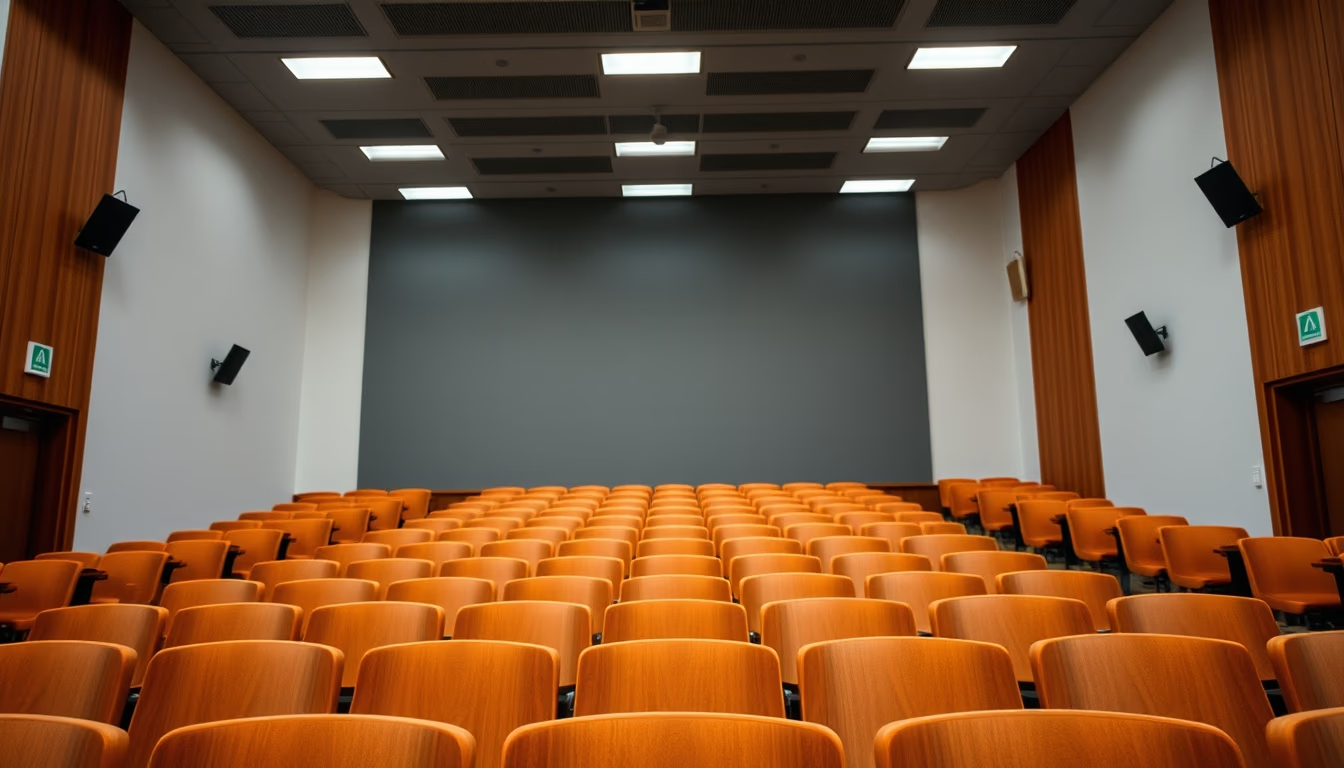
Empty lecture halls in Brazilian universities reveal structural challenges, dropout rates, and shifts in higher education.
About this subject
The image of an empty university lecture hall is more than an architectural record. In Brazil, idle classrooms can signal issues such as student dropout, frequent strikes, or budget cuts. Data from the 2022 Higher Education Census shows that dropout rates in face-to-face courses reach 59% in private institutions and 25% in public ones, numbers reflected in underutilized spaces.
Many Brazilian universities, especially federal public ones, have experienced periods of paralysis due to faculty and staff strikes. In 2024, a national faculty strike lasted over two months, leaving auditoriums and lecture halls empty. These spaces, designed for hundreds of students, become symbols of the struggle for better working conditions and funding.
Additionally, the COVID-19 pandemic accelerated the adoption of hybrid and remote formats, reducing the need for physical presence. Many universities maintain online courses, decreasing occupancy of traditional spaces. Empty lecture halls also host cultural events, lectures, and extracurricular activities, but low demand reveals a shift in higher education profile.
The architecture of these spaces also tells stories. The tiered auditorium model, with fixed seats and a central blackboard, was designed for lectures. With active methodologies and digital technologies, these environments are being rethought. Some universities are converting them into innovation labs or coworking spaces, seeking adaptation to new educational demands.
Frequently Asked Questions
Why are university lecture halls in Brazil empty?
Reasons include student dropout, faculty strikes, budget cuts, and the shift to remote or hybrid learning accelerated by the pandemic.
What is the dropout rate in Brazilian higher education?
According to the 2022 Higher Education Census, dropout rates reach 59% in private institutions and 25% in public ones for face-to-face courses.
How are universities adapting traditional classroom spaces?
Many are converting auditoriums into innovation labs, coworking spaces, or rooms for active learning methodologies to increase flexibility.
Direct URL
https://pub-c7d6a6ea828543ac903a74a341ccb2e1.r2.dev/imagens/university-lecture-hall-empty-street-photography.avifHow to credit
Include a visible link back to UtilizAí. Copy one of the snippets below:
<a href="https://xn--utiliza-eza.com/en/midia/imagens/university-lecture-hall-empty-street-photography">University lecture hall empty</a> by <a href="https://xn--utiliza-eza.com">UtilizAí</a>, licensed under <a href="https://creativecommons.org/licenses/by/4.0/">CC BY 4.0</a>.
[University lecture hall empty](https://xn--utiliza-eza.com/en/midia/imagens/university-lecture-hall-empty-street-photography) by [UtilizAí](https://xn--utiliza-eza.com), CC BY 4.0
License: CC-BY-4.0