University lecture hall empty
1344×768 · AVIF · CC BY 4.0
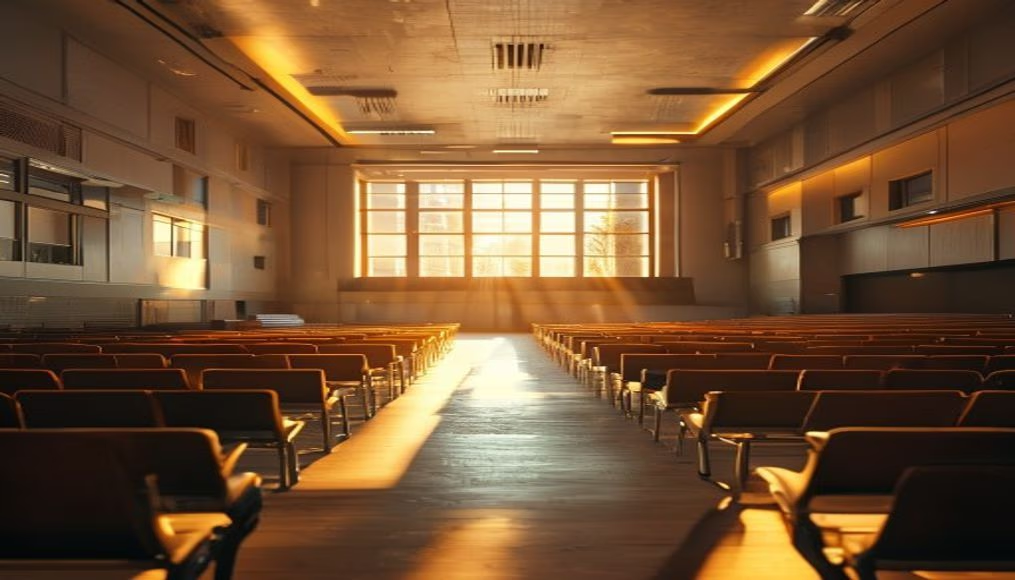
Empty university lecture halls, like this amphitheater, reveal academic architecture and the history of higher education.
About this subject
University lecture halls, especially amphitheaters, are designed to focus students' attention on the professor and visual aids. Their architecture evolved from medieval universities, where classes were held in churches or makeshift rooms. In the 19th century, with institutional growth, tiered or horseshoe-shaped lecture theaters emerged, optimizing visibility and acoustics. An iconic example is the University of Glasgow's Lecture Theatre, seating over 300 students.
Acoustics are crucial: materials like wood and sound-absorbing panels reduce reverberation. Today, many amphitheaters incorporate multimedia technology, but the basic design remains. The semicircular or tiered layout ensures every student sees the board and the professor without obstruction, promoting interaction even in large groups. These spaces are also used for lectures, events, and conferences.
Interestingly, empty halls like this often symbolize transitions in the academic calendar: holidays, strikes, or late-night schedules. Studies show that the average occupancy rate of amphitheaters in Brazilian universities is around 60%, varying by course and shift. The absence of students does not diminish the architectural importance of these venues, which remain the heart of face-to-face education.
Frequently Asked Questions
Why do university lecture halls have an amphitheater shape?
The tiered or semicircular shape improves visibility and acoustics, allowing all students to see the professor and slides even in large groups. This design originates from Greek theaters and was adapted for education.
What is the typical capacity of a university lecture hall?
It varies widely, but average amphitheaters hold between 100 and 300 students. Some, like at the University of São Paulo, accommodate up to 500 seats. Capacity depends on the course and institutional budget.
Are empty lecture halls a problem at universities?
Not always. Empty halls may indicate low-demand times or holiday periods. However, chronic underutilization can lead to space reallocation, such as conversion into labs or study rooms.
Direct URL
https://pub-c7d6a6ea828543ac903a74a341ccb2e1.r2.dev/imagens/university-lecture-hall-empty-travel-photography-v10.avifHow to credit
Include a visible link back to UtilizAí. Copy one of the snippets below:
<a href="https://xn--utiliza-eza.com/en/midia/imagens/university-lecture-hall-empty-travel-photography-v10">University lecture hall empty</a> by <a href="https://xn--utiliza-eza.com">UtilizAí</a>, licensed under <a href="https://creativecommons.org/licenses/by/4.0/">CC BY 4.0</a>.
[University lecture hall empty](https://xn--utiliza-eza.com/en/midia/imagens/university-lecture-hall-empty-travel-photography-v10) by [UtilizAí](https://xn--utiliza-eza.com), CC BY 4.0
License: CC-BY-4.0