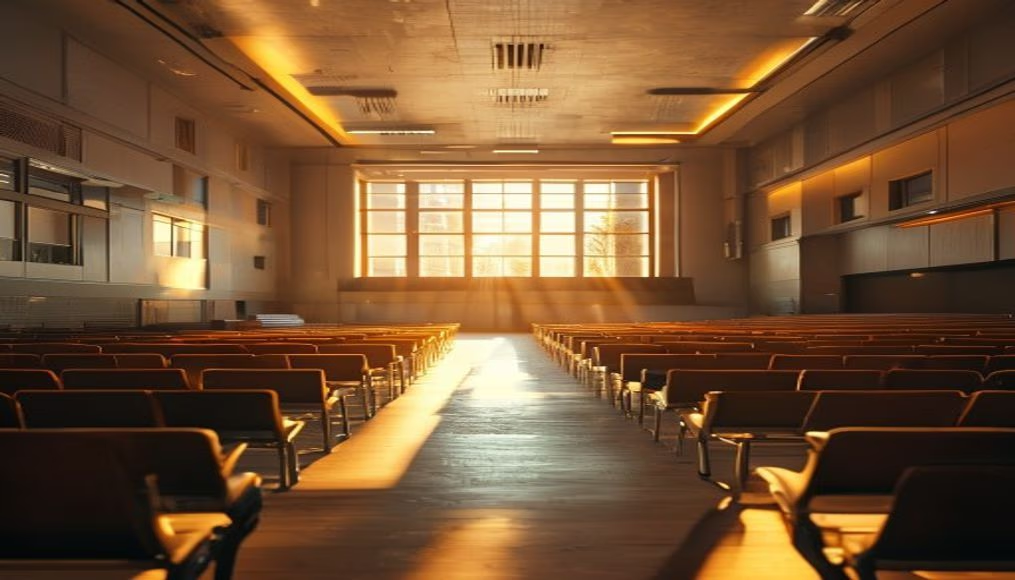
Modern classroom empty rows
1344×768 · AVIF · CC BY 4.0
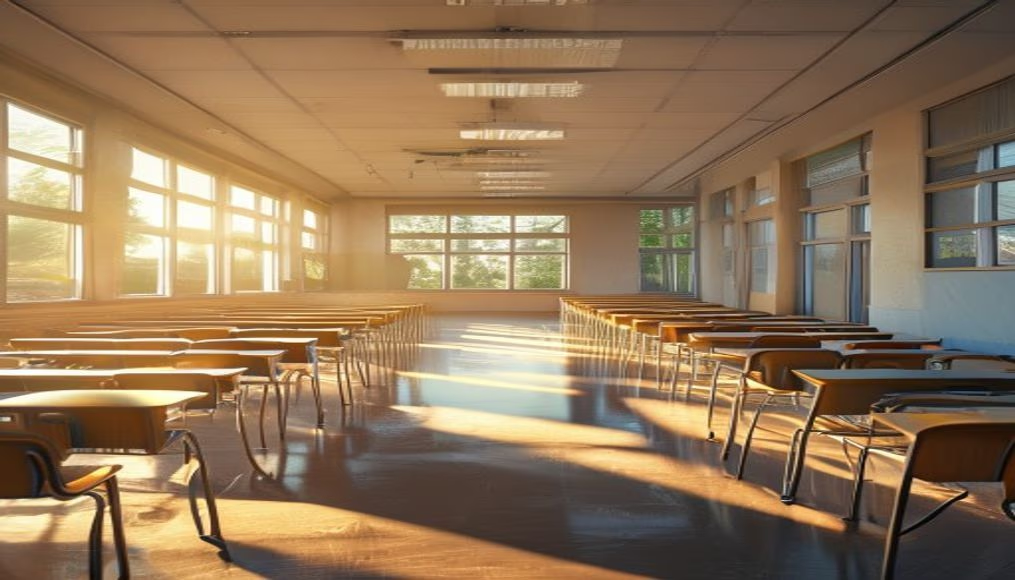
Modern classrooms with empty rows reflect contemporary educational design and spatial organization in learning institutions.
About this subject
The layout of a modern classroom goes beyond simple desk arrangement, designed to optimize interaction between students and teachers by incorporating principles of ergonomics, acoustics, and lighting. Research from the University of Salford, for example, shows that furniture arrangement can impact up to 25% of student academic progress. Traditional rows are still common in many schools but are increasingly adapted with wheeled chairs and modular tables that allow quick reconfiguration for group or individual activities.
The adoption of technologies such as interactive whiteboards, projectors, and integrated sound systems has transformed the educational environment. In countries like Finland and Singapore, education benchmarks, classrooms prioritize flexibility: lightweight furniture, neutral colors, and ample natural light. In Brazil, despite structural challenges, private and some public schools have invested in architectural projects that foster collaboration, with areas for teamwork and reading corners.
Interestingly, the European Commission’s "classroom of the future" concept proposes distinct zones for different activities, presentation, creation, discussion, all equipped with digital resources. This approach aims to prepare students for the 21st-century job market, which demands skills like critical thinking and communication. The image of empty rows thus symbolizes both traditional order and the transformative potential of educational space.
Frequently Asked Questions
Why is classroom layout important for learning?
Layout directly affects student engagement and comfort. Flexible arrangements allow for different teaching dynamics, such as group work and discussions, improving content retention and participation.
What are the main features of a modern classroom?
Modern classrooms prioritize flexibility, technological integration (interactive whiteboards, projectors), natural lighting, proper acoustics, and ergonomic furniture that can be rearranged according to the activity.
How do rows compare to other educational layouts?
Rows are efficient for lectures and tests but may limit interaction. U-shape, island, or circle layouts foster collaboration and are recommended for active methodologies like blended learning.
Direct URL
https://pub-c7d6a6ea828543ac903a74a341ccb2e1.r2.dev/imagens/modern-classroom-empty-rows-travel-photography-v10.avifHow to credit
Include a visible link back to UtilizAí. Copy one of the snippets below:
<a href="https://xn--utiliza-eza.com/en/midia/imagens/modern-classroom-empty-rows-travel-photography-v10">Modern classroom empty rows</a> by <a href="https://xn--utiliza-eza.com">UtilizAí</a>, licensed under <a href="https://creativecommons.org/licenses/by/4.0/">CC BY 4.0</a>.
[Modern classroom empty rows](https://xn--utiliza-eza.com/en/midia/imagens/modern-classroom-empty-rows-travel-photography-v10) by [UtilizAí](https://xn--utiliza-eza.com), CC BY 4.0
License: CC-BY-4.0