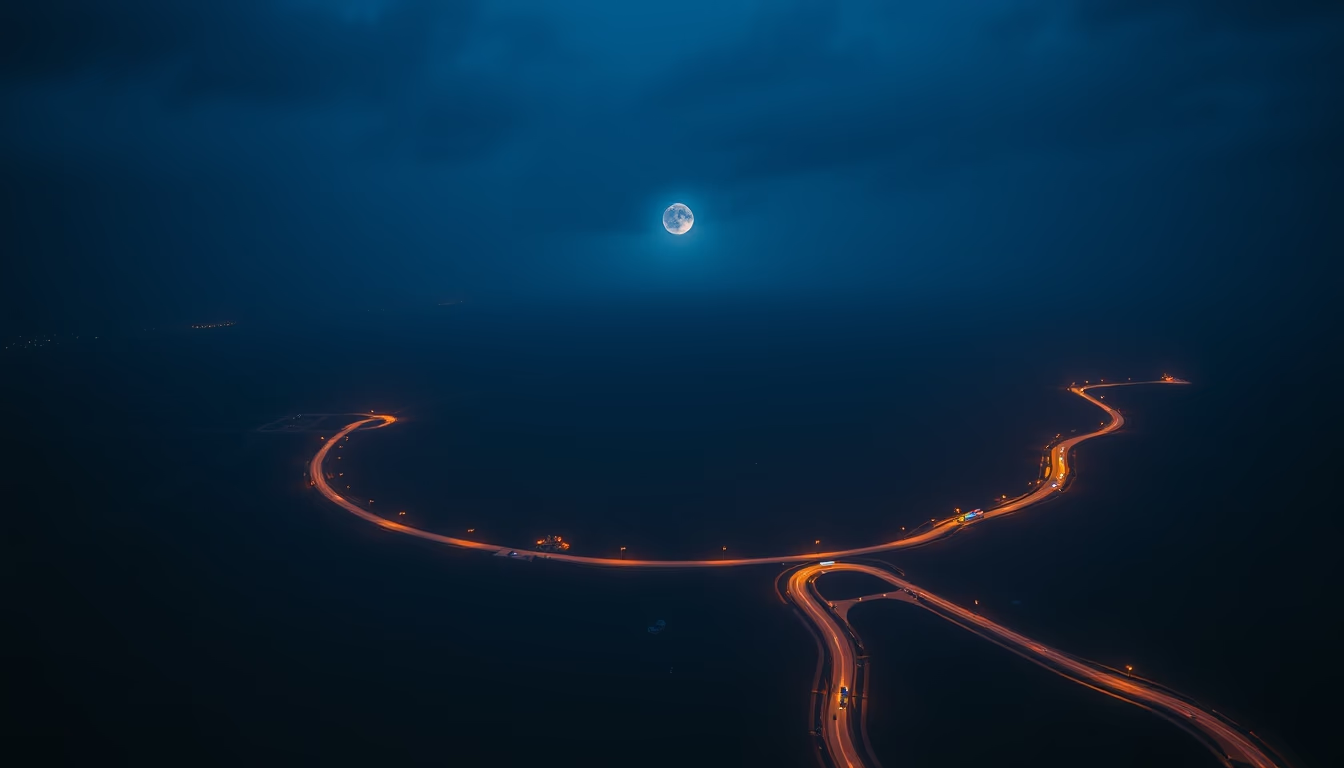
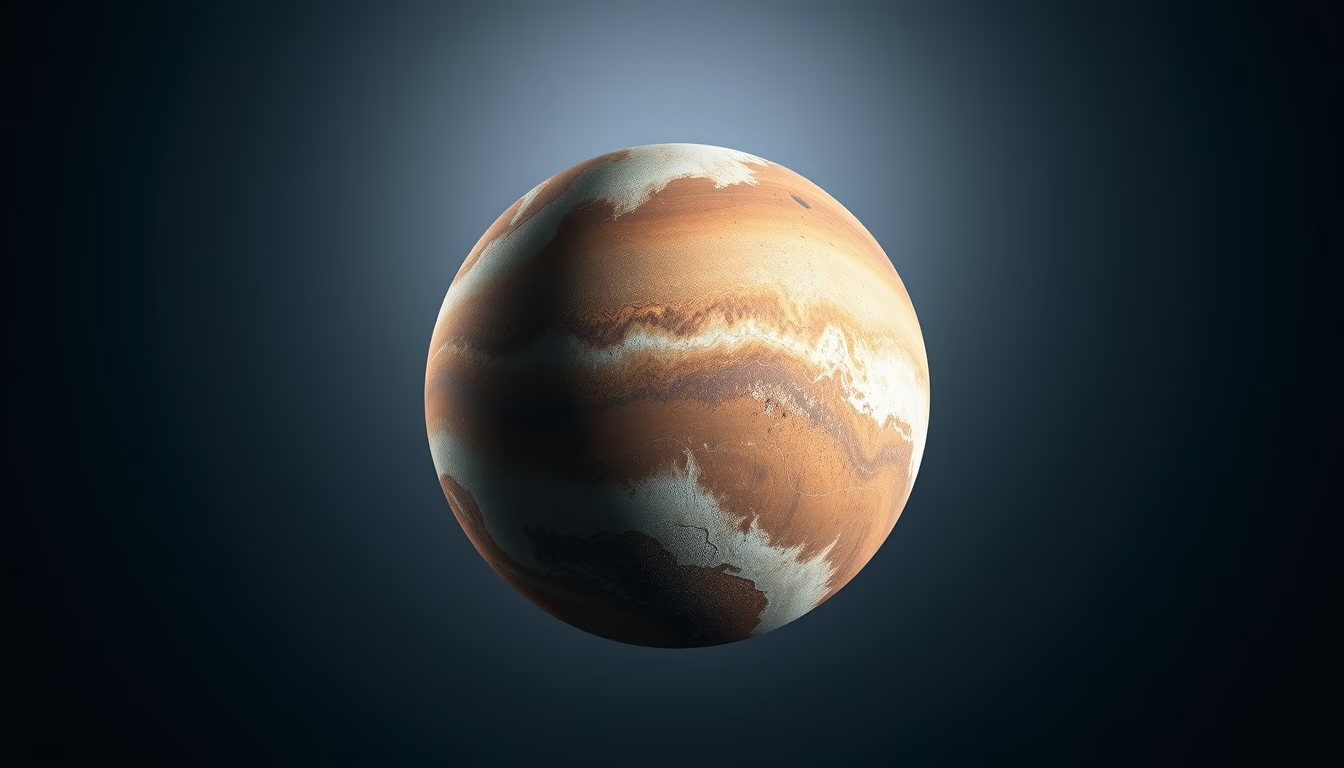
Trappist-1 system art
1344×768 · AVIF · CC BY 4.0

The Trappist-1 system, 40 light-years away, hosts seven Earth-sized rocky planets, three within the habitable zone.
About this subject
The Trappist-1 system is one of the most remarkable discoveries in modern astronomy. Located 40 light-years away in the constellation Aquarius, it orbits an ultra-cool dwarf star that has only 8% of the Sun's mass and a surface temperature of about 2,550 K. In 2017, NASA announced that the Spitzer Space Telescope, combined with the TRAPPIST (Transiting Planets and Planetesimals Small Telescope) based in Chile, had identified seven Earth-sized exoplanets transiting this star.
Three of these planets, TRAPPIST-1e, f, and g, lie within the habitable zone, where temperatures could allow liquid water on the surface, a key condition for life as we know it. All seven planets are rocky and likely have masses between 0.3 and 1.2 times that of Earth. Density studies suggest some may have global oceans, while others are drier. The system is remarkably compact: the planets' orbits are closer to each other than Jupiter's moons, and a year on the outermost planet, TRAPPIST-1h, lasts only 18.8 days.
The host star, TRAPPIST-1, is faint and cool, emitting mostly infrared radiation. This makes planetary transits easier to detect because the contrast between star and planet is greater. However, the extreme proximity of the planets to the star exposes them to intense radiation, which could cause tidal heating and potential volcanism. Despite this, simulations indicate that some planets may retain atmospheres and even harbor microbial life.
The system's name honors Belgian Trappist beer, as the Belgian team responsible for the original discovery at the La Silla Observatory used telescopes from the TRAPPIST project, funded by the University of Liège. Since then, the system has become a prime target for the James Webb Space Telescope, which conducted observations in 2023 to analyze the planets' atmospheres for biosignatures such as methane, oxygen, and water vapor.
Frequently Asked Questions
How many planets does the Trappist-1 system have?
Seven Earth-sized rocky planets, all orbiting the ultra-cool dwarf star TRAPPIST-1.
What is the distance of the Trappist-1 system from Earth?
Approximately 40 light-years away in the constellation Aquarius.
Why is it called the Trappist-1 system?
The name honors Belgian Trappist beer, as the TRAPPIST telescope (Transiting Planets and Planetesimals Small Telescope) used in the discovery is operated by the University of Liège.
Direct URL
https://pub-c7d6a6ea828543ac903a74a341ccb2e1.r2.dev/imagens/trappist-1-system-art-isometric-flat-lay-fresh14.avifHow to credit
Include a visible link back to UtilizAí. Copy one of the snippets below:
<a href="https://xn--utiliza-eza.com/en/midia/imagens/trappist-1-system-art-isometric-flat-lay-fresh14">Trappist-1 system art</a> by <a href="https://xn--utiliza-eza.com">UtilizAí</a>, licensed under <a href="https://creativecommons.org/licenses/by/4.0/">CC BY 4.0</a>.
[Trappist-1 system art](https://xn--utiliza-eza.com/en/midia/imagens/trappist-1-system-art-isometric-flat-lay-fresh14) by [UtilizAí](https://xn--utiliza-eza.com), CC BY 4.0
License: CC-BY-4.0