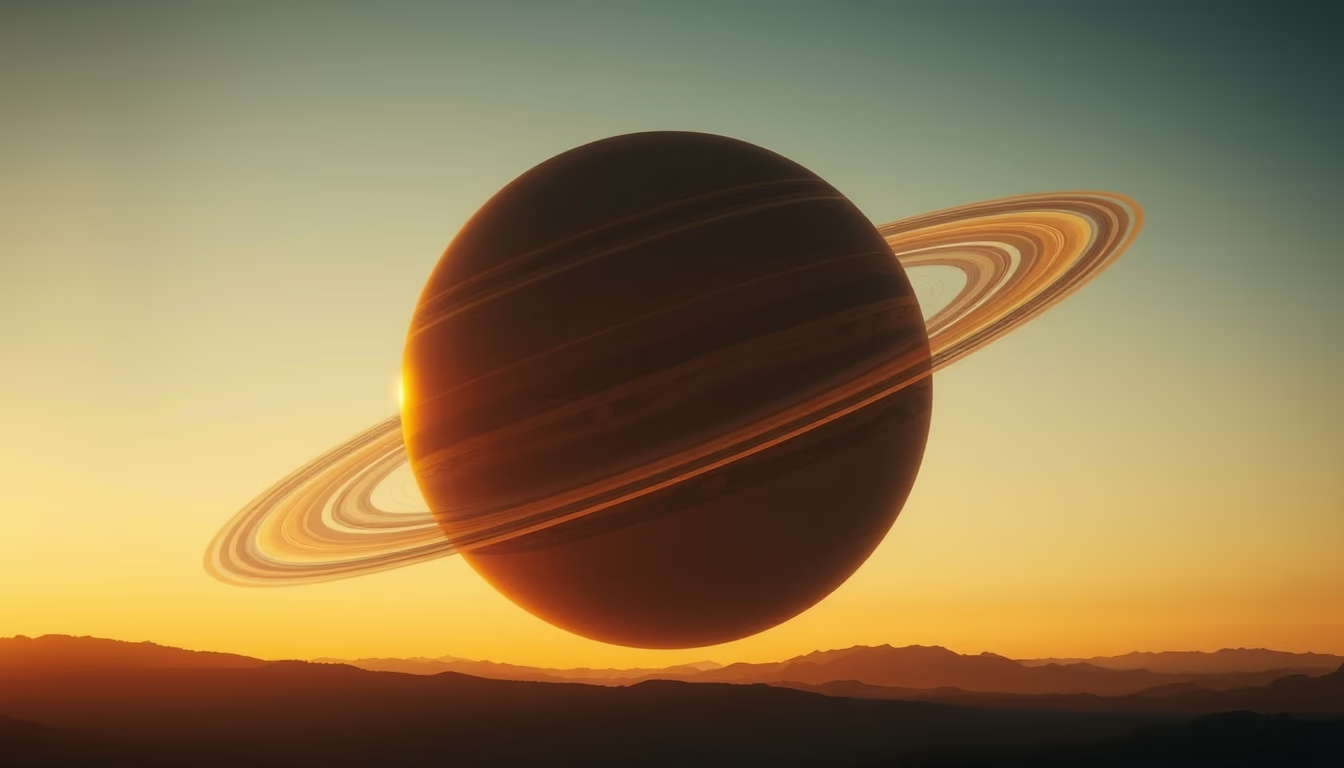
Trappist-1 system art
1344×768 · AVIF · CC BY 4.0

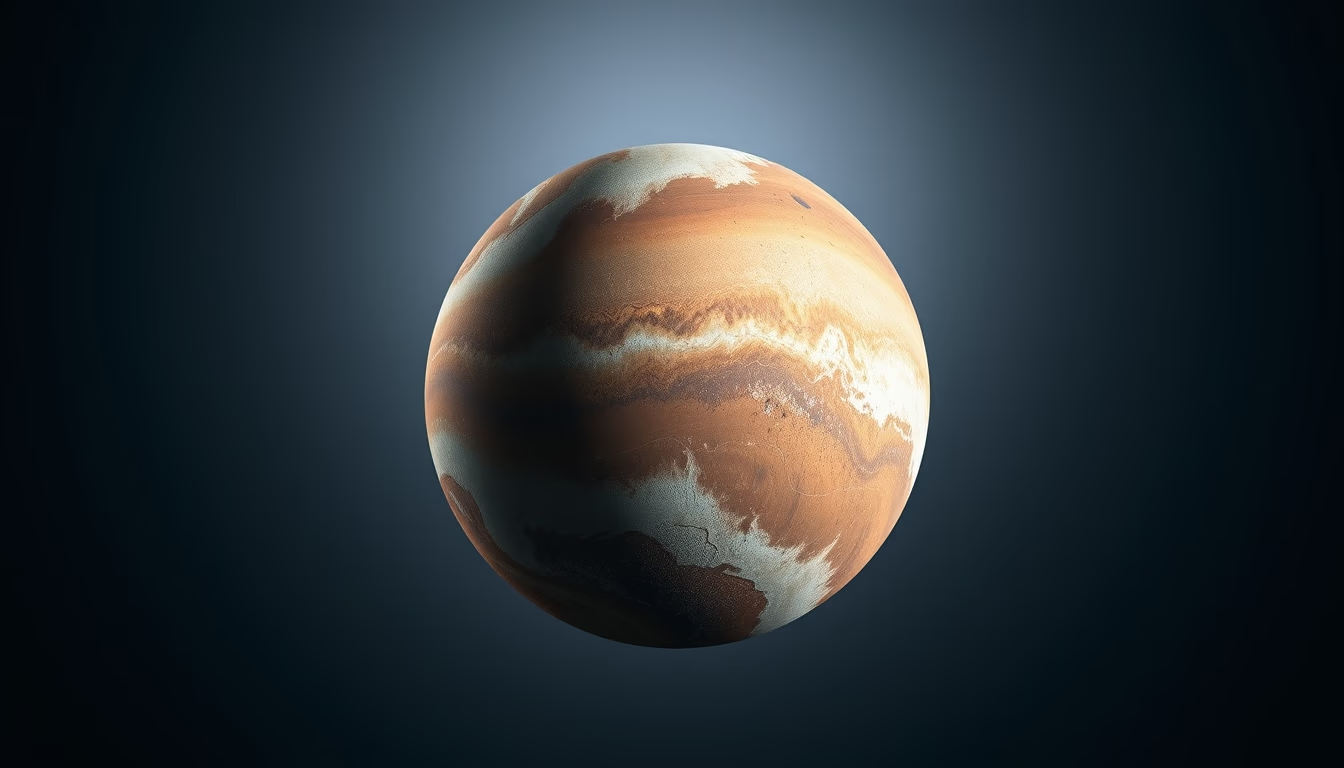
The TRAPPIST-1 system hosts seven rocky planets roughly Earth-sized, orbiting an ultracool dwarf star 40 light-years away.
About this subject
Discovered in 2016 by the TRAPPIST (Transiting Planets and Planetesimals Small Telescope) in Chile, the TRAPPIST-1 system quickly became one of the most studied in modern astronomy. Its central star, an ultracool dwarf of spectral type M8V, is much smaller and cooler than the Sun, with only 8% of the solar mass and a surface temperature of about 2,550 K. The system lies in the constellation Aquarius, roughly 40 light-years from Earth.
The seven confirmed planets, designated TRAPPIST-1b through h, are all rocky and Earth-sized. Three of them (e, f, and g) orbit within the star's habitable zone, where temperatures could allow liquid water on the surface. Studies using the Spitzer and Hubble space telescopes indicate varied compositions, with some planets possibly hosting global oceans and others thick atmospheres. The system is so compact that the planets' orbits are all smaller than Mercury's orbit around the Sun, and they could fit within the distance between Jupiter and the Sun.
TRAPPIST-1's significance lies in the unique opportunity to study potentially habitable worlds in detail. Due to its relative proximity, the system is a prime target for the James Webb Space Telescope, which has already begun analyzing planetary atmospheres. In 2023, Webb detected carbon dioxide molecules in TRAPPIST-1c, revealing a dense atmosphere, but no clear signs of water or methane yet. These data help refine models of planet formation and the search for biosignatures on exoplanets.
Frequently Asked Questions
How many planets does the TRAPPIST-1 system have?
The TRAPPIST-1 system has seven confirmed planets, all rocky and roughly Earth-sized.
How far is the TRAPPIST-1 system from Earth?
The system is located about 40 light-years away, in the constellation Aquarius.
Is there a possibility of life on TRAPPIST-1?
Three planets (TRAPPIST-1e, f, and g) orbit within the habitable zone, where liquid water could exist. However, no direct evidence of life has been found; the James Webb Space Telescope is analyzing their atmospheres for biosignatures.
Direct URL
https://pub-c7d6a6ea828543ac903a74a341ccb2e1.r2.dev/imagens/trappist-1-system-art-documentary-photography-fresh18.avifHow to credit
Include a visible link back to UtilizAí. Copy one of the snippets below:
<a href="https://xn--utiliza-eza.com/en/midia/imagens/trappist-1-system-art-documentary-photography-fresh18">Trappist-1 system art</a> by <a href="https://xn--utiliza-eza.com">UtilizAí</a>, licensed under <a href="https://creativecommons.org/licenses/by/4.0/">CC BY 4.0</a>.
[Trappist-1 system art](https://xn--utiliza-eza.com/en/midia/imagens/trappist-1-system-art-documentary-photography-fresh18) by [UtilizAí](https://xn--utiliza-eza.com), CC BY 4.0
License: CC-BY-4.0