Tidal locked planet
1344×768 · AVIF · CC BY 4.0
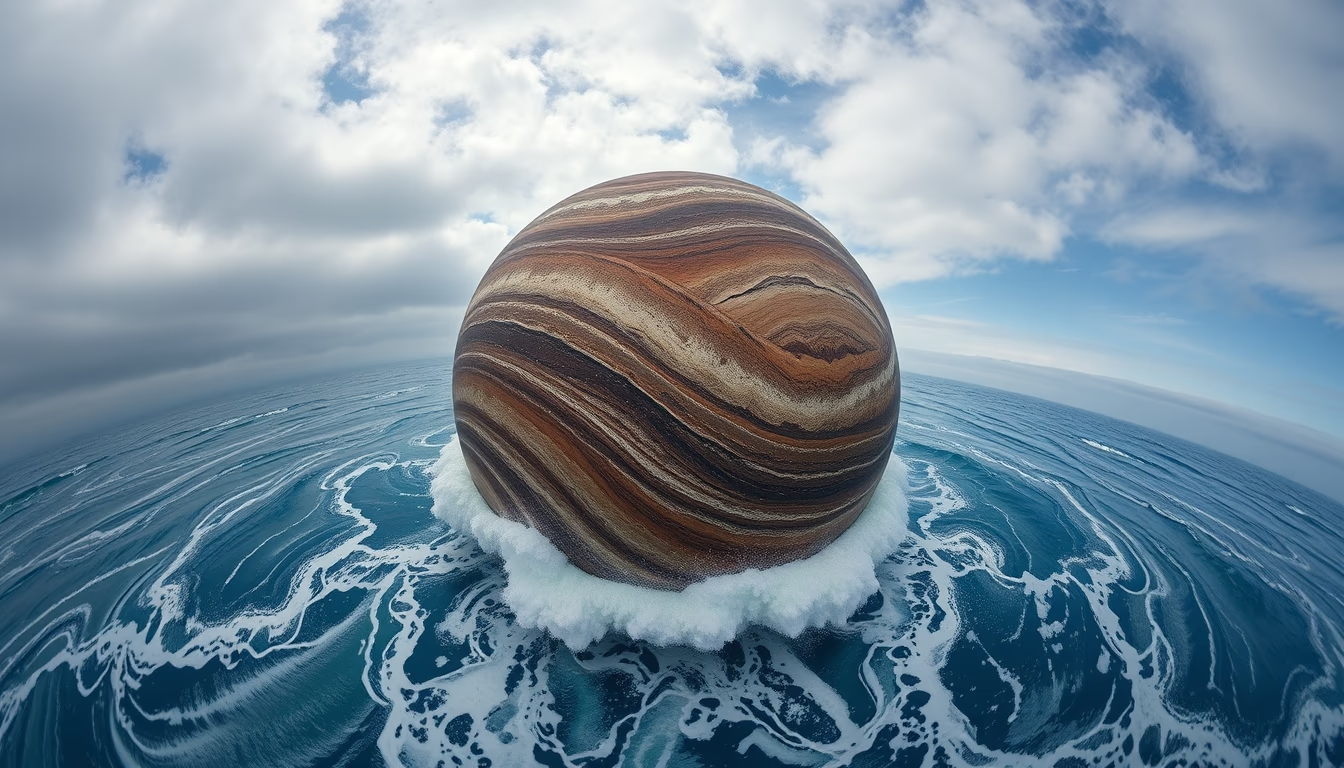
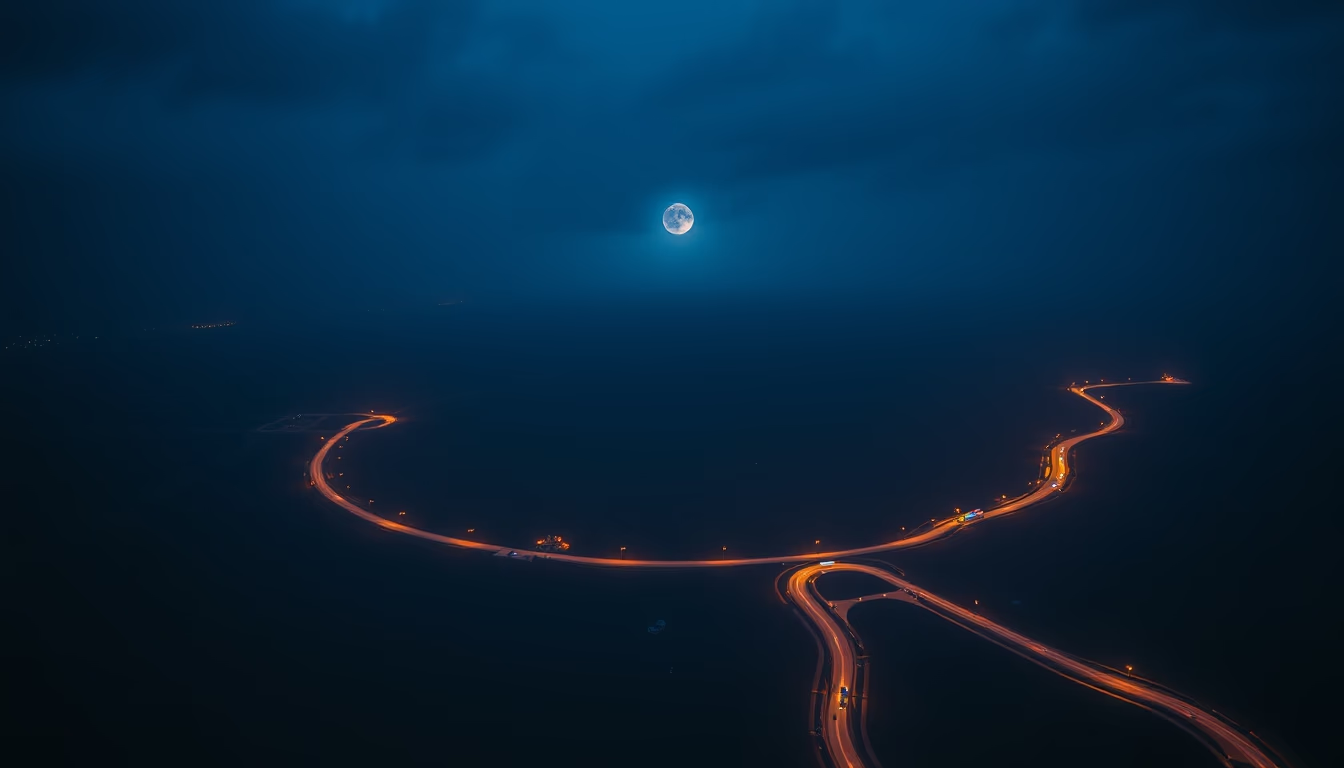
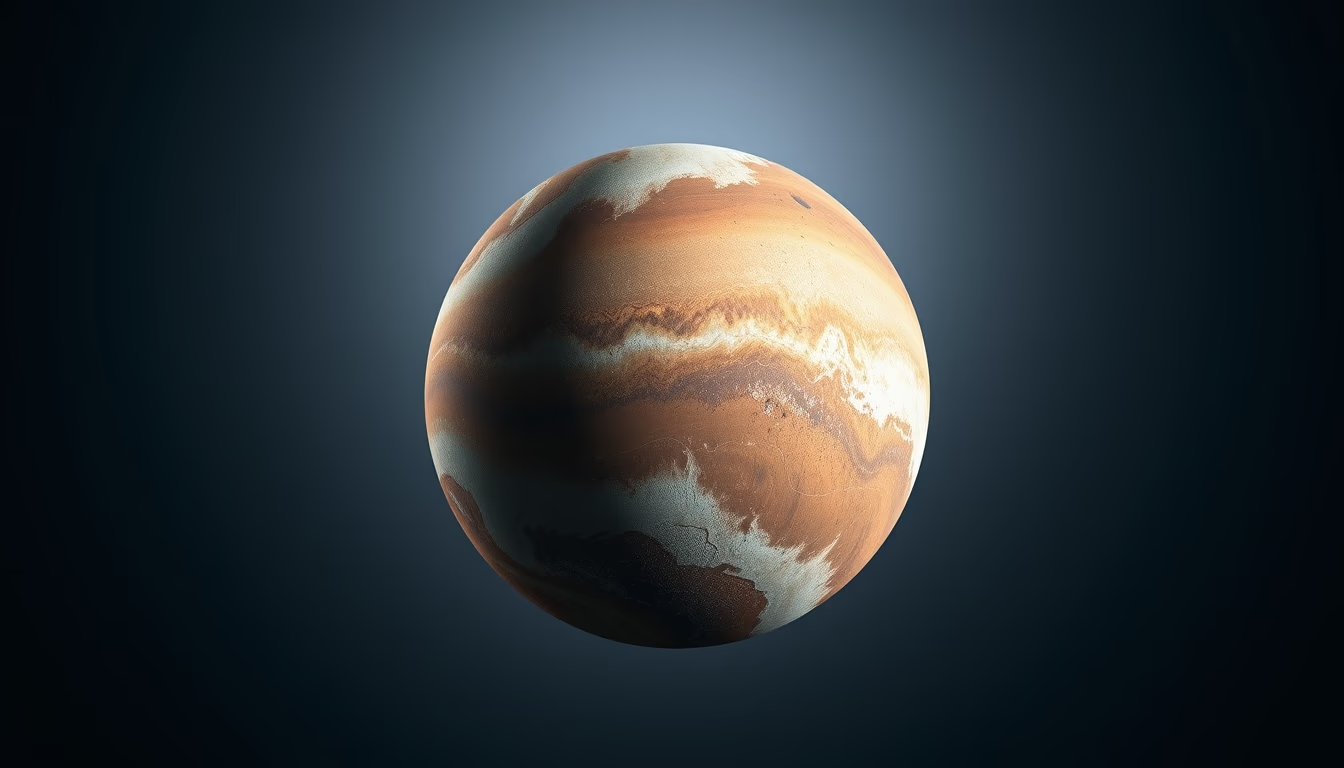
Tidally locked planets always keep the same face toward their star, creating extreme temperature contrasts and unique landscapes.
About this subject
Tidal locking is a gravitational phenomenon where a celestial body always shows the same face to its central star. This happens when the planet's rotation period equals its orbital period, due to tidal energy dissipation over billions of years. The classic example is Earth's Moon, which only shows us one hemisphere. Among exoplanets, many worlds in the habitable zones of red dwarf stars are thought to be tidally locked, such as the planets in the TRAPPIST-1 system.
On these planets, the dayside can reach temperatures capable of melting metals, while the nightside is a deep freeze. However, the terminator zone, the ring between light and darkness, may have milder conditions and even allow liquid water. Studies suggest that a thick atmosphere could redistribute heat, mitigating extremes. The discovery of exoplanets like Kepler-438b and Proxima Centauri b has revived the debate about the habitability of tidally locked worlds, as they are the most common type in the galaxy.
Space telescopes like the James Webb are beginning to analyze the atmospheric composition of these planets, searching for biosignatures. Despite challenges, the permanent twilight region might offer an interesting evolutionary niche. Scientists model scenarios ranging from global oceans to deserts, depending on orbital distance. Tidal locking is not a sentence of eternal hell or ice: atmospheric dynamics and the presence of moons can create surprises, like steady winds that transport heat. We still have much to learn about these fascinating worlds.
Frequently Asked Questions
What does it mean for a planet to be tidally locked?
It means the same face always points toward its star, like the Moon does with Earth. This happens when the rotation period equals the orbital period.
Is life possible on a tidally locked planet?
Yes, theoretically. The terminator zone between the day and night sides could have mild temperatures. With a thick atmosphere, heat can be redistributed, making regions habitable.
Which known exoplanets are thought to be tidally locked?
Many candidates, such as those in the TRAPPIST-1 system, Proxima Centauri b, and Kepler-438b. Most orbit red dwarf stars, where tidal locking is more common.
Direct URL
https://pub-c7d6a6ea828543ac903a74a341ccb2e1.r2.dev/imagens/tidal-locked-planet-fish-eye-wide-angle-fresh12.avifHow to credit
Include a visible link back to UtilizAí. Copy one of the snippets below:
<a href="https://xn--utiliza-eza.com/en/midia/imagens/tidal-locked-planet-fish-eye-wide-angle-fresh12">Tidal locked planet</a> by <a href="https://xn--utiliza-eza.com">UtilizAí</a>, licensed under <a href="https://creativecommons.org/licenses/by/4.0/">CC BY 4.0</a>.
[Tidal locked planet](https://xn--utiliza-eza.com/en/midia/imagens/tidal-locked-planet-fish-eye-wide-angle-fresh12) by [UtilizAí](https://xn--utiliza-eza.com), CC BY 4.0
License: CC-BY-4.0