Tidal locked planet
1344×768 · AVIF · CC BY 4.0
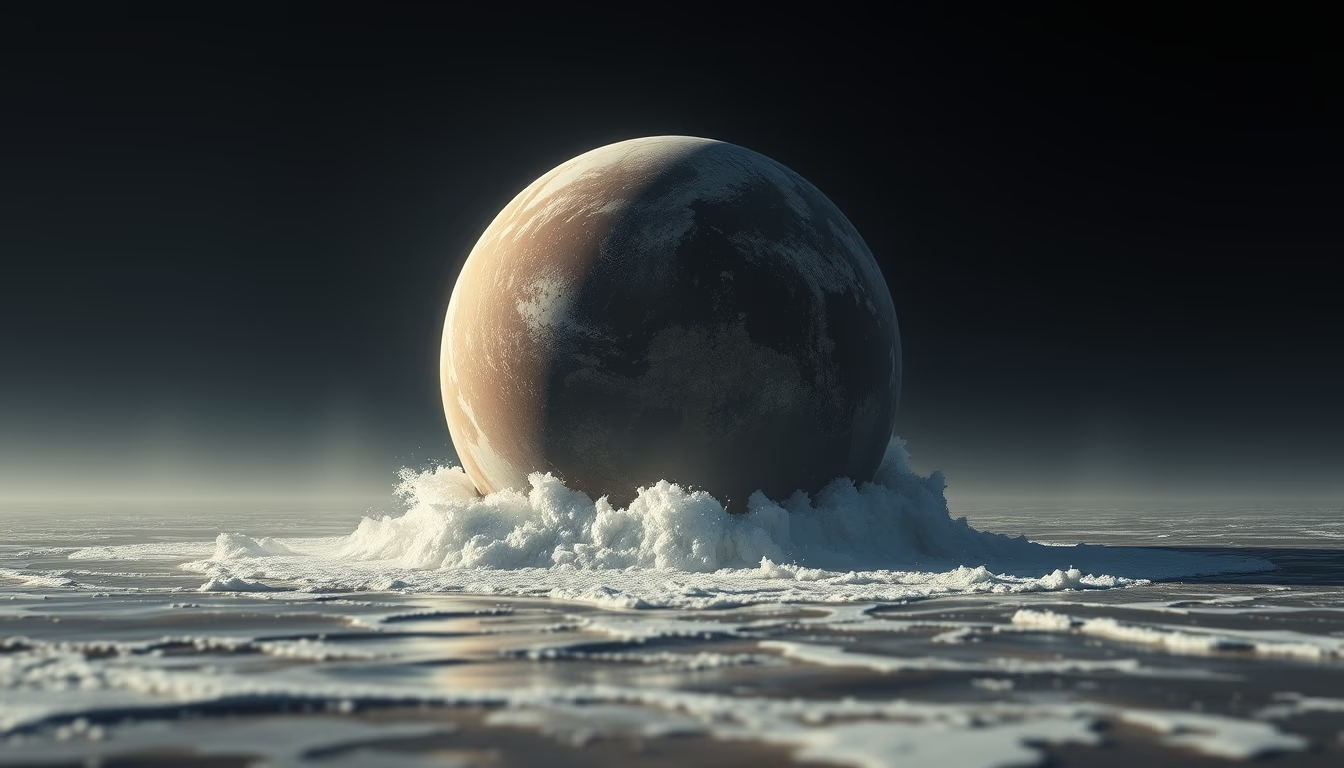
Tidally locked planets always show the same face to their star, creating extreme and unique conditions across their surface.
About this subject
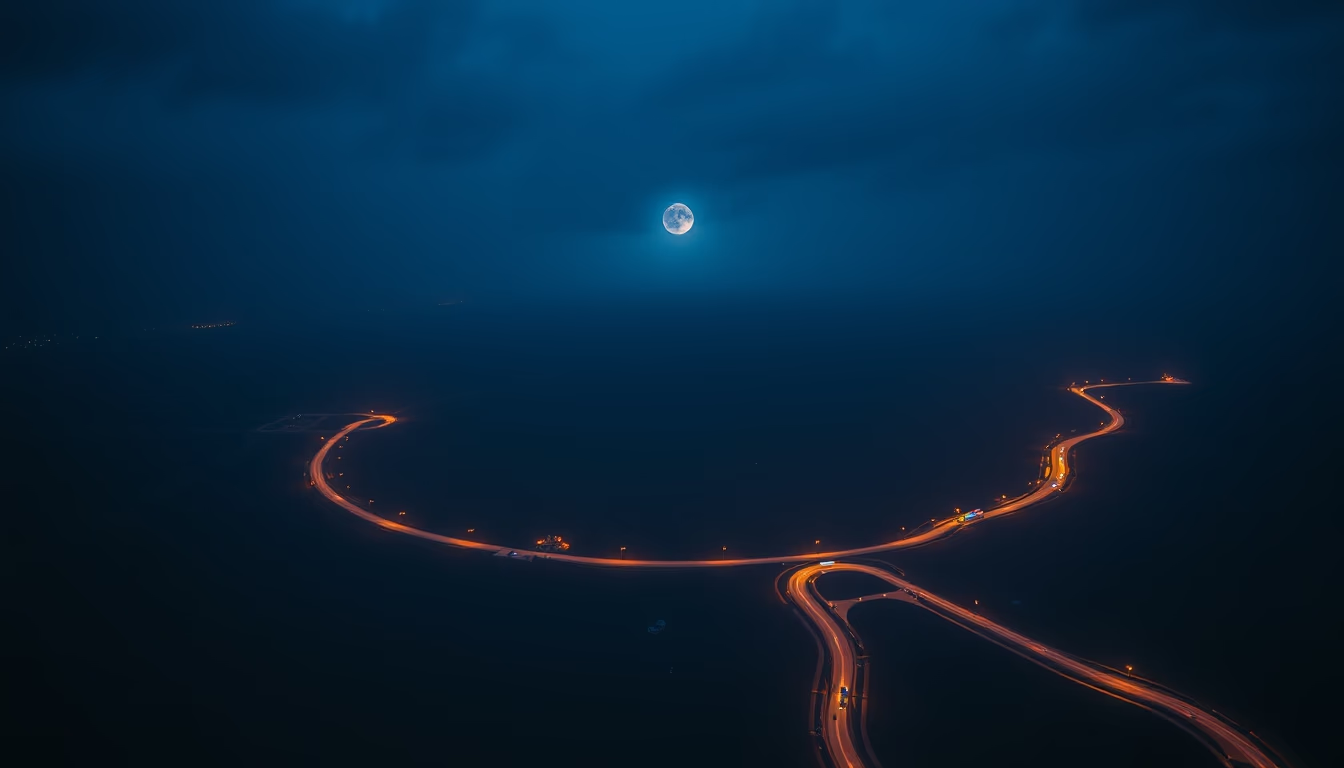
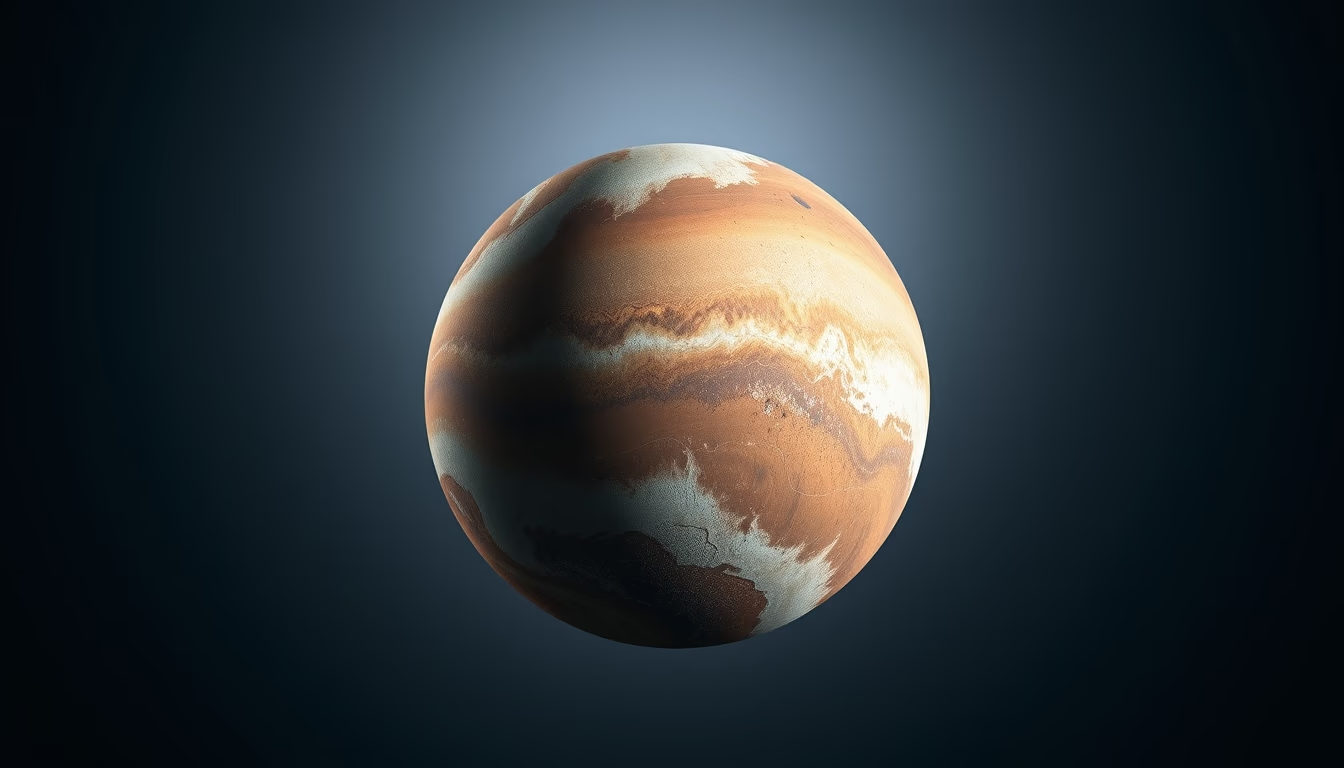
Tidal locking is an orbital phenomenon where a planet's rotation period matches its orbital period around the star, causing the same hemisphere to permanently face the star. This occurs due to gravitational forces that dissipate rotational energy over billions of years, a common process in compact exoplanet systems. In our Solar System, Earth's Moon is tidally locked, always showing the same face. Among exoplanets, candidates like Proxima Centauri b and the TRAPPIST-1 planets are strong candidates for being in this state.
The dayside of a tidally locked planet receives constant stellar radiation, potentially reaching extremely high temperatures, while the nightside remains frozen and dark. Between these extremes, a narrow band called the terminator zone may offer milder conditions where liquid water could exist. This region is a target for astrobiological studies, as it might be the most habitable area on these worlds. A thick atmosphere can redistribute heat, reducing thermal differences, but climate models show this depends on factors such as atmospheric composition and pressure.
Detection of tidally locked planets is primarily done via the transit method and phase curve analysis, which reveals brightness variations as different hemispheres are observed. Telescopes like the James Webb can analyze the atmospheres of these planets, searching for biomarkers. Studying these worlds helps us understand orbital evolution processes and the possibilities of life under extreme conditions, expanding our knowledge of the diversity of planetary environments in the universe.
Frequently Asked Questions
What causes tidal locking in a planet?
Tidal locking is caused by gravitational forces that dissipate the planet's rotational energy over time until its rotation period matches its orbital period. This is most common for planets very close to their stars.
Is there a tidally locked body in our Solar System?
Yes, Earth's Moon is tidally locked, always showing the same face to Earth. Mercury also experiences a similar effect, but in a 3:2 resonance, not full locking.
Could life exist on a tidally locked planet?
Yes, life could potentially exist in the terminator zone, where temperatures are milder and liquid water might be present. However, habitability depends on many factors, including atmosphere and composition.
Direct URL
https://pub-c7d6a6ea828543ac903a74a341ccb2e1.r2.dev/imagens/tidal-locked-planet-fine-art-photography-fresh1.avifHow to credit
Include a visible link back to UtilizAí. Copy one of the snippets below:
<a href="https://xn--utiliza-eza.com/en/midia/imagens/tidal-locked-planet-fine-art-photography-fresh1">Tidal locked planet</a> by <a href="https://xn--utiliza-eza.com">UtilizAí</a>, licensed under <a href="https://creativecommons.org/licenses/by/4.0/">CC BY 4.0</a>.
[Tidal locked planet](https://xn--utiliza-eza.com/en/midia/imagens/tidal-locked-planet-fine-art-photography-fresh1) by [UtilizAí](https://xn--utiliza-eza.com), CC BY 4.0
License: CC-BY-4.0