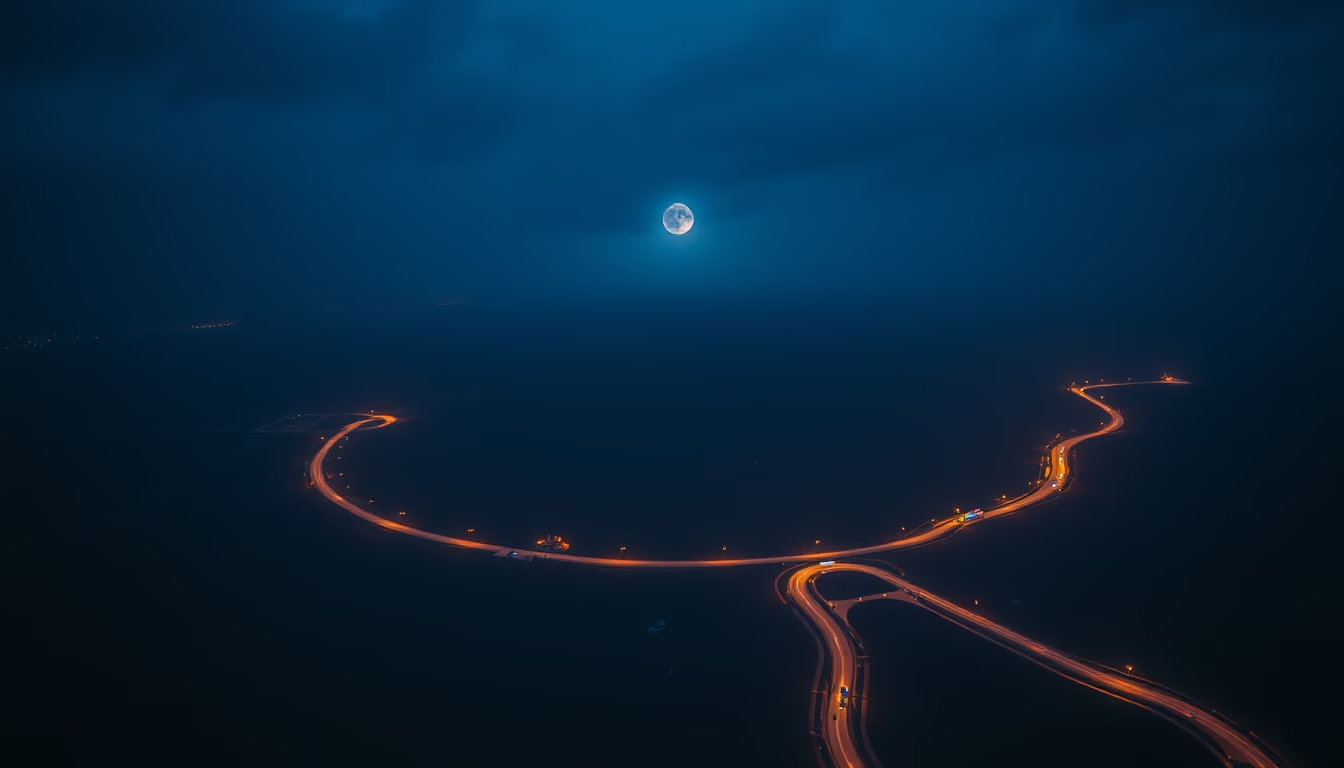
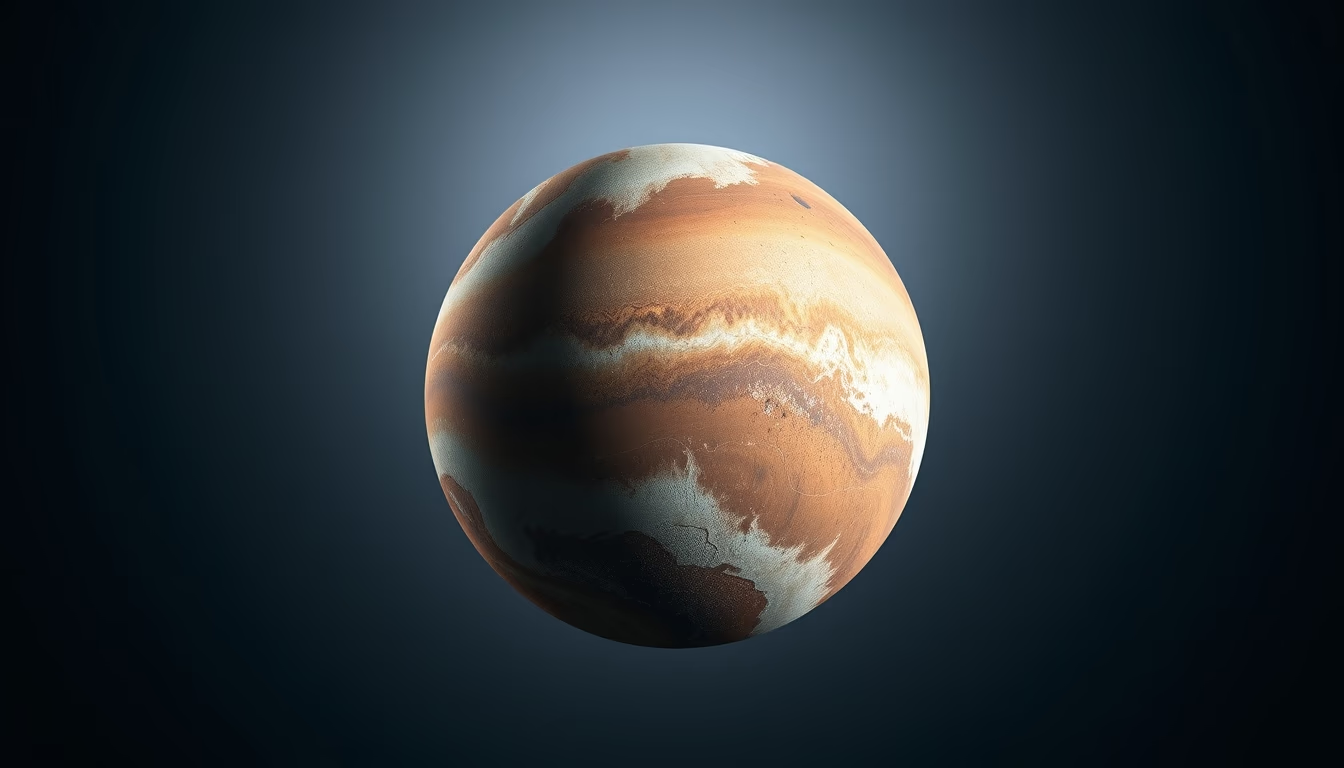
Tidal locked planet
1344×768 · AVIF · CC BY 4.0
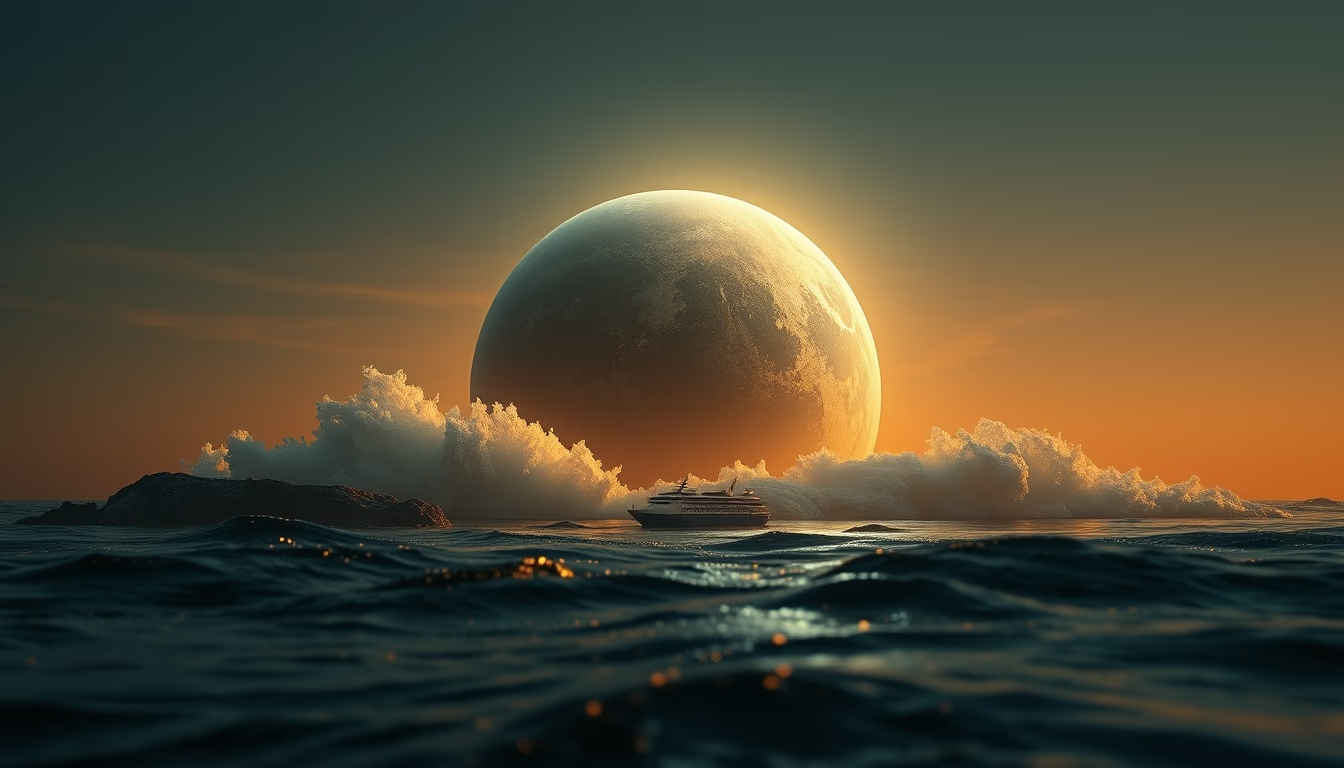
Tidally locked planets always keep the same face toward their star, creating extreme temperature contrasts between the day and night sides.
About this subject
Tidal locking is an orbital phenomenon where a celestial body's rotation period matches its orbital period around another body, causing the same hemisphere to always face the host star. The most familiar example in the Solar System is Earth's Moon, which is tidally locked to Earth. In exoplanetary systems, it is estimated that most rocky planets in the habitable zone of red dwarf stars (such as TRAPPIST-1 and Proxima Centauri b) are subject to this phenomenon due to intense gravitational forces at close distances.
The most striking consequence of tidal locking is the permanent division into a dayside that is constantly illuminated and a nightside in perpetual darkness. On the dayside, temperatures can exceed 200°C, while on the nightside they can drop below -200°C. This extreme difference generates violent winds that circulate from the hot to the cold side, potentially transporting heat and allowing a habitable band along the terminator, the line between the two hemispheres. Climate models suggest that if liquid water exists, it might concentrate in that region.
Tidal locking is not limited to red dwarf systems; it also occurs in binary star systems or between planets and moons. In our Solar System, Mercury is not perfectly tidally locked to the Sun but exhibits a 3:2 spin-orbit resonance (three rotations for every two orbits). This demonstrates that complete locking is a special case of a broader rotational energy dissipation process. For exoplanets, direct observational evidence of tidal locking remains indirect, coming from light curves and brightness variations over the orbit.
Astrobiology actively investigates whether tidally locked planets could host life. While the extreme conditions seem hostile, some models indicate that a thick atmosphere can redistribute heat and prevent total freezing of the nightside. Moreover, long-term climate stability may be favored by the absence of large seasonal variations. Future missions, such as the James Webb Space Telescope, may analyze the atmospheric composition of potentially habitable exoplanets and test whether tidal locking truly precludes life or can be overcome by atmospheric dynamics.
Frequently Asked Questions
What is tidal locking?
Tidal locking occurs when a planet's rotation period matches its orbital period around its star, causing it to always show the same face to the star.
Which known planets are tidally locked?
In the Solar System, Earth's Moon and many moons of Jupiter and Saturn are tidally locked. Among exoplanets, Proxima Centauri b and the TRAPPIST-1 planets are thought to be tidally locked.
Is it possible for life to exist on a tidally locked planet?
Yes, it is possible. Although the dayside is very hot and the nightside very cold, the terminator zone may have mild temperatures. A thick atmosphere can also redistribute heat, making regions more favorable for life.
Direct URL
https://pub-c7d6a6ea828543ac903a74a341ccb2e1.r2.dev/imagens/tidal-locked-planet-cinematic-wide-shot-fresh16.avifHow to credit
Include a visible link back to UtilizAí. Copy one of the snippets below:
<a href="https://xn--utiliza-eza.com/en/midia/imagens/tidal-locked-planet-cinematic-wide-shot-fresh16">Tidal locked planet</a> by <a href="https://xn--utiliza-eza.com">UtilizAí</a>, licensed under <a href="https://creativecommons.org/licenses/by/4.0/">CC BY 4.0</a>.
[Tidal locked planet](https://xn--utiliza-eza.com/en/midia/imagens/tidal-locked-planet-cinematic-wide-shot-fresh16) by [UtilizAí](https://xn--utiliza-eza.com), CC BY 4.0
License: CC-BY-4.0